Have you ever bought bedding that looked stunning online, only to discover it felt as thin as paper when you actually crawled under it? Or maybe you splurged on a thick, luxurious-sounding comforter, only to find yourself overheating every night?
In both cases, a single metric could have saved you the trouble: GSM. In this guide, we will walk you through what GSM means, why it matters more than most shoppers realize, and how to choose the right GSM for your specific needs—whether you are buying for your own bedroom, outfitting a boutique hotel, or sourcing in bulk for your brand. Let’s dive in.
What Is GSM in Bedding?
GSM stands for Grams per Square Meter. It is a standardized unit that measures the weight—or more precisely, the density—of a fabric per unit area. A higher GSM number means a heavier, denser fabric; a lower number means a lighter, thinner one.
Here is a simple analogy: GSM is to bedding what body weight is to a person. It tells you “how heavy” the material is, but on its own it cannot tell you “how good” it is. A 300 GSM fabric can feel silky-smooth or rough and stiff depending on the fiber, the weave, and the finishing process.
You may have encountered GSM on towel labels, apparel tags, or even printer-paper specifications. The metric is used across many industries, but in this article we focus exclusively on what it means for bedding—sheets, blankets, comforters, and duvets.
How Is GSM Different from Thread Count?
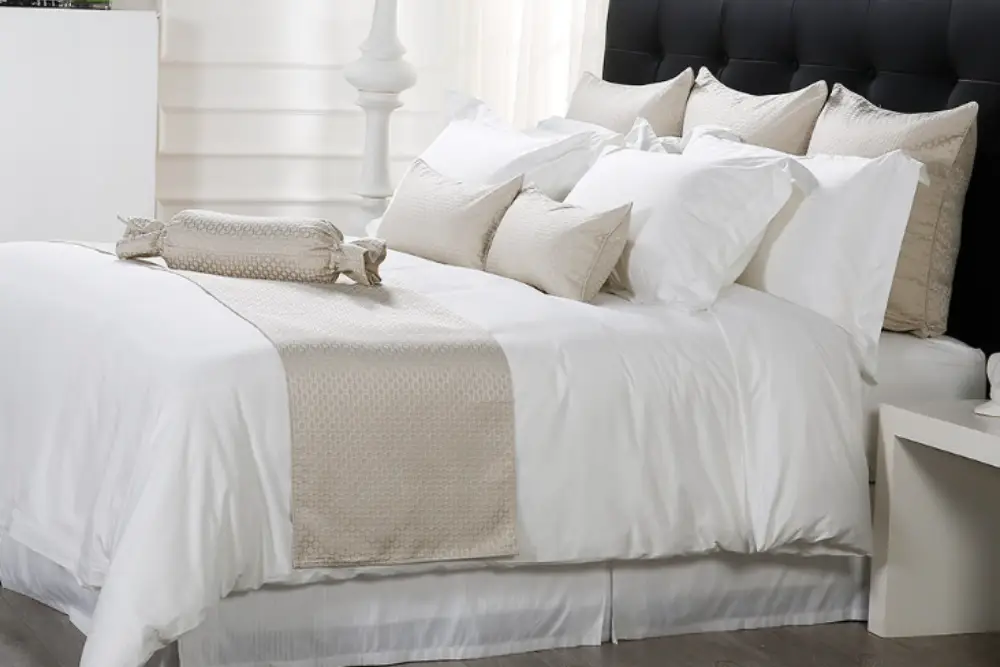
Thread count (TC) refers to the total number of warp and weft threads woven into one square inch of fabric. It is primarily relevant to woven textiles such as percale and sateen cotton sheets.
GSM, on the other hand, measures the weight density of any type of fabric—woven, knitted, non-woven, or even loose filling material. This broader applicability makes GSM a more universal and versatile benchmark.
There is another crucial difference. Thread count can sometimes be misleading if manufacturers use multi-ply yarns and count each thin strand as a separate thread. In those cases, a sheet labeled “1,000 TC” may not reflect genuinely fine weaving. However, when paired with high-quality long-staple cotton and a true single-ply construction, a high thread count absolutely delivers on its promise of softness and luxury. GSM complements thread count by adding an objective weight dimension—together, both metrics give you a fuller picture of what to expect from a fabric.
A simple way to remember the distinction: “Thread count tells you how tightly woven a fabric is; GSM tells you how heavy and dense it feels.”
How GSM Affects Comfort, Warmth and Durability in Bedding
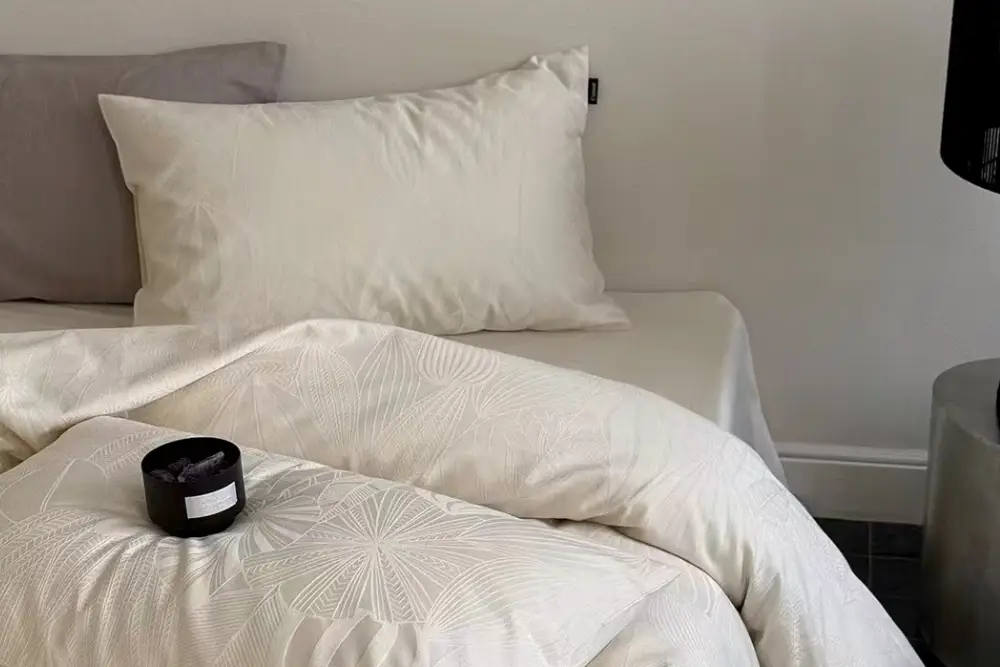
Comfort
Low-GSM fabrics (think 100–180 GSM) feel airy and lightweight against the skin, making them ideal for sleepers who run hot. High-GSM fabrics (300+ GSM) deliver a thick, enveloping sensation—the kind of cozy “wrapped-in-a-cloud” feeling many people associate with luxury hotel bedding.
However, GSM alone does not dictate how a fabric feels to the touch. At the same 300 GSM, a cotton sateen sheet will feel smooth and cool, while a microfiber of equivalent weight will offer greater warmth retention—making it an excellent choice for cooler climates or sleepers who prefer extra coziness. Always consider GSM alongside the fiber type to find the combination that best suits your needs.
Warmth
The principle is straightforward: heavier, denser fabrics trap more air between their fibers, and trapped air is what provides insulation. A 100 GSM summer quilt lets heat escape easily, keeping you cool on warm nights. A 400 GSM winter comforter creates a thick barrier of still air that holds body heat close. This is why GSM is one of the most reliable shortcuts for estimating a product’s warmth level.
Durability
Generally speaking, a higher GSM fabric uses more material per unit area, which tends to make it more resistant to thinning after repeated washes. For hospitality buyers who need linens that can withstand dozens of industrial wash cycles, choosing an adequate GSM is essential. That said, an excessively heavy fabric may create more friction and strain inside a domestic washing machine, potentially accelerating mechanical wear. Balance is key.
Key reminder: GSM is an important indicator, but it is not the whole story. Fiber composition, weave structure, and post-processing treatments (such as mercerization, enzyme washing, or calendering) all play significant roles in determining the final feel, performance, and longevity of your bedding. For a deep dive into how different fabrics perform, see our comprehensive guide to 50 types of bedding fabric.
GSM Ranges Explained — From Lightweight to Heavyweight
The table below provides an industry-standard overview of how different GSM ranges translate into fabric feel and practical application.
| GSM Range | Category | Feel & Weight | Best For | Typical Products |
| 100–200 | Lightweight | Light, crisp, and breathable | Summer / tropical regions | Summer quilts, thin percale sheets |
| 200–300 | Mid-weight | Moderate thickness with comfortable drape | All-season / transitional climates | Quality sheets, light blankets, sateen duvet covers |
| 300–400 | Heavyweight | Thick, warm, and substantial | Autumn / winter | Winter comforters, flannel blankets |
| 400+ | Ultra-heavy | Extremely thick and dense | Extreme cold / luxury hospitality | Premium hotel towels, heavy duvets |
The above ranges are widely recognized industry references. Specific values may vary slightly between brands and regions, so always verify with the manufacturer’s spec sheet when sourcing in bulk.
GSM by Product Type — Sheets, Blankets, Comforters and Duvets
Different bedding categories have their own ideal GSM windows. The table below provides a quick-reference guide.
| Product Type | Recommended GSM | Notes |
| Bed Sheets (flat & fitted) | 120–180 GSM | Woven cotton sheets in this range deliver a balanced combination of softness and breathability. Higher-TC percale usually sits around 120–150 GSM; sateen tends toward the upper end. |
| Blankets | 200–500 GSM | Cotton blankets: 200–350 GSM. Flannel or wool blankets: 300–500 GSM. Choose based on season and personal warmth preference. |
| Comforters / Duvets (fill) | 150–400 GSM | This measures the filling weight only, not the shell. Summer quilts: 150–200 GSM. All-season: 200–300 GSM. Winter: 300–400 GSM. |
| Duvet Covers | 120–200 GSM | A lighter cover preserves the loft of the duvet insert and allows its insulating properties to work effectively. |
| Quilts & Coverlets | 150–350 GSM | Quilts typically use a thinner fill than comforters. A mid-weight quilted coverlet works beautifully as a standalone summer layer or as extra warmth layered over a duvet in winter. |
How to Choose the Right GSM
The right GSM depends on your climate, your sleep habits, and the specific product you are shopping for. Below, we break down the most common scenarios to help you make a confident decision.
Pick Lightweight GSM for Hot Sleepers and Humid Climates
If you live in a tropical or subtropical region—or you simply tend to overheat at night—look for bedding in the 100–200 GSM range. Fabrics like percale cotton, bamboo, and lyocell are excellent choices in this weight class. They wick moisture away from the body and allow airflow, helping you stay cool and dry through the night.
Go Mid-Range for Four-Season Comfort or Year-Round Hotel Rooms
For regions with four distinct seasons, or hotels that need a single set of linens that works all year, the 200–300 GSM sweet spot is hard to beat. Sateen cotton and brushed microfiber in this range offer enough warmth for mild winters while remaining comfortable in spring and autumn. Most major hotel chains gravitate toward this range precisely because it delivers year-round guest satisfaction without seasonal linen swaps. As a long-standing supplier to international hotel brands, we have seen firsthand how this GSM range consistently meets the demands of high-volume hospitality environments.
Opt for Heavyweight GSM in Cold Winters and Mountain Climates
When temperatures plunge below freezing, you want bedding that traps as much warmth as possible. Look for 300–400+ GSM products in materials such as flannel, fleece, or heavy cotton sateen. Mountain lodges and cold-climate resorts often rely on this weight class to keep guests comfortable during harsh winter nights.
Consider Soft, Breathable GSM for Kids and Sensitive Skin
Children’s skin and sensitive adult skin benefit from lightweight, breathable fabrics that minimize irritation. A GSM range of 150–250 is ideal. Organic cotton, bamboo fiber, and lyocell are top picks because they are naturally gentle, hypoallergenic, and excellent at regulating temperature—keeping little ones comfortable without overheating. If you are sourcing kids bedding sets in bulk, prioritize certified fabrics and request GSM verification from your supplier to ensure consistency across orders.
Match GSM to Hotel and Hospitality Standards
Five-star hotels typically specify sheets in the 200–300 GSM range and towels at 500–700 GSM. The reason is twofold: higher-GSM linens feel noticeably more luxurious to guests, and they withstand the rigors of industrial laundering far longer than their lighter counterparts.
If you are purchasing for a hotel, B&B, or Airbnb property, we recommend striking a balance between durability and cost—factor in your expected wash frequency and choose a GSM that delivers a premium hand-feel without blowing your per-unit budget. Explore our hotel linen collection for options designed to meet hospitality-grade durability and comfort standards.
A Note on GSM for Weighted Blankets
Weighted blankets are a special case. Unlike traditional blankets where GSM reflects fabric density alone, weighted blankets derive much of their heft from glass bead or poly pellet filling. The shell fabric itself is typically in the 150–250 GSM range for breathability and softness, while the overall blanket weight (usually 5–15 lbs / 2–7 kg) is determined by the fill. When evaluating a weighted blanket, focus on total weight relative to body weight (the common recommendation is about 10% of the sleeper’s body weight) rather than GSM alone.
How to Check GSM at Home
You do not need a laboratory to estimate GSM. Here is a simple method anyone can use:
Step 1: Obtain or cut a fabric sample measuring exactly 10 cm × 10 cm.
Step 2: Weigh the sample on a kitchen scale that reads in grams.
Step 3: Multiply the weight by 100. The result is the approximate GSM.
For example, if a 10 cm × 10 cm swatch weighs 2.5 grams, the fabric is approximately 250 GSM.
Alternatively, you can check the product label, look up the brand’s official specification sheet, or simply ask the supplier. Keep in mind that many consumer-facing brands do not print GSM on their packaging. If the information is not readily available, the weigh-and-calculate method above is a reliable fallback.
How to Care for Different GSM Bedding
Low GSM (100–200): These lightweight fabrics are easy to machine-wash and dry quickly. Use a gentle cycle with mild detergent to minimize pilling. Avoid high-heat drying, as thin fabrics are more susceptible to shrinkage and fiber degradation.
Medium GSM (200–300): Wash in warm water on a regular cycle. Tumble dry on medium-low heat or air dry for best results. These fabrics are generally forgiving but will maintain their softness longer with moderate temperatures.
High GSM (300+): Thick fabrics require extra attention during rinsing. Their density tends to trap detergent residue, which can make the fabric stiff and irritate sensitive skin over time. Rinse thoroughly, allow ample drying time (or use a commercial-size dryer), and consider professional laundering for especially heavy items.
Pro tip: Regardless of GSM, always wash new bedding before its first use. An initial wash removes residual manufacturing chemicals and often improves the fabric’s softness right out of the gate.
Frequently Asked Questions
Is Higher GSM Always Better?
Not necessarily. Higher GSM means thicker and warmer, which is wonderful in a cold winter but can be stifling in a tropical summer. “Better” is entirely relative to your use case, climate, and personal comfort preferences. A lightweight 150 GSM percale sheet can be far more appropriate—and feel far more luxurious—than a heavy 400 GSM alternative when temperatures soar.
Does GSM Affect Bedding Price?
GSM does influence price, but it is not the only factor. A higher GSM generally means more raw material per unit, which raises production cost. However, the fiber type often matters more than the weight. For instance, a 300 GSM bamboo fiber blanket will typically cost significantly more than a 300 GSM polyester blanket, even though both weigh the same. Brand positioning, finishing treatments, and third-party quality or sustainability certifications also play into the final retail price.
What GSM Is Best for Year-Round Use?
For a single set of bedding that performs well across all four seasons, aim for the 200–300 GSM range. This mid-weight sweet spot provides enough insulation for mild cold without overheating in warmer months. It is also the range most commonly specified by international hotel chains for precisely this reason.
Conclusion
Understanding GSM empowers you to move beyond vague marketing language and make genuinely informed bedding decisions. Whether you are a homeowner upgrading your sleep setup, a hospitality buyer sourcing linens at scale, or a retailer curating your product range, GSM gives you a clear, comparable metric for evaluating fabric weight, warmth, and durability.
At RUHO Living, we manufacture bedding across every GSM class—from lightweight summer quilts to heavy-duty hotel linens—and we can customize the exact specification to match your market and climate requirements. With 20+ years of experience supplying leading hotel brands worldwide, our team can help you pinpoint the right GSM, fabric, and construction for your project.
Ready to find the perfect GSM for your next order? Browse our full product catalog to explore options across every weight class, or contact our product specialists to get personalized sourcing recommendations tailored to your market and budget. We are here to help you sleep—and sell—better.