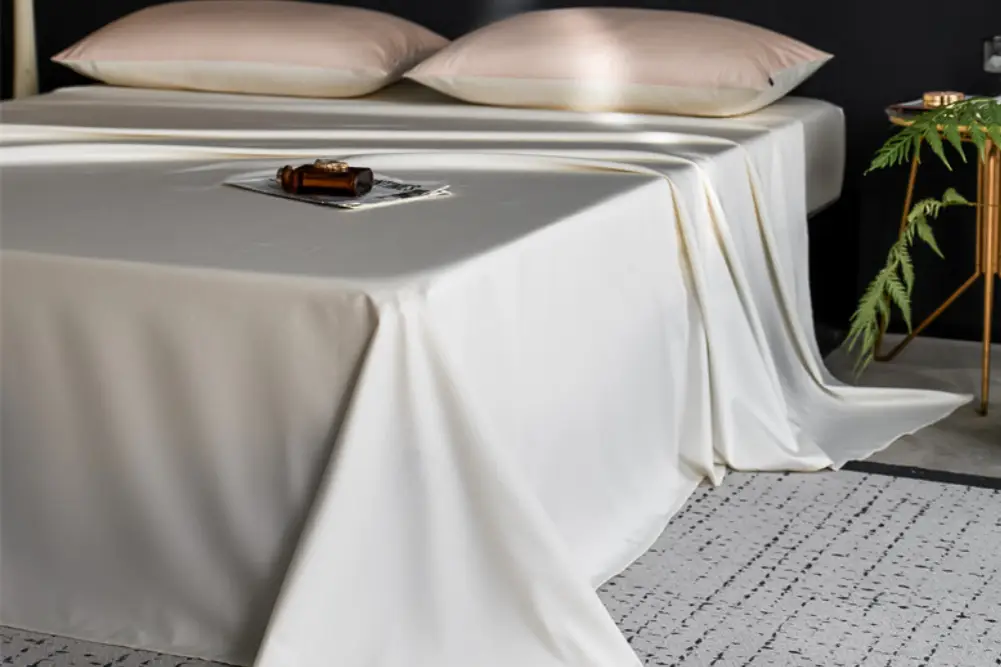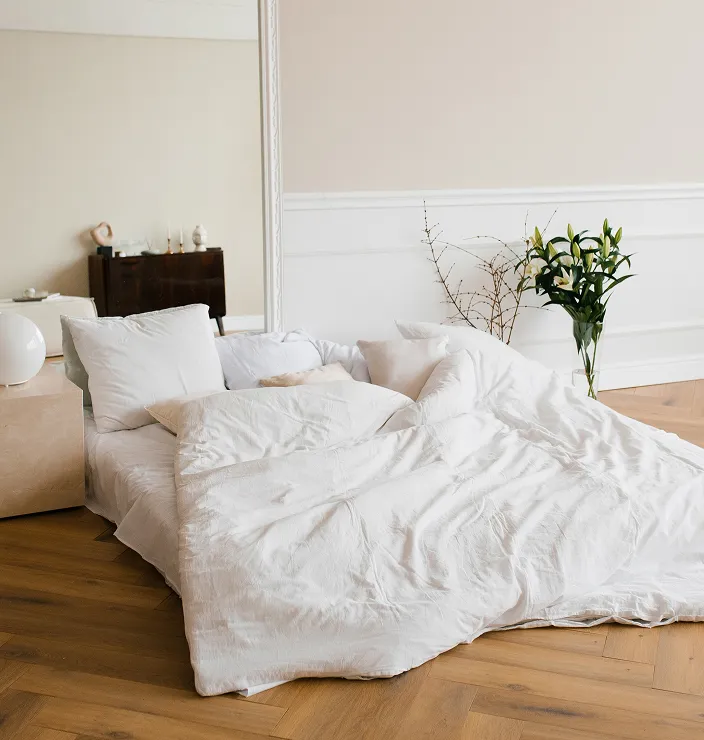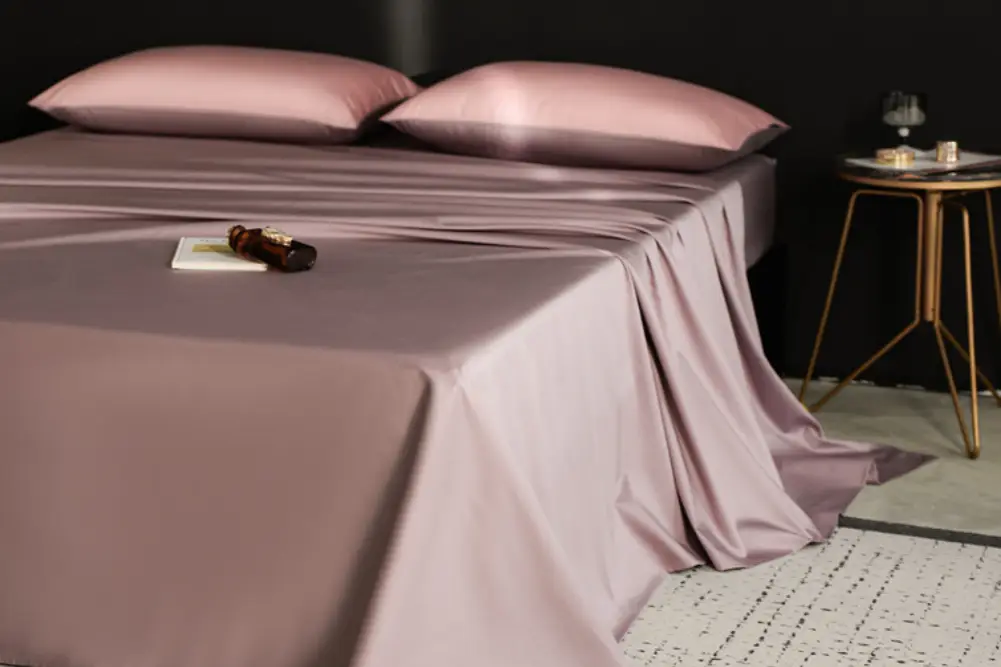
A buyer orders a Queen sheet set, makes the bed, and watches the fitted sheet pop off the corner before morning. Another shopper opens a King set, only to see the flat sheet pool on the floor. These problems are common, and they have one root cause: bed sheet size is rarely as simple as the label suggests. Sizing shifts across brands, across regions (US, UK, and EU), and across mattress pocket depths.
This guide walks shoppers through a five-step process for choosing the right sheet size. It covers how to measure a mattress, how to match it to a standard size, how to handle deep mattresses, how to pick the right sheet type, and how to choose fabric and weave. A full size chart and answers to common questions are included.
Why Choosing the Right Bed Sheet Size Matters
The wrong sheet size creates four problems. Each one hurts sleep quality, product lifespan, or both. Buyers often blame the brand, but the cause is usually a fit mismatch.
Slippage. Sheets that are too large slide around at night. Fitted sheets with shallow pockets pop off the corners. Thicker modern mattresses make this worse, since a 16-inch pillow-top needs more fabric than a flat 8-inch mattress.
Shrinkage allowance. Cotton sheets shrink 3–5% after the first wash. The starting size must account for this, or the sheet will be too small after one cycle. Quality manufacturers pre-shrink or oversize on purpose.
Appearance and finish. Oversized flat sheets pool on the floor. Undersized pillowcases leave the pillow half-covered. Sheets that do not fit bunch and wrinkle, which spoils the look of the bed. For hotels and short-term rentals, that look matters for every guest review.
Lifespan. Sheets that are pulled or stretched to fit wear out faster. Seams give way. Elastic loses its hold. Properly sized sheets last longer because they are not under constant tension during sleep or laundry cycles.
Avoiding these issues starts with one simple step: measuring the mattress accurately.
Step 1 — Measure Your Mattress (Length, Width & Depth)
A mattress has three measurements that matter, not two. Many buyers measure length and width and forget depth. That single mistake is the most common cause of fitted-sheet slippage on modern beds. The fix is to record all three numbers before shopping.
How to Measure Mattress Length & Width
Length and width should be measured with care, since even a half-inch error can change the fit. Use these steps for a clean measurement:
- Strip the bed of all linens, mattress protectors, and toppers.
- Use a flexible tape measure laid flat against the mattress edge.
- Measure length head-to-foot and width side-to-side.
- Do not stretch or compress the mattress fabric while measuring.
- Measure at two points and use the larger value. Some mattresses have slight asymmetry from wear.
- Round measurements to the nearest half-inch or full centimeter.
These steps give a baseline that any sheet size chart can be matched against. Buyers who skip them often end up returning a set that was technically the right name but the wrong fit.
How to Measure Mattress Depth (Pocket Depth)
Depth is the most undertaught skill in sheet shopping. Take it slowly:
- Place a rigid straightedge — a ruler, level, or stiff cardboard — flat across the top of the mattress so it extends slightly past the side.
- Measure vertically from the bottom of the mattress to the underside of the straightedge.
- For pillow-top, Euro-top, or memory foam mattresses, measure at the highest point. That is often the center, not the edge.
- If a topper, mattress pad, or protector will stay on during use, include all layers in the measurement.
- Record the depth in both inches and centimeters.
Industry depth ranges fall into three groups:
- Standard mattresses: 7–12 inches (18–30 cm).
- Thick or deep mattresses: 13–17 inches (33–43 cm).
- Extra-deep or luxury mattresses: 18+ inches (46+ cm).
Common Measuring Mistakes to Avoid
Even careful shoppers fall into the same traps. The five most common errors are:
- Measuring only the side edge and ignoring the pillow-top arch at the center.
- Leaving the mattress topper or protector in place during measurement.
- Estimating instead of measuring (“it’s probably 12 inches”).
- Ignoring sag and deformation in older mattresses, especially those five years old or more.
- Trusting the manufacturer’s labeled depth, which sometimes excludes the pillow-top layer.
These five errors account for most of the “my sheets don’t fit” complaints that retailers see. A few extra minutes with a tape measure prevents almost all of them, and saves the cost of a return.
Step 2 — Match Your Mattress to a Standard Bed Sheet Size
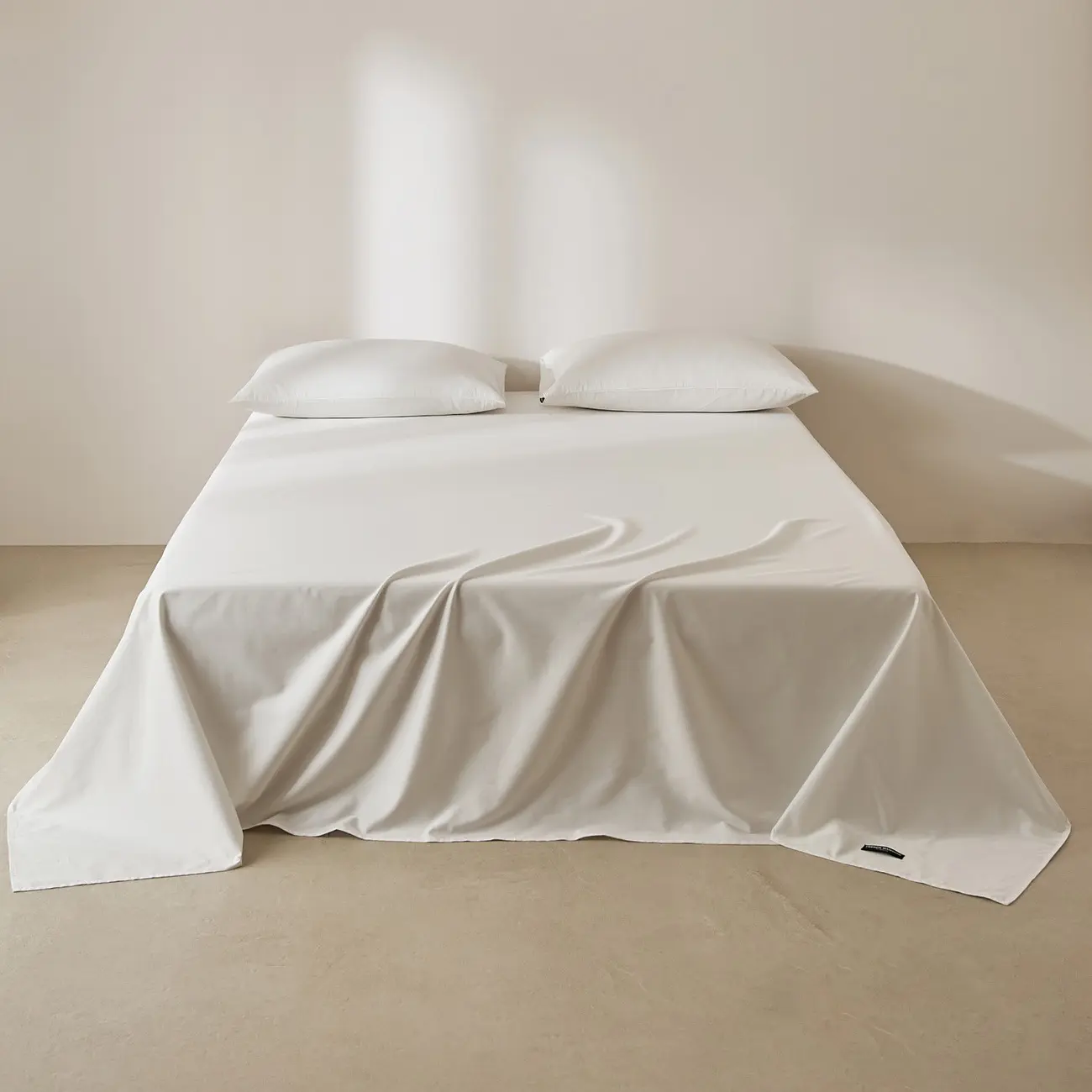
The US sizing system covers most residential beds and the bulk of hotel inventory in North America. Fitted sheets are sized to match mattress dimensions. Flat sheets and duvet covers are sized larger, with built-in drop allowances on each side and at the foot.
Standard Bed Sheet Sizes Chart (Inches & cm)
The chart below shows the mattress dimensions and matching fitted and flat sheet sizes for the most common US bed types. Buyers should use it as a quick reference and then confirm against their own measurements.
| Bed Type | Mattress (in) | Mattress (cm) | Fitted Sheet (in) | Flat Sheet (in) |
| Crib | 28 × 52 | 71 × 132 | 28 × 52 | n/a |
| Twin | 38 × 75 | 96.5 × 190.5 | 39 × 75 | 66 × 96 |
| Twin XL | 38 × 80 | 96.5 × 203 | 39 × 80 | 66 × 102 |
| Full / Double | 54 × 75 | 137 × 190.5 | 54 × 75 | 81 × 96 |
| Queen | 60 × 80 | 152 × 203 | 60 × 80 | 90 × 102 |
| King | 76 × 80 | 193 × 203 | 76 × 80 | 102 × 112 |
| California King | 72 × 84 | 183 × 213 | 72 × 84 | 102 × 114 |
| Olympic Queen | 66 × 80 | 168 × 203 | 66 × 80 | 96 × 102 |
| Split King | 2 × (38 × 80) | 2 × (96.5 × 203) | 2 × Twin XL | 102 × 112 |
Crib Sheet Size (Dimensions in Inches & cm)
Crib sheets suit infant cribs and most toddler beds that use a standard crib mattress. They measure 28 × 52 inches (71 × 132 cm) and are sold as fitted sheets only. A common misconception: a fitted crib sheet must hug the mattress with no slack, so loose or oversized sheets should never be used in a crib. Safety guidelines from pediatric groups make this point clearly, and most retailers follow it.
Twin Sheet Size (Dimensions in Inches & cm)
Twin sheets suit children’s rooms, single adult beds, and standard bunk beds. The fitted sheet measures 39 × 75 inches (99 × 190.5 cm), matching a 38 × 75 mattress. Buyers should not confuse Twin with Twin XL — the lengths differ by five inches, and the sheets are not interchangeable. This mix-up is one of the most common online return reasons in the bedding category.
Twin XL Sheet Size (Dimensions in Inches & cm)
Twin XL sheets suit college dorm beds and many adjustable bases sold as Split King. The fitted sheet measures 39 × 80 inches (99 × 203 cm). The added length is what separates Twin XL from regular Twin, so the label must be checked carefully before purchase. Hotels and short-term rentals also use Twin XL for single rooms that need a longer mattress for taller guests.
Full / Double Sheet Size (Dimensions in Inches & cm)
Full sheets, also called Double, suit guest rooms, teenagers’ rooms, and smaller bedrooms. The fitted sheet measures 54 × 75 inches (137 × 190.5 cm). A note for couples: a Full mattress is the same length as a Twin and only 16 inches wider, which is why many couples size up to a Queen. For solo sleepers, however, a Full offers more side-to-side space than a Twin without dominating a small room.
Queen Sheet Size (Dimensions in Inches & cm)
Queen sheets are the most common size sold in North America. The fitted sheet measures 60 × 80 inches (152 × 203 cm). Buyers should note that a US Queen is not the same as a UK Queen, which is closer to a US Full in width, so cross-border buyers should confirm against the actual mattress rather than the size name. Queen is also the most-stocked size in hospitality inventory, which keeps pricing competitive.
King Sheet Size (Dimensions in Inches & cm)
King sheets suit master bedrooms and couples who want more space. The fitted sheet measures 76 × 80 inches (193 × 203 cm). Important note: King (76 × 80) and California King (72 × 84) are not interchangeable. King sheets will be too wide and too short on a Cal King, and Cal King sheets will be too narrow and too long on a standard King.
California King Sheet Size (Dimensions in Inches & cm)
California King sheets suit taller sleepers and longer rooms. The fitted sheet measures 72 × 84 inches (183 × 213 cm) — narrower and longer than a standard King. Anyone moving from a King to a Cal King mattress must buy new sheets, since the existing set will not fit either dimension. The extra four inches of length is the main reason buyers choose Cal King, especially for sleepers over six feet tall.
Split King & Olympic Queen (Non-Standard Sizes)
Split King. A Split King is two Twin XL mattresses placed side by side, most often on an adjustable bed base. It requires two Twin XL fitted sheets, since each side moves independently. A standard King flat sheet or duvet cover still works across both halves.
Olympic Queen. An Olympic Queen measures 66 × 80 inches (168 × 203 cm) — six inches wider than a standard Queen. Standard Queen sheets will not fit. Buyers should search for “Olympic Queen” specifically, often through specialty manufacturers.
Non-standard sizes are best served by retailers and manufacturers that offer made-to-measure or custom sizing rather than off-the-shelf sets.
Step 3 — Check Pocket Depth for Thick & Deep Mattresses
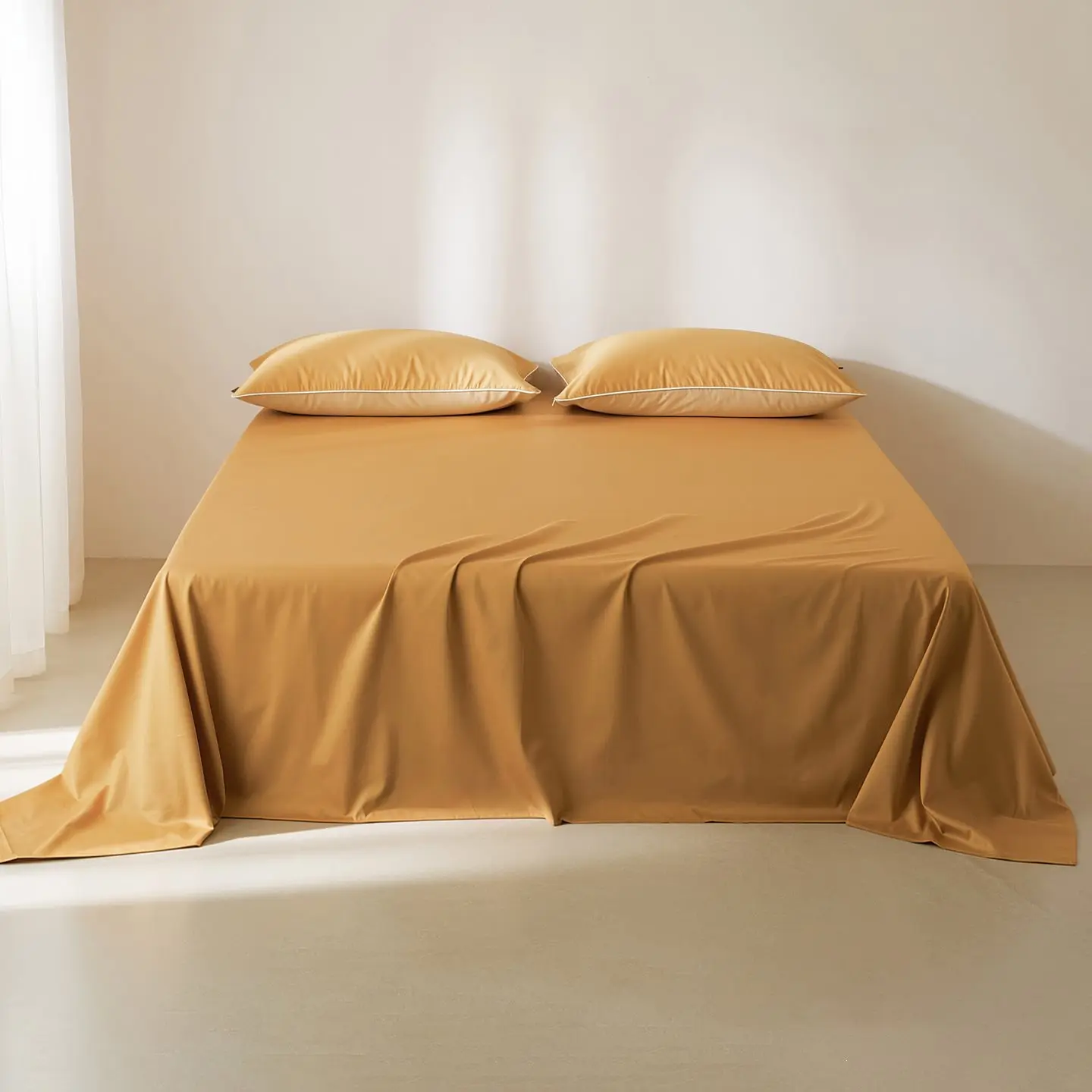
Modern mattresses run thicker than they did 20 years ago. Memory foam, hybrid constructions, and pillow-top designs have pushed average mattress depths from 8 inches to 12–16 inches. The fitted sheet must keep up. When a sheet’s pocket depth is less than the mattress thickness plus a 2-inch tuck-under allowance, the corners will lift during the night. The result is a sheet that bunches at the foot of the bed by morning, and a sleeper who wakes up annoyed before the alarm even rings.
Sheets for Memory Foam, Pillow-Top & Adjustable Beds
Each mattress type has its own depth profile and its own sheet rules:
- Memory foam mattresses commonly measure 10–14 inches deep.
- Pillow-top mattresses commonly measure 13–18 inches deep.
- Adjustable beds bend frequently, so sheets with all-around elastic — not just corner elastic — are recommended for a secure fit.
- Adding a mattress topper usually increases total height by 2–4 inches. Sheets must be sized to the combined depth.
The industry rule of thumb: pocket depth should exceed mattress depth by about 2 inches. That extra room gives the sheet enough fabric to tuck under and hold its grip overnight. For high-traffic beds, such as hotel rooms or short-term rentals, an all-around elastic fitted sheet built with a generous pocket will outlast a corner-elastic model under the same wash cycles.
Deep Pocket vs. Extra Deep Pocket Sheets
The two terms get used loosely. The table below shows how the industry generally defines them:
| Sheet Type | Pocket Depth | Suitable Mattress Thickness |
| Standard Pocket | 7–12 inches (18–30 cm) | Up to 12 inches (30 cm) |
| Deep Pocket | 13–17 inches (33–43 cm) | 13–17 inches (33–43 cm) |
| Extra Deep Pocket | 18–22+ inches (46–56+ cm) | 18+ inches (46+ cm) |
Shoppers should look for the actual pocket depth listed in inches on the product page, not just the “deep pocket” label. The term is used inconsistently across brands — one company’s “deep pocket” may match another’s “standard.” When a listing only says “deep pocket” without a measurement, the safer choice is to look elsewhere or contact the seller for the exact figure. Manufacturers that publish clear pocket-depth numbers tend to be more reliable on every other spec as well.
Step 4 — Choose the Right Sheet Type
A complete sheet set usually includes three pieces: a fitted sheet, a flat sheet, and pillowcases. Each piece has its own sizing logic. Mixing them up — for example, using a King flat sheet with a Queen fitted sheet — leads to the kind of overhang and bunching that buyers complain about.
Fitted Sheet Sizes
A fitted sheet is the bottom sheet, with elasticized corners or all-around elastic that wrap the mattress. It should match the mattress length and width exactly, with pocket depth that fully accommodates the mattress thickness.
Two outcomes to avoid: an oversized fitted sheet slips around because it has nothing to grip, and an undersized one will not stretch over the corners at all. Neither problem can be solved by tucking. The fix is the right size, not more force.
All-around elastic generally outperforms four-corner elastic, especially on adjustable beds where the mattress bends. The continuous band keeps the sheet anchored as the base moves.
Flat Sheet Sizes
A flat sheet is a rectangular sheet that lies between the sleeper and the duvet. Some sleepers use it as a top layer in summer. Hotels often tuck it in hospital-style under the mattress.
The sizing formula is simple: mattress dimensions plus a “drop” on each side and at the foot. Standard drops are 15–16 inches on each side and 22 inches at the foot. That is why a King flat sheet measures roughly 102 × 112 inches — a 76-inch mattress plus 16-inch drops on each side.
Some sleepers skip flat sheets entirely. European-style duvet covers, which are washed as often as the bottom sheet, replace them in many households.
Pillowcase Sizes (Standard, Queen, King)
Pillowcases come in four common sizes. The table below covers the standard dimensions:
| Pillowcase Type | Dimensions (in) | Dimensions (cm) |
| Standard | 20 × 26 | 51 × 66 |
| Queen | 20 × 30 | 51 × 76 |
| King | 20 × 36 | 51 × 91 |
| Euro (decorative) | 26 × 26 | 66 × 66 |
A practical note: pairing a Standard pillow with a King pillowcase leaves the case looking loose and oversized. Buyers should either match pillow inserts to case sizes, or use Queen cases on King-size beds for a closer fit. Euro pillowcases are decorative — they sit behind the sleeping pillows against the headboard, not under the head. Hospitality buyers should plan pillowcase orders by pillow insert size, since hotels often pair Queen pillows with Queen cases regardless of the bed size used in the room.
Step 5 — Pick the Right Fabric, Thread Count & Weave
Once size is settled, three more factors shape how the sheet feels and how long it lasts: fabric, thread count, and weave.
1. Fabric.
- Cotton — the most common choice. Long-staple varieties such as Egyptian, Pima, and Supima offer the best durability and softness, since longer fibers produce smoother yarn and fewer loose ends.
- Linen — breathable and quick to dry. It softens with each wash and suits warm climates and hot sleepers.
- Bamboo — naturally cooling and moisture-wicking. It is often marketed as antimicrobial.
- Microfiber — affordable and easy to care for, though less breathable than natural fibers. It is a strong fit for budget buyers and high-volume use, such as guest rentals.
2. Thread Count.
Higher thread count does not automatically mean higher quality. The genuine quality range for single-ply woven cotton is 200–600. Counts of 800 or above are usually achieved through multi-ply yarn — twisting multiple thin threads together and counting each separately. The number goes up. The fabric does not get better.
Optimal thread count ranges by weave and fiber:
- Percale cotton: 200–400.
- Sateen cotton: 300–600.
- Linen: 80–150. Linen fibers are thicker, so high counts are unnecessary and undesirable.
- Bamboo: 250–400.
3. Weave.
- Percale — a one-over-one-under plain weave. It produces a crisp, matte, lightweight feel similar to high-end hotel sheets. Best for hot sleepers.
- Sateen — a four-over-one-under weave. It produces a smooth, silky, slightly lustrous surface with more drape. It feels softer right away and sleeps a little warmer.
Selection guidance is simple. Percale suits buyers who want a cool, crisp feel. Sateen suits buyers who want a soft, luxurious feel. Both can be made in cotton or in blended fibers.
When Standard Sizes Don’t Fit — Custom Sheet Sizes for Caravans, RVs & Hotels
Standard sizing covers most homes, but several common scenarios fall outside the chart.
- Caravan and RV mattresses — typically non-standard. An RV Queen is often 60 × 75 inches, five inches shorter than a residential Queen. An RV King is commonly 72 × 75 or 72 × 80 inches — narrower than a residential King.
- Hotel and luxury hospitality mattresses — some premium hotel mattresses run 18–22 inches deep. They need extra deep pocket sheets that many retail brands do not stock.
- European and Continental bed sizes — IKEA and most European manufacturers use metric sizing (140 × 200, 160 × 200, 180 × 200 cm) that does not align with US dimensions. Direct substitution does not work.
- Antique or custom bed frames — older or handmade beds may have non-standard mattress dimensions entirely.
For these cases, buyers should consider a few practical steps:
- Work with manufacturers that offer made-to-measure or custom-cut sheets, such as Ruho Living’s caravan bedding line for RV and motorhome owners.
- Submit accurate three-dimensional measurements (length, width, depth) to the supplier.
- Confirm whether the manufacturer pre-shrinks fabric or builds in a shrinkage allowance — 3–5% is typical for cotton.
- Ask about split-sheet construction for adjustable bases set up as Split Kings.
FAQs
Do sheet sizes differ between the US, UK, and Europe?
Yes, sizing varies across regions. A US Queen measures 60 × 80 inches. A UK King is roughly 60 × 78 inches — close to a US Queen in width but slightly shorter. European sizing is fully metric, with common sizes of 140 × 200, 160 × 200, and 180 × 200 cm. These do not match US dimensions directly. Cross-border buyers should convert measurements and compare against the actual mattress, not the labeled size category. Buying by name alone often leads to a poor fit.
How often should I replace my bed sheets?
General guidance is every 2–3 years for sheets used nightly. Replacement signs include visible pilling, thinning fabric that becomes translucent, stretched or failed elastic, seam failures, and stains that survive washing. Guest-room or backup sheets used infrequently can last 4–5 years. High-quality long-staple cotton, washed and dried with care, can stretch lifespan further. Hotels and rentals usually replace on a stricter schedule because of the higher wash cycle volume.
Why do my fitted sheets keep slipping off?
There are four common causes, each with a clear fix:
- Insufficient pocket depth → switch to deep pocket sheets sized for the actual mattress thickness.
- Oversized fitted sheets (for example, a King sheet on a Queen mattress) → match the labeled size to the mattress exactly.
- Aging or corner-only elastic → choose sheets with all-around elastic for better grip.
- High-heat dryer cycles weakening the elastic over time → tumble dry on low or air-dry to extend elastic life.
Sheet straps or suspenders can serve as a short-term mechanical fix while a properly sized replacement is on order.
Conclusion
Choosing the right sheet size comes down to four moves: measure the mattress accurately, match it to a standard size, verify the pocket depth, and then pick fabric and weave by sleep preference. That sequence solves the vast majority of fit complaints that retailers and manufacturers see year after year. Buyers with non-standard beds — RVs, hotel-depth mattresses, European frames, or custom builds — should work directly with a supplier that offers made-to-measure construction and confirmed shrinkage allowances.
Shoppers ready to find the right fit can explore the full size range and custom options on the Ruho Living collection pages, or request a sample before placing a larger order.