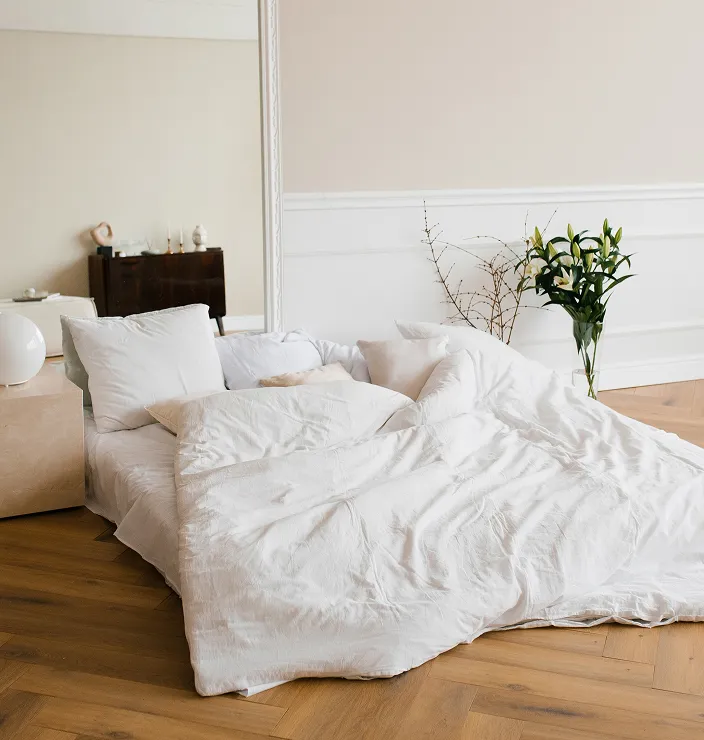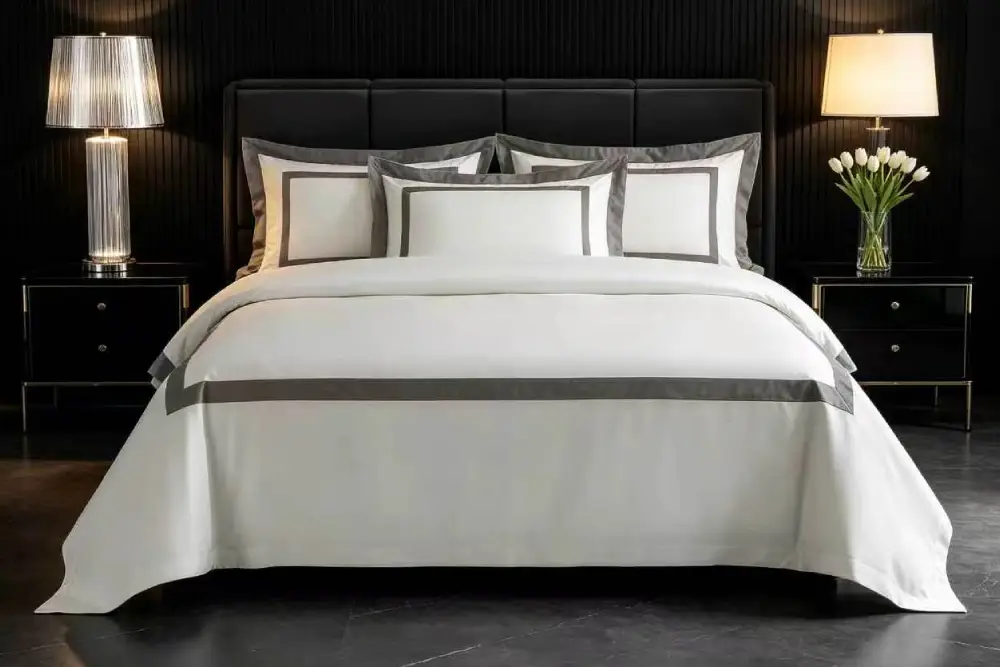
A person spends about a third of their life in bed. So do millions of tiny pests. A bed is warm, damp, and full of food. That makes it a perfect home for dust mites and the allergens they leave behind. This guide explains how to keep bedding allergen-free, written from a bedding maker’s point of view.
The truth is simple. A bed can never be fully allergen-free. But the right fabric, washing, and care can cut allergens by a lot. This guide covers what really lives in a bed, how it affects health, which fabrics help, and the easy routine that keeps a bed clean.
Dust Mites & Hidden Allergens: What’s Really Living in Your Bed
A bed holds more than dust mites. It also holds other allergens, such as pet dander, pollen, and mold. Dust mites are the main offender, but they are not alone. Knowing what hides in a bed is the first step to a cleaner one.
Why Your Bed Is a Dust-Mite Paradise
A bed gives dust mites all three things they need: warmth, moisture, and food. Dust mites are tiny bugs, far too small to see. One mite is about 0.3 millimeters wide. About 50 of them could sit on a pinhead. They do not bite or sting. Instead, they eat the dead skin that people shed. A person sheds about 1.5 grams of skin each night. That is enough to feed a million mites.
Dust mites do not drink water. They soak it up from the air. So they love warm, damp rooms. They breed fast at about 70°F to 77°F (21°C to 25°C). A used mattress can hold 100,000 to 10 million mites. That number sounds scary. But every part of it can be controlled.
Beyond Dust Mites — Dander, Pollen, Mold & Sweat
Dust mites are not the only problem in a bed. Other allergens hide there too, such as pet dander, pollen, and mold spores. Pet dander floats in from cats and dogs. Pollen rides in on hair and clothes. Mold grows where the air stays damp.
Sweat ties all of this together. Each night, a body gives off heat and sweat. This makes the bed warm and wet. That is the exact climate mites and mold like. So moisture is the key link. Most of these allergens grow worse when a bed stays damp. The Asthma and Allergy Foundation of America (AAFA) reports that about 8 in 10 U.S. homes have dust mite allergen in at least one bed. This is why drying out a bed matters so much, as the routine section will show.
Signs Dust Mites & Allergens Are Affecting You
Allergen symptoms often show up at night and in the morning. Common signs include sneezing, a runny nose, and itchy eyes. Others are coughing, a stuffy nose, and watery eyes. For people with asthma, dust mites are a top indoor trigger. They can cause wheezing and tight breathing. They can also make eczema flare.
Most of this contact happens during sleep. Dust mite allergen sits deep in fabric and does not float for long. So a person breathes it in while lying in bed. That is why symptoms often feel worse in the bedroom. Anyone with strong or lasting symptoms should see a doctor. This article is for learning, not for diagnosis.
Can Dirty Pillows & Sheets Cause Acne & Breakouts?
A dirty pillow does not directly cause acne, but it may make skin worse. No study proves that a dirty pillowcase causes acne. Still, a pillowcase picks up oil, sweat, dead skin, and bacteria. The face rests on it for hours each night. That buildup can clog pores and rub the skin. The result may be more breakouts or irritation.
Clean bedding helps lower that risk. Skin doctors suggest washing a pillowcase once a week. For oily or acne-prone skin, every two or three days is better. So a fresh pillowcase will not cure acne. But good bedding habits can support clearer, calmer skin.
What Is Allergen-Free Bedding?
Allergen-free bedding means bedding that holds very few allergens. No bedding can ever be 100% allergen-free. The phrase really means bedding that is built, washed, and cared for in a way that keeps allergens very low. To shop well, it helps to cut through the marketing words first.
Allergy-Proof vs. Allergen-Free vs. Hypoallergenic — What’s the Difference?
These three words sound the same, but they are not. “Allergen-free” and “allergy-proof” are mostly marketing terms. No fabric can block every allergen or kill every mite. So these words really mean “much lower allergen levels.” “Hypoallergenic” means “less likely to cause an allergic reaction.” It is not a legal or tested term. It does not promise lab testing or a certificate. The smart move is to look past the label and focus on how the fabric is built and washed.
How Anti-Mite & Hypoallergenic Fabrics Actually Work
Anti-mite fabrics work through three plain things: a tight weave, hot washing, and dryness. A tight weave blocks mites and allergen bits, so they cannot sink into the cloth. Hot washing kills mites and rinses allergens away, so the fabric must handle heat many times. Good moisture control keeps the bed dry, which gives mites no water to grow.
Certificates add one more layer. A label like OEKO-TEX Standard 100 means the fabric has no harmful chemicals. But “no harmful chemicals” is not the same as “anti-mite,” so keep those two ideas apart. For zip-on, mite-proof covers, the weave needs pores under 10 microns. The best are under 6 microns. That is small enough to stop mites, allergens, and dander.
Best Bedding Materials for Dust Mite Allergy
The best bedding materials for dust mite allergy are tightly woven and easy to wash hot. Cotton, bamboo, and linen all fit this need well. Each fiber has its own pros and cons. But as the sections below show, the weave and the care matter more than the fiber name.
Is Cotton Hypoallergenic?
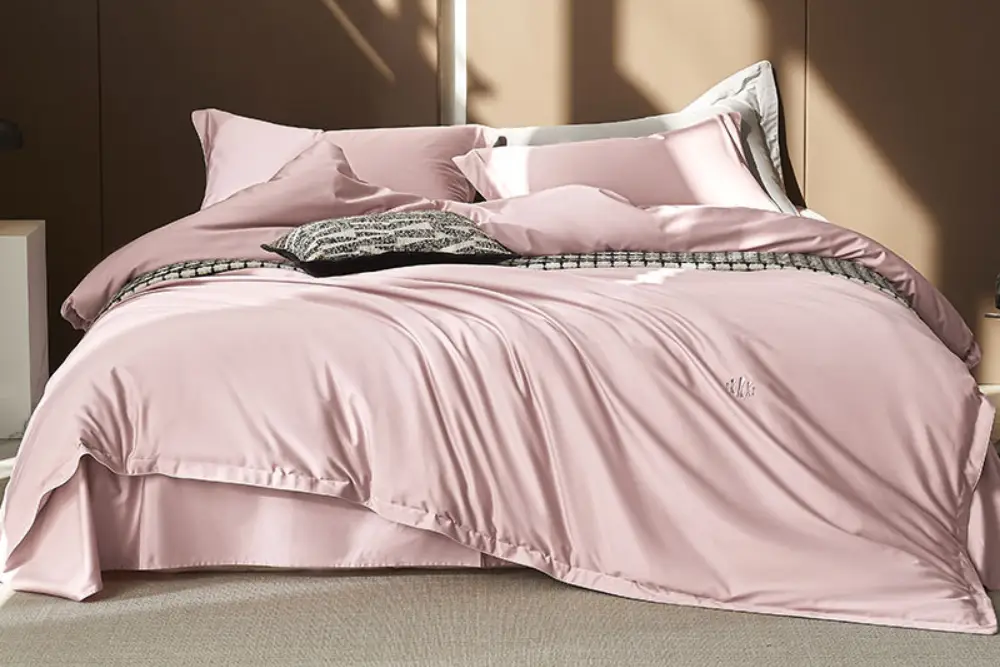
Cotton is a strong choice for allergy-prone sleepers, though it is not fully hypoallergenic. Cotton is soft, breathable, and easy to wash hot. Hot washing is the main way to kill dust mites, so cotton has a real edge here.
But cotton also soaks up sweat and oil. A loose, rarely washed cotton sheet can still host mites. So the result depends on two things: a tight weave and frequent hot washing. A dense cotton with a higher thread count (e.g., 400TC, 500TC, or 1000TC) holds up best.
Is Bamboo Hypoallergenic?
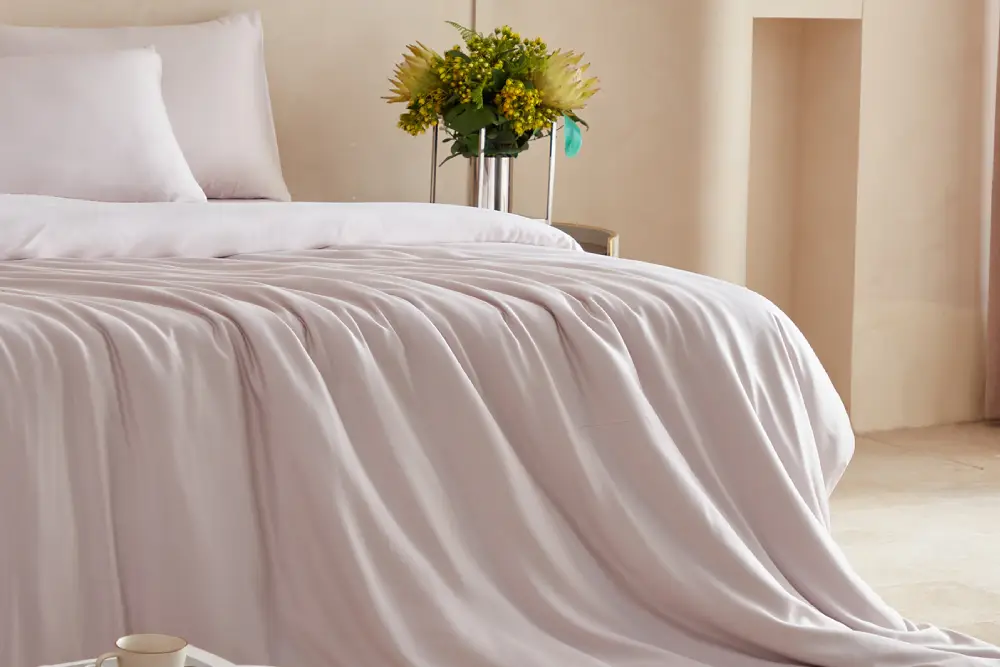
Bamboo is often described as hypoallergenic because it wicks moisture and stays dry. Bamboo fabric comes from bamboo pulp, usually made into viscose or lyocell. It feels smooth, light, and cool. It pulls moisture away from the skin, and a drier bed is less friendly to dust mites.
Bamboo is also sold as naturally antibacterial. The drying benefit is real and useful. But broad “antibacterial” claims should stay modest. Like all bedding, bamboo still needs regular hot washing to keep mites and allergens in check.
Is Silk Hypoallergenic?
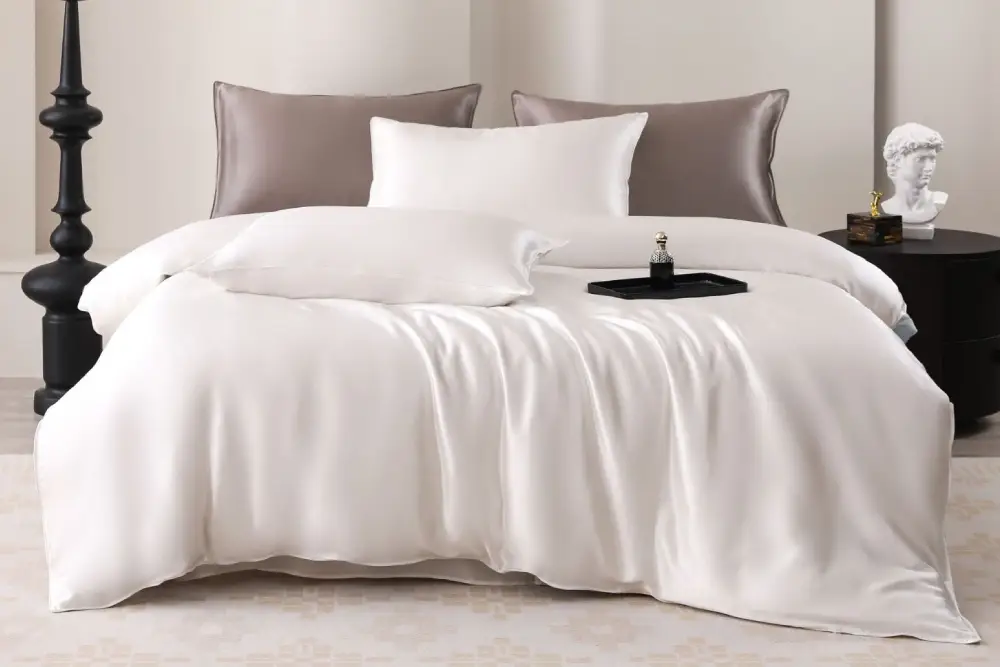
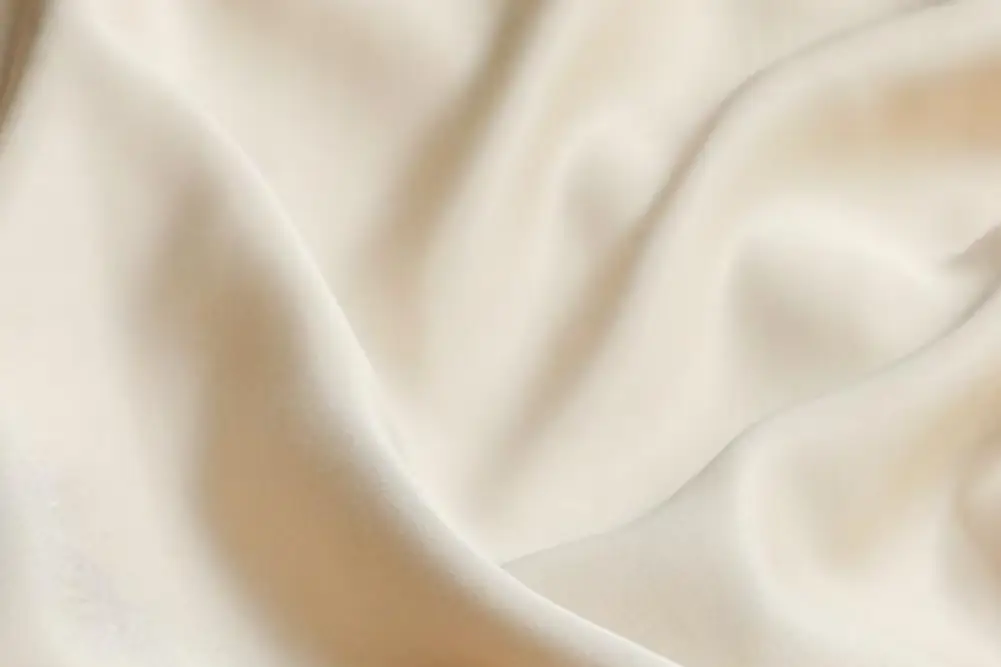
Silk resists mites and mold by nature, but it is hard to clean with heat. Silk has a smooth, tight surface and holds little moisture. Mites and mold struggle to settle on it. Its low friction is also gentle on skin and hair.
The downside is care. Silk is delicate and usually needs cool or hand washing. That makes hot, mite-killing washes hard to do. So silk suits people who want a soft, smooth feel. It works best next to a hot-washable layer that can take care of deep cleaning.
Is Linen Hypoallergenic?
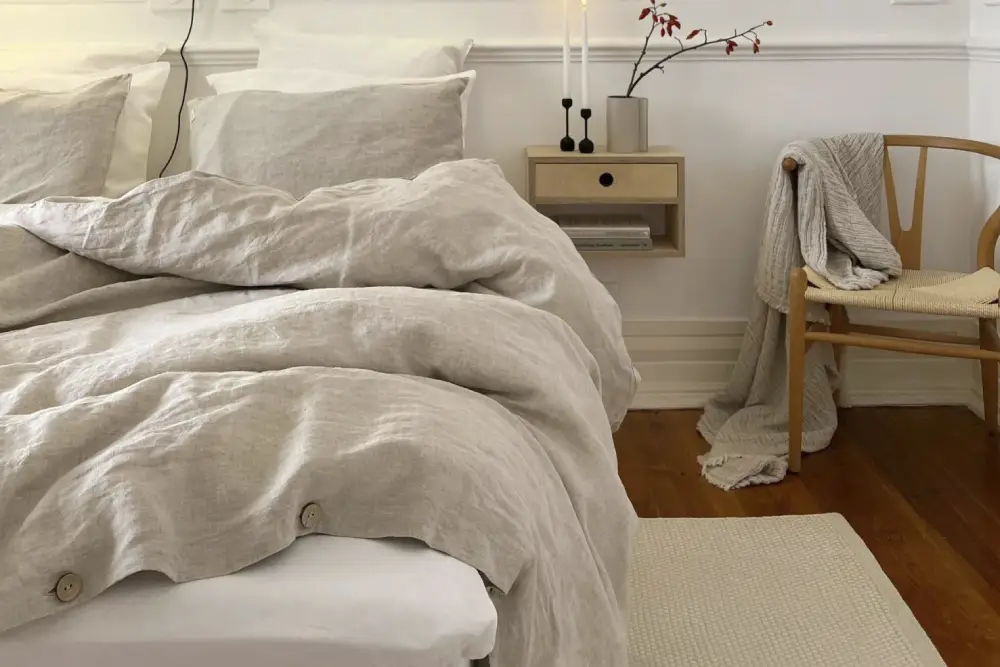
Linen is a smart pick for allergy-prone sleepers because it dries fast. Linen comes from the flax plant. It is very breathable and pulls moisture away well. It also dries quickly, which gives mites less water to grow.
Linen is tough, too. Like cotton, it handles frequent hot washing. It even gets softer with each wash. So from a moisture view, linen keeps a bed cool, dry, and less mite-friendly over time.
Which Material Is Best — and What Matters More Than Fabric
No single fiber is the “best” anti-mite material. How the bedding is built and washed matters more than the fiber name. Four things decide if bedding resists allergens: a tight weave, hot-wash durability, good airflow, and a safe-chemical certificate.
Measured this way, a dense cotton built to last hundreds of washes beats a loose fabric that only claims to be “anti-mite.” In short, build quality beats marketing words. A well-made duvet cover set in cotton, bamboo, or linen can check all of these boxes at once.
Your Allergen-Free Bedding Routine: Wash, Encase & Replace
A good routine has three parts: wash often, encase the bed, and replace old items. Each part does a different job. Together, they keep allergens low week after week. The sections below break down each step.
Wash Sheets, Pillowcases & Duvet Covers on the Right Schedule
Wash sheets, pillowcases, and duvet covers once a week. Top allergy groups agree on this, such as the AAFA, Mayo Clinic, and the American College of Allergy, Asthma & Immunology. Weekly washing keeps dust mite allergen low.
People with oily or acne-prone skin can swap pillowcases more often. Every two or three days helps cut the oil and bacteria that press against the face each night.
Wash Hot & Dry Thoroughly to Kill Dust Mites
Wash bedding in hot water of at least 130°F (54°C) to kill dust mites. Heat is what does the work, since warm or cold water will not kill mites. Research shows about 55°C is the lowest temperature that reliably kills house dust mites.
Some items cannot take hot water. For those, dry them on high heat for at least 15 minutes, which kills the mites. Then a normal wash rinses the allergens out. For items that cannot be washed at all, seal them in a bag and freeze them for 24 hours. Freezing kills the mites, but it does not remove the allergen.
One note on safety: many home water heaters are set near 120°F to avoid burns. A hot dryer cycle is a safe way to reach mite-killing heat. This is also why bedding needs to survive many hot washes without falling apart.
Encase Mattresses & Pillows in Allergen-Proof Covers
Zip allergen-proof covers onto the mattress and pillows to lock allergens in. These covers are one of the most useful single steps. They seal old allergens inside and stop new mites from moving in. The AAFA and Mayo Clinic both note that covers work better than air cleaners for dust mites.
A good cover has a tight weave with pores under 10 microns. Studies, including work linked to Johns Hopkins, found that allergen can drop by 90% or more within a month of using covers. The covers themselves need washing only a few times a year. Set fair hopes, though. Covers alone bring clear relief to about 30% to 40% of people, so they work best as part of the full routine.
Replace Pillows & Duvets Before They Become Allergen Traps
Replace pillows every 1 to 2 years and duvets as they wear out. Over time, pillows and duvets fill with dead skin, mites, and mite waste. A few simple timelines help: replace pillows every 1 to 2 years, wash the pillow itself about every 3 months, and replace a mattress every 8 to 10 years.
The buildup is easy to miss. A pillow can gain about 10% in weight after just one year. That extra weight is mites, waste, and shed skin. So replacing old bedding is part of allergen control, not just comfort.
Follow This 10-Minute Weekly “Wash & Refresh” Routine
A full weekly reset takes about 10 minutes of real work. The steps are easy to repeat:
- Strip the bed, wash all bedding in hot water, and dry it well on high heat.
- While it washes, vacuum the mattress with a HEPA vacuum.
- Open a window or run a dehumidifier to dry out the room.
- Each season, wash the covers and pillow inserts, and replace pillows when they wear out.
Done each week, this short habit cuts allergen contact by a lot. An allergen-free bed is more about a steady routine than about costly gadgets.
Common Mistakes That Sabotage Allergy-Free Sleep
Even careful cleaners make small mistakes that undo their work. The most common ones are easy to fix:
- Washing too cool. Water under 130°F does not kill mites. Heat is what kills them.
- Drying poorly. Damp bedding invites mites and mold right back.
- Cleaning only the sheets. The mattress, pillow inserts, and duvet inserts hold the most allergen, so skipping them leaves the problem in place.
- Trusting the label. A “hypoallergenic” tag means little if the fabric is loose and cannot take hot washing.
- Letting the room stay humid. Above 50% humidity, mites thrive even with frequent washing.
- Making the bed too soon. Sealing the duvet right after waking traps night sweat and moisture.
- Using harsh detergent. Strong scents and residue can irritate sensitive skin.
Avoiding these traps is often what separates a routine that looks clean from one that truly lowers allergens.
Beyond Bedding — Allergy-Proofing Your Whole Bedroom
Bedding is only part of the job. The whole bedroom shapes how many allergens build up. A few room-wide habits make every washing and fabric choice work better.
Control Humidity to Stop Mites & Mold
Keep indoor humidity below 50% to slow dust mites and mold. This is the single most important room habit. Mites take water from the air, not from drinking, so a dry room makes it hard for them to breed. The American Lung Association calls humidity the top factor in how many mites a home holds.
Simple tools help, such as a dehumidifier, an air conditioner, and good airflow. It also helps to avoid drying wet laundry inside the bedroom, since that adds moisture to the air.
Vacuum, Dust & Purify the Air
Vacuum and dust often to keep allergens from building back up. Vacuum once or twice a week with a HEPA filter, which traps fine dust instead of blowing it around. Damp dusting and damp mopping also trap dust well.
A HEPA air purifier can help with floating particles. One key point: dust mite allergen settles fast and does not float long. So covers and washing help more against mites than a purifier does. Air purifiers do more against light, floating allergens, such as pollen, smoke, and pet dander.
Rethink Carpets, Curtains & Soft Furnishings
Soft items like carpets, curtains, and stuffed toys store allergens, so use fewer of them. These surfaces collect dust, dander, and mites. Where possible, choose hard floors with washable rugs over wall-to-wall carpet. Pick washable curtains that can handle hot water.
Cut clutter so allergens have fewer places to hide. Stuffed toys are a favorite mite home. Wash them weekly in hot water, or seal and freeze them to kill the mites.
FAQs
Can you ever completely get rid of dust mites?
No. Dust mites live in nearly every home, and no cleaning removes them all. The real goal is to reduce them, not erase them. Hot washing, allergen-proof covers, and low humidity together can push allergen levels very low. That low level is what eases symptoms for most people.
Is it better to leave your bed unmade?
It may help a little. Leaving the bed open after waking lets sheets air out and release night moisture. That can lower the damp air mites like. The effect is small on its own, so treat it as a minor helper, not a fix. Pair it with washing and humidity control for real results.
Can dust mites live in memory foam or latex mattresses?
Yes, mostly on the surface. Mites need food and moisture, so any surface with skin flakes can hold them. The dense inside of memory foam and latex is less welcoming than open springs. But the top layer and the bedding on it still gather skin and allergen. Covers and frequent washing remain the best defense.
Do dust mite allergies get worse in certain seasons?
Often, yes. Mites breed most in warm, humid months, so they peak in summer. Symptoms can also rise in fall and winter, when windows stay shut and indoor air grows stale. Unlike pollen, dust mites are a year-round indoor allergen, so bedding care matters in every season.
How soon will I notice relief after upgrading my bedding?
It varies by person. Studies show allergen levels can fall a lot within about a month of using covers and washing well. But how fast symptoms ease differs for each person. Most people need a few weeks and a full routine, so it is wise not to expect instant results.
Source Certified, Anti-Mite Bedding with RUHO Living
Allergen-resistant sleep starts with well-built bedding: tightly woven, hot-wash safe, moisture-wicking, and free of harmful chemicals. That is exactly what a skilled bedding maker can supply.
RUHO Living has produced bedding for over 20 years. It makes products such as duvet cover sets, pillows, sheets, and hotel linen. It works in breathable, moisture-wicking fibers, including cotton, bamboo, and linen. Its fabric meets OEKO-TEX Standard 100, BSCI, and ISO 9001 standards. OEKO-TEX Standard 100 confirms the cloth is free of harmful chemicals. Its bedding is also built to hold color, feel, and shape through 200+ wash cycles. That durability matters, because allergen control needs frequent hot washing.
For shoppers, the first step is simple: pick certified, tightly woven, hard-wearing bedding as the base of an allergen routine. For brands, retailers, and hotel buyers, RUHO Living offers custom (OEM/ODM) production. The minimum order starts at 50 sets per design, and sampling takes 7 to 10 days. This makes it easy to build a certified, anti-mite bedding line. Explore the full bedding product range or reach out to start a custom program.
Sources: Asthma and Allergy Foundation of America (AAFA); Mayo Clinic; American College of Allergy, Asthma & Immunology (ACAAI); American Lung Association; Allergy & Asthma Network; and general dermatology guidance on bedding hygiene.
Disclaimer: This article is for general learning only and is not medical advice. Anyone with strong or lasting allergy or skin symptoms should speak with a qualified doctor.