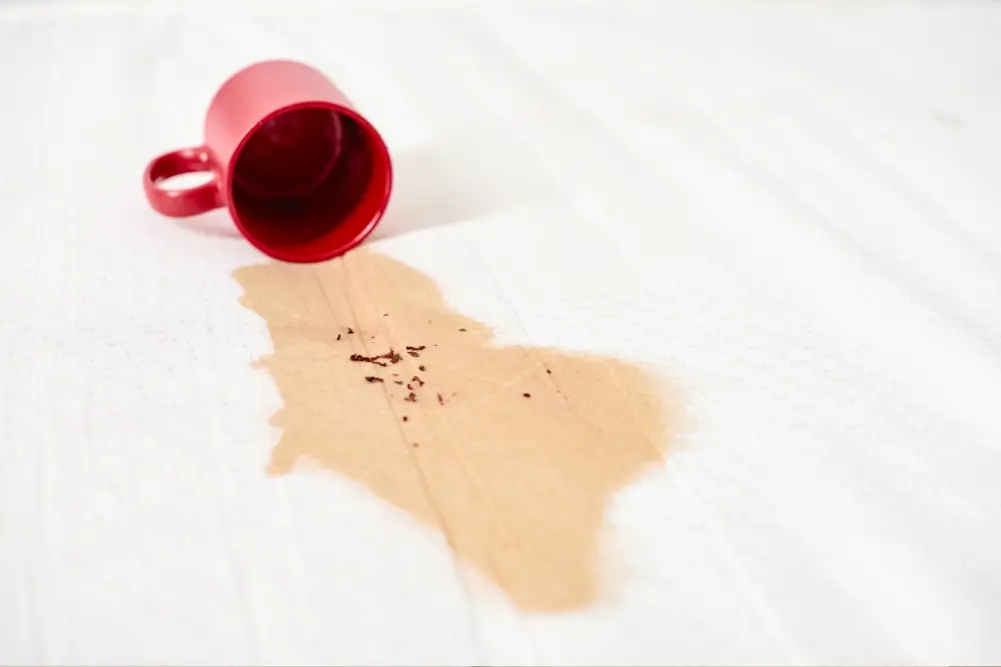
Bedding collects stains night after night, and the most common culprits are sweat and yellowing, blood, oil from skin and skincare products, and makeup. Because each of these stains behaves differently, each one calls for its own approach.
The central principle is straightforward: match the method to the stain, and act quickly before it sets. No single method works for everything, and choosing the wrong one can actually make a stain worse. Applying hot water to blood, for instance, can lock it into the fabric permanently.
The sections below explain the most reliable way to treat each type of stain. They also cover care advice by fabric, methods for keeping white sheets bright, and the habits that prevent stains before they start.
Quick-Reference Bedding Stain Chart (Key Takeaways)
When a stain is fresh, there is rarely time to read a full article, so the chart below offers the fast version. It lists the right water temperature, the best treatment, and the single thing to avoid for each common stain.
| Stain Type | Water Temperature | Go-To Treatment | What to Avoid |
| Sweat / Yellowing | Cool to warm | Oxygen bleach, white vinegar, baking soda, enzyme detergent | Chlorine bleach (it makes yellowing worse) |
| Blood | Cold only | Hydrogen peroxide, salt, enzyme cleaner | Hot water (it sets the stain) |
| Oil & Grease | Warm to hot (check the fabric) | Dish soap; baking soda or cornstarch to absorb the oil | Cold water (oil will not dissolve) |
| Makeup | Cool to warm | Micellar water, dish soap, makeup remover | Rubbing (it spreads the color) |
Before You Start — How to Remove Stains From Bed Sheets the Right Way
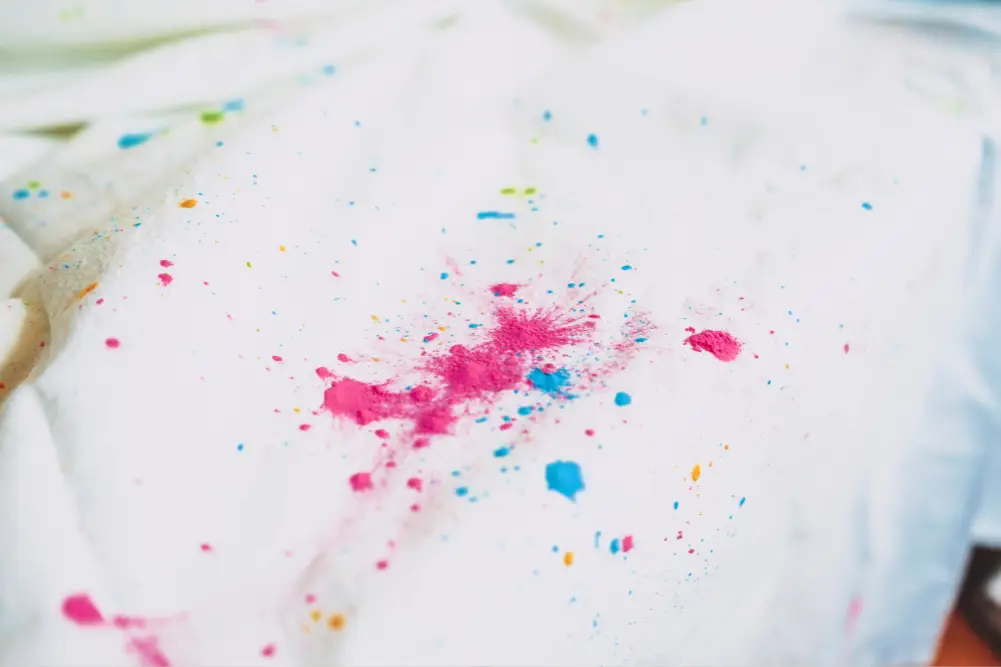
A handful of universal principles dramatically raise the success rate before any treatment begins, and these four steps apply to nearly every stain.
Identify the Stain Type First
Most bedding stains fall into three groups, and each group follows its own logic.
Protein stains such as sweat and blood respond best to cold water paired with enzyme cleaners, which are formulated specifically to break down proteins. Oil and grease stains, by contrast, require a degreaser such as dish soap along with warm water. Pigment and makeup stains need something that dissolves color, such as micellar water or a mild solvent.
Fresh stains are also far easier to handle than older ones. A set-in stain that has dried or aged usually demands longer soaking and several rounds of treatment.
Gather the Right Stain-Removal Supplies
Keeping the right supplies on hand makes the whole process faster, and a basic kit covers almost every stain a household will encounter:
- White vinegar
- Baking soda
- 3% hydrogen peroxide
- Liquid dish soap
- Enzyme laundry detergent
- Oxygen bleach (sometimes labeled sodium percarbonate)
- A soft brush or an old toothbrush
- Clean white cloths
- A spray bottle
A white cloth matters more than it might seem, because a colored cloth can transfer its own dye onto the sheet, whereas a white one will not — and it also makes the stain easy to see as it lifts.
Pretreat the Stain Right Away (Blot, Don’t Rub)
Blotting and rubbing are not the same thing. Blotting lifts the stain up and out of the fabric, while rubbing drives it deeper into the fibers and can damage the weave.
The most effective method is to blot gently while working from the outer edge of the stain inward, which prevents it from spreading. Any new treatment should be patch-tested on a hidden area first, especially on colored or delicate fabrics.
Choose the Right Water Temperature & Wash Settings
Water temperature can make or break the final result, so the following guide is worth keeping in mind:
- Cold water, around 30°C / 86°F or below, suits protein stains such as sweat and blood
- Warm water, around 40°C / 104°F, works for oil and everyday washing
- Hot water, 50–60°C / 140°F, belongs only on sturdy white cotton or when sanitizing is needed
The care label always comes first, since some fabrics cannot tolerate heat. One more rule matters just as much: bedding should never go into the dryer until the stain has fully disappeared. Dryer heat can bake a stain permanently.
How to Remove Sweat Stains From Bed Sheets (and Yellowing)
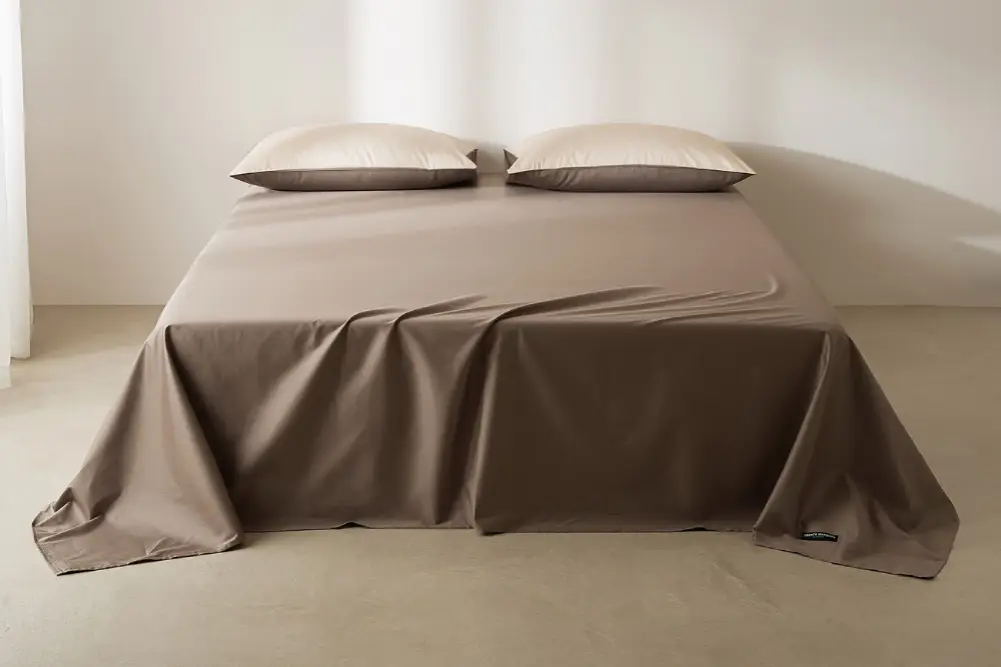
Sweat stains and yellowing share the same source: natural skin oils and perspiration build up over time and gradually turn the fabric yellow. On pillowcases, leftover hair products and skincare only compound the problem.
A few reliable methods handle most cases:
- Combine hydrogen peroxide, baking soda, and a drop of dish soap into a paste. Spread it over the stain and let it sit for 30 to 60 minutes, then brush gently and wash. Colored fabric should be patch-tested first.
- Soak the bedding in a white-vinegar solution before washing, using roughly one cup of vinegar in a basin of water.
- For stubborn, set-in yellowing, soak the item in oxygen bleach until the discoloration lifts.
Washing at the warmest temperature the fabric speeds things along, and line-drying whites in sunlight adds extra brightness. One caution stands out above the rest: chlorine bleach should never be used on sweat or yellowing. It reacts with the protein in sweat and turns the discoloration even darker.
How to Remove Blood Stains From Bed Sheets
Blood is a protein stain, so the rule is short and strict — cold water only. Hot water sets blood into the fabric and makes it nearly impossible to remove afterward.
For fresh blood, the first move is to rinse the fabric under cold water from the back. This pushes the blood out of the weave rather than deeper into it.
After that, a few treatments work well:
- Apply 3% hydrogen peroxide directly onto the stain, where it will foam up as it lifts the blood. Blot and repeat as needed, testing colored fabric beforehand.
- Soak the area in salt water, or work in a paste made from salt and a little cold water.
- Use an enzyme cleaner or enzyme detergent, which is especially effective at breaking down protein.
Dried blood demands more patience. Soaking it in cold water for anywhere from 30 minutes to several hours softens the stain. After that, an enzyme detergent or hydrogen peroxide can be worked in gently and repeated until the stain clears. As always, the item should not go into the dryer until the blood is completely gone.
How to Remove Oil & Grease Stains From Bedding (Body Oils & Lotions)
Oil stains usually originate from body oils, face and body lotions, and hair products. Because oil will not rinse out with water alone, it needs a degreaser to break it apart — and dish soap is formulated for precisely that purpose.
The method is straightforward:
- Blot away any excess oil first. On a fresh stain, sprinkle baking soda or cornstarch on top and leave it for at least 15 minutes to absorb the oil, then brush it off.
- Apply liquid dish soap directly onto the stain, work it in gently with a finger or soft brush, and let it sit for 10 to 15 minutes.
- Wash in the warmest water the fabric can handle, since warm water dissolves oil far better than cold.
For a stubborn oil mark, the treatment can be repeated, or a degreasing pretreatment can be used before washing.
How to Remove Makeup Stains From Bedding & Pillowcases
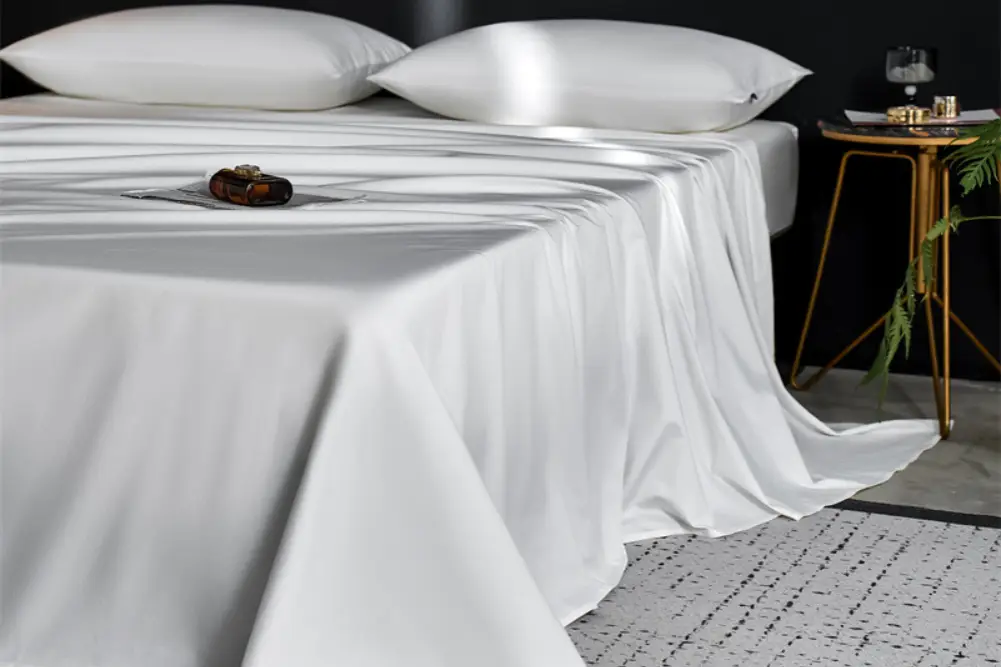
Makeup stains depend heavily on the product. Foundation and lipstick are usually oil-based, so they respond to the same approach as oil stains, while mascara and eyeliner are often waterproof and oily as well.
Here is a simple method:
- Blot away the excess makeup first, since rubbing only spreads the color and presses the pigment into the fibers.
- Dab the stain with a white cloth dampened with micellar water or makeup remover to dissolve the makeup. Micellar water is a gentle, water-based makeup-removing liquid.
- Treat any remaining oil with dish soap, then launder as normal.
Colored and silk pillowcases should always be patch-tested first. On delicate fabric, it also helps to rinse out any oily makeup-remover residue rather than leaving it to sit.
How to Get Stains Out of White Sheets & Restore Brightness
White sheets often turn dull or gray over time. The cause is usually a combination of leftover skin oils, a buildup of detergent and minerals, and the long-term effects of chlorine bleach.
Several gentle methods can restore white sheets to their original brightness:
- Soak them in oxygen bleach, which is gentle and works on a wide range of fabrics.
- Add about half a cup of baking soda to the wash, then add white vinegar to the rinse cycle to strip out detergent and mineral buildup.
- Dry whites in direct sun, since sunlight has a natural brightening effect — though this works for white fabric only, as colors will fade.
- Wash whites separately from colors.
Frequent chlorine bleach is best avoided, because over time it can yellow the fabric and weaken its fibers.
How Do Hotels Keep Their Sheets So White?
Hotels follow a strict, well-tested system. They rely on commercial high-temperature washing, professional-grade oxygen and peroxide bleaching, and softened water that prevents mineral dullness. They also measure detergent precisely, sort every load, treat stains promptly, and replace their linens on a fixed schedule rather than waiting for them to look worn.
There is one more reason their sheets stay crisp, and it lies in the fabric itself. Hotels begin with linens built to survive constant industrial washing, which means high thread counts and strong colorfastness. This is precisely where a supplier’s quality becomes visible. RUHO Living, a bedding manufacturer that has supplied hotel linens to international groups such as Hilton and Sheraton, engineers its fabrics to withstand exactly this kind of heavy, repeated laundering.
Bedding Stain Removal by Fabric Type — Cotton, Linen, Bamboo & Silk
The right treatment also depends heavily on the fabric, since the same stain remover that is perfectly safe on cotton can ruin silk. The guidance below covers the fabrics found in most bedding.
Cotton is the most durable and the most forgiving of all bedding fabrics. It tolerates warm or hot water as well as oxygen bleach, which makes it the easiest material to treat for stains.
Linen is strong yet should still be handled with a gentle touch, which means warm or cool water and a mild detergent. Chlorine bleach should be avoided, since it weakens and yellows linen over time, while air-drying suits the fabric well and it grows softer with every wash.
Bamboo, made from bamboo viscose or rayon, is considerably more delicate. It performs best on a cool or warm gentle cycle with a mild, pH-neutral detergent, and bleach should be skipped entirely. Drying belongs on low heat or by air, and aggressive scrubbing should be avoided.
Silk is the most delicate fabric of all and requires cool water alongside a silk-specific or pH-neutral detergent. Chlorine bleach, oxygen bleach, and hydrogen peroxide should never touch it. Enzyme detergents are equally problematic, because enzymes break down protein fibers and silk itself is a protein fiber. Silk should be blotted rather than wrung, then air-dried away from direct sunlight.
Choosing a well-made fabric — a quality cotton, linen, or bamboo set, for example — already shifts the odds in one’s favor. Following the care that fabric requires makes stains far easier to handle and keeps bedding looking better for much longer.
How to Prevent Bedding Stains in the First Place
The easiest stain to remove is the one that never happens, and a few simple habits keep bedding cleaner for far longer:
- Rinse off body oils and sweat before bed, and remove makeup before sleeping.
- Allow lotions and serums to absorb fully before lying down.
- Avoid eating and drinking in bed.
- Wash sheets every one to two weeks, with weekly being ideal, and launder pillowcases more often — every few days — since they collect the most facial oil.
- Use a mattress protector along with pillow protectors.
- Rotate between two sets of sheets to spread out the wear.
- Treat any stain right away, before it has time to set or dry in.
When to Replace Your Bedding: Sheets, Pillowcases, Quilt Covers
Even with attentive care, bedding does not last forever. As a rough guide, sheets last about two to three years, and pillowcases wear out around the same time as the sheet set. Pillow inserts last roughly one to two years, while a good-quality duvet or quilt cover can last five years or more.
A few clear signs indicate that it is time to replace bedding: stains or yellowing that will not wash out, fabric that has grown thin or see-through, pilling, tears, a fitted sheet whose elastic no longer holds, a smell that will not leave, and a noticeable loss of softness.
Durable, well-made fabric simply lasts longer before it reaches that point. When the time comes to replace worn-out bedding, a quality sheet set built to retain its color and feel through hundreds of washes is a sound long-term investment.
FAQs
Can I still remove a stain after it’s been through the dryer?
It is more difficult, but often still possible. Dryer heat bakes the stain into the fibers, and once that happens a stain sometimes cannot be removed completely. Even so, it is worth attempting. The fabric can be re-wet and treated with the method that matches the stain type — enzymes or peroxide for protein, dish soap for oil. From there it should be soaked and worked gently, with the treatment repeated several times if needed. The item should be air-dried and inspected before any further drying. The safest habit by far is to always check for stains before reaching for the dryer.
Will bleach damage my sheets or weaken the fibers over time?
Chlorine bleach is harsh, and repeated use can weaken fibers, cause yellowing, and damage elastic. Oxygen bleach, also known as sodium percarbonate, is a gentler alternative that brightens fabric with far less damage. It still works best when diluted and used according to the care label, and it should never be applied to silk, wool, or bamboo.
Conclusion — Keep Your Bedding Fresh, Clean & Long-Lasting
Most bedding stains will come out with the right approach. The key points are easy to remember: act quickly, identify the stain type, match both the water temperature and the method, blot instead of rubbing, and never dry an item until the stain is completely gone. Caring for bedding according to its fabric type protects that investment over the long run.
Consistent prevention and correct care keep bedding cleaner and noticeably extend its life. It helps just as much to start with the right fabric in the first place. Quality, well-made bedding — like the durable fabrics RUHO Living produces — stays cleaner, holds its color, and lasts longer through every wash.