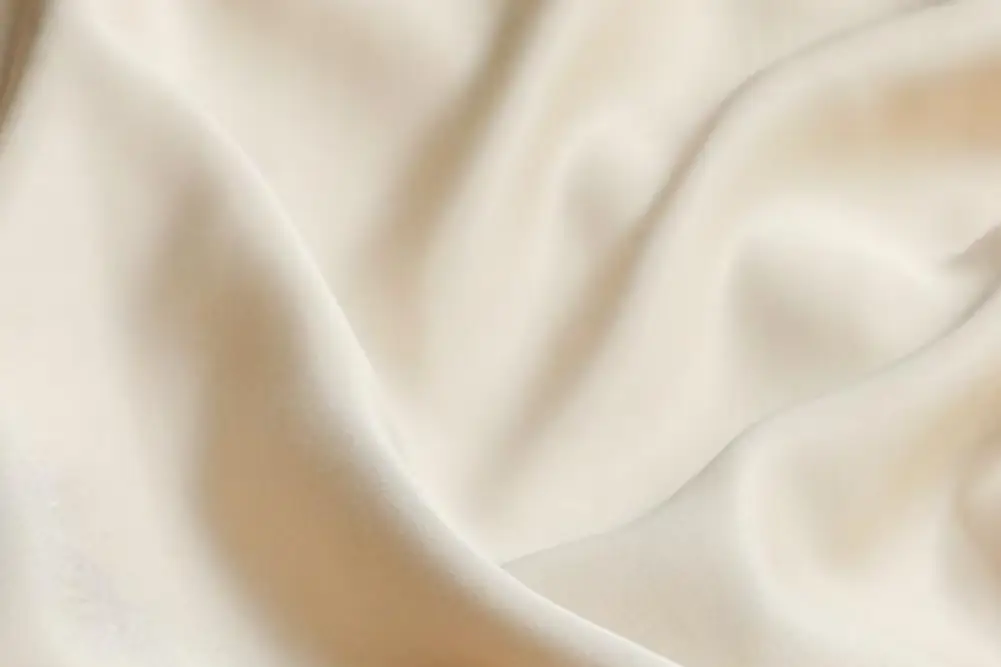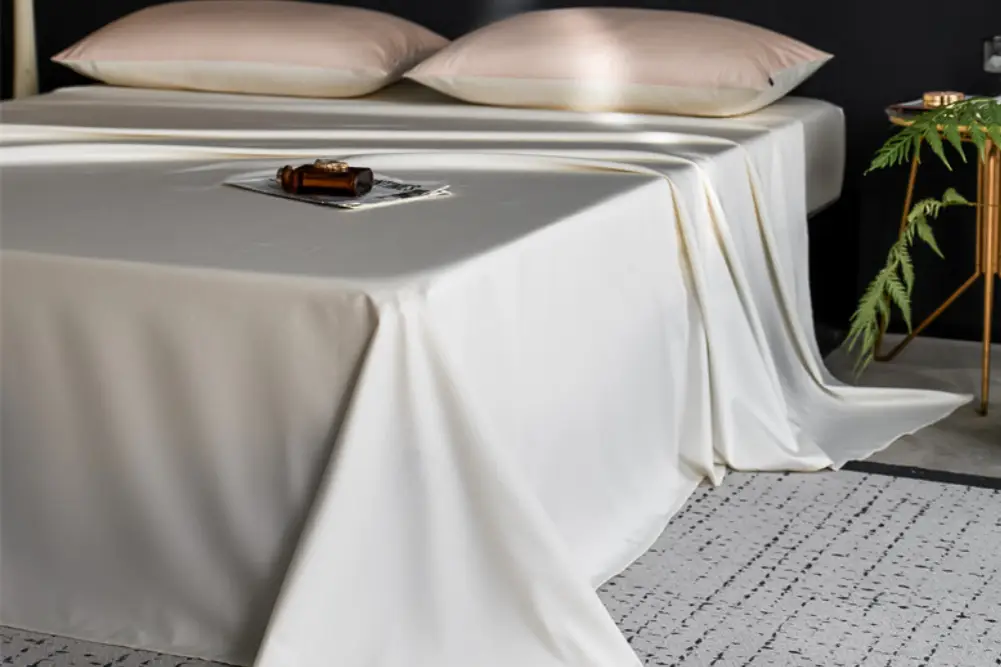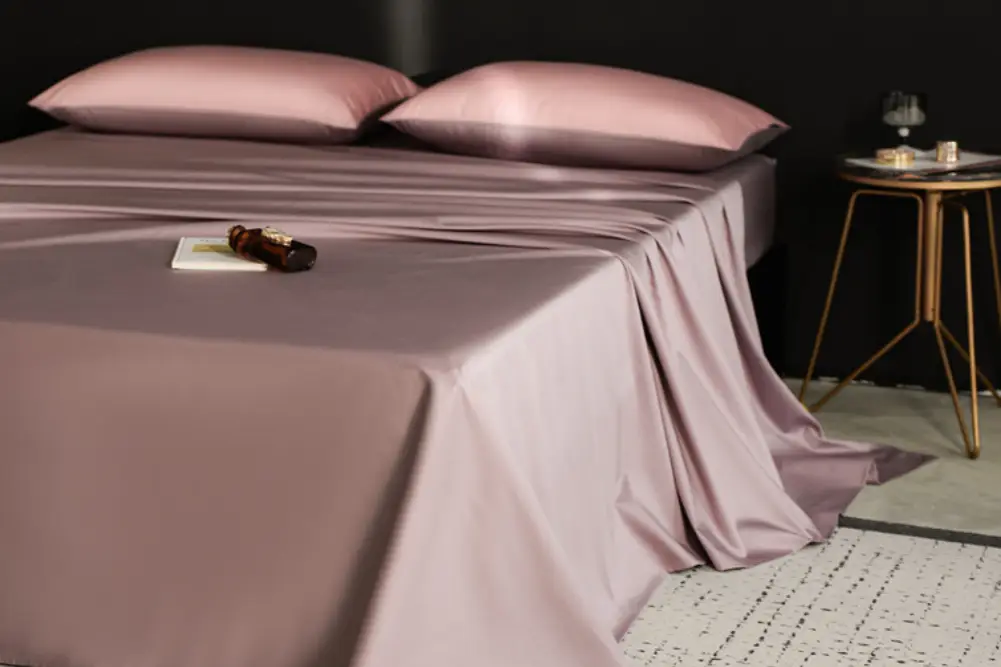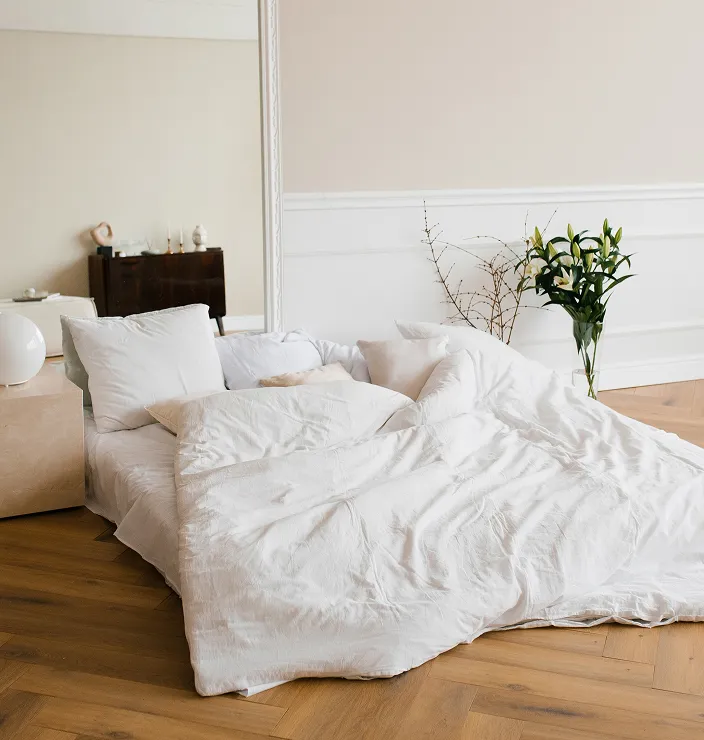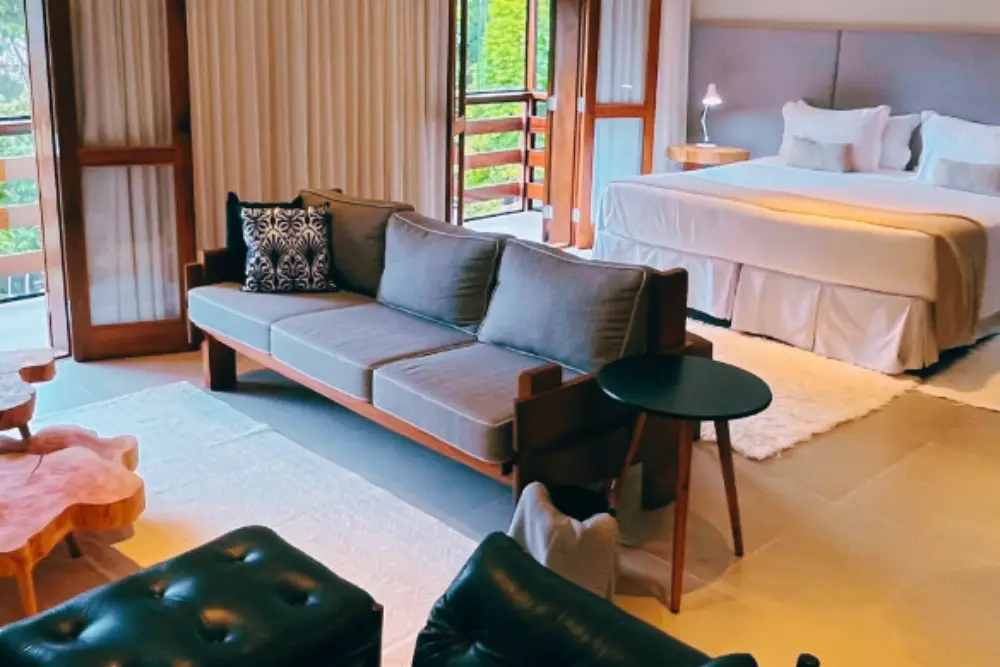
Guests form a first impression of a hotel room within seconds, and the bed is the centerpiece of that impression. For hotel buyers, choosing the right bedding is not just about comfort — it directly affects guest satisfaction scores, online reviews, and repeat bookings. Yet the market is flooded with fabric types, specifications, and suppliers, making the decision feel overwhelming.
This guide walks through the complete 6-layer hotel bed-making system, the technical standards that truly matter (thread count, GSM, weave), a practical framework for choosing the right bedding based on star rating and climate, and clear guidance on vetting suppliers. Whether a property serves business travelers or leisure guests, this article provides the operational logic needed to make smarter purchasing decisions.
What Makes Hotel Bedding Different from Regular Bedding
Hotel bedding and household bedding may look similar on the surface, but they serve very different demands. Understanding these differences is the first step toward making informed purchasing decisions.
Wash durability is the most critical distinction. Hotel bedding must withstand industrial laundering at water temperatures of 60–75 °C, often multiple times per week. Household bedding, by contrast, is washed at low frequency in a standard home machine. This means hotel fabrics need tighter weaves and stronger fibers to maintain their appearance over hundreds of wash cycles.
Standardization and consistency matter enormously in hospitality. A hotel needs every room to look and feel the same — uniform color, texture, and hand feel across an entire batch. Home buyers have no such requirement and can mix and match freely.
Hygiene compliance adds another layer of complexity. Hotels must meet local health regulations, such as OEKO-TEX certification in Europe or guidelines set by hospitality industry bodies in other regions. These certifications ensure that textiles are free from harmful substances and safe for repeated skin contact.
The cost model is fundamentally different as well. Hotels calculate “cost per use” rather than unit price. A sheet set that costs more upfront but lasts 200 industrial wash cycles is far more economical than a cheaper option that pills and fades after 50 washes.
The goal of this guide is to help readers make purchasing decisions based on hotel-operations logic rather than consumer logic.
The Core Layers of Hotel Bedding
A professionally made hotel bed follows a standard 6-layer system, arranged from closest to the mattress to the outermost decorative layer. Each layer serves a distinct functional role — protection, comfort, warmth, or visual appeal.
Layer 1 — Mattress Protector & Mattress Pad
The mattress protector sits directly on the mattress. Its primary functions are waterproofing and dust-mite prevention, both of which extend the mattress lifespan significantly. TPU-laminated fabric is the preferred choice because it is more breathable than PVC alternatives. The protector should fully encase the mattress, either in a fitted or full-encasement style.
The mattress pad sits on top of the protector and adds a comfort buffer. Common fills include polyester fiber or cotton, typically in the range of 200–400 GSM. The pad smooths out any unevenness in the mattress surface and adds a soft layer that guests can feel immediately.
For replacement timing, protectors should be swapped every 3–6 months, while pads typically last 6–12 months depending on wear and laundering frequency.
Layer 2 — Sheets (Fitted & Flat)
Sheets are the layer guests interact with most directly, making fabric selection critical.
Cotton remains the gold standard. Egyptian cotton, with its extra-long staple fibers (fiber length ≥ 35 mm), is the premium choice known for exceptional softness and durability. Supima cotton (American Pima) offers strong value as a mid-tier option with similar long-staple benefits.
Poly-cotton blends (T/C) are widely used in economy and midscale hotels. Common ratios include 60/40 or 50/50 (polyester/cotton). The advantages are clear: wrinkle resistance, wash durability, and lower cost. These blends are ideal for properties focused on operational efficiency.
Bamboo fiber and Tencel are excellent moisture-wicking options suited for hotels in tropical climates. They feel cool against the skin and manage humidity well.
For color, white is the industry gold standard. White sheets are easy to bleach, sanitize, and visually standardize across rooms. If a property uses colored sheets, the dye fastness should be Grade 4 or above to prevent fading during industrial laundering.
One often-overlooked detail: the fitted sheet’s pocket depth must match the mattress thickness. Most hotel mattresses require a pocket depth of 25–38 cm (10–15 inches).
Layer 3 — Blanket or Coverlet
Blankets are typically thermal-weave cotton or acrylic, providing light warmth in air-conditioned rooms. They sit between the flat sheet and the duvet or comforter.
Coverlets are lightweight decorative bed covers common in American-style bed-making. They are placed on top of the flat sheet and beneath the duvet, adding a clean visual layer.
For tropical or summer hotels, a coverlet alone may replace the duvet entirely. In colder climates, layering both a blanket and a duvet provides flexible warmth control for guests. The recommended weight range for blankets is approximately 200–350 GSM.
Layer 4 — Duvet or Comforter
This is the primary warmth layer, and the choice between a duvet and a comforter has significant operational implications.
A duvet is an insert used with a removable duvet cover. The cover can be laundered after each guest checkout while the insert itself needs only quarterly professional cleaning. This system is preferred by most hotels for its hygiene efficiency. Fills include down (goose or duck) and synthetic options like microfiber.
A comforter is a one-piece construction with no separate cover. It is more common in economy hotels and short-term rentals because it simplifies bed-making, though it requires more frequent full laundering.
Key parameters to evaluate include:
- Fill power (loft): The typical hotel range is 600–800+. Higher fill power means lighter weight with greater warmth — a quality guests notice immediately.
- Fill weight: This should be chosen based on climate. Tropical properties typically use 200–300 g/m², while temperate climates call for 400–600 g/m².
- Construction: Baffle box construction prevents fill from shifting and clumping. It is preferred by upscale hotels over sewn-through quilting, which creates thin spots along stitch lines.
For maintenance, using a duvet cover significantly reduces washing frequency. The duvet shell itself should be professionally laundered or dry-cleaned once per quarter.
Layer 5 — Pillows (Function & Style)
Pillows directly affect sleep quality, making them one of the most guest-sensitive bedding components.
Down pillows are soft and fluffy with a fill power of 500–700. They suit upscale properties where guests expect a cloud-like feel. Synthetic pillows are low-cost and machine-washable, making them practical for budget hotels with high turnover. Memory foam and latex pillows offer firm support but are not universally preferred; they work best as an alternative option offered alongside standard pillows.
The typical standard is 2 pillows per guest — one sleeping pillow and one decorative or spare. Luxury hotels often go further by offering a pillow menu with multiple firmness and fill options.
Pillows should be replaced every 6–12 months depending on usage frequency. A simple “fold test” helps determine timing: fold the pillow in half and release it. If it does not spring back to its original shape, it is time for a replacement.
Layer 6 — Decorative Finishing Touches
The final layer includes bed runners, throw pillows, and bed skirts. These items enhance visual depth and reinforce brand identity.
Practical advice for this layer: all decorative items should be removable and washable. Dark or patterned fabrics work well for bed runners because they conceal minor stains between laundering cycles. Throw pillows should be limited to 2–3 per bed to avoid inconveniencing guests who must move them before sleeping.
Hotel Bedding Standards by Star Rating
While exact criteria vary by country and rating body (such as Forbes Travel Guide or local tourism bureaus), the following tiers represent widely accepted conventions in the hospitality industry.
3-Star / Economy: Poly-cotton blend (T/C 50/50), 200–250 thread count, synthetic-fill duvet, synthetic pillows. The baseline expectation is clean, tidy, and functional.
4-Star / Upper-Midscale: 100% cotton or high-cotton blend (T/C 80/20), 300–400 thread count, percale or sateen weave, mid-loft down duvet (fill power 600+). Guests at this level expect a noticeable upgrade in fabric softness and bed presentation.
5-Star / Luxury: Extra-long-staple cotton (Egyptian or Supima), 400–600 thread count sateen, high-loft goose-down duvet (fill power 700–800+), pillow menu, and full customization available. Every tactile detail matters at this tier.
These ranges serve as a general reference. Buyers should always verify the specific standards required by their rating body or brand guidelines.
Thread Count, GSM & Weave — Standards That Actually Matter
Many buyers focus too heavily on thread count alone, when in reality GSM and weave type are equally — if not more — important to fabric performance.
Thread Count
Thread count (TC) is the total number of warp and weft threads per square inch of fabric. The practical range for hotel use is 200–600 TC. Products marketed above 600 TC often rely on multi-ply yarn counting, which inflates the number artificially. The tactile improvement above 600 TC is negligible, and breathability may actually decrease.
It is worth noting that thread count and yarn count are two entirely different metrics. Yarn count (expressed as 40S, 60S, 80S, etc.) measures the fineness of the yarn itself — the higher the number, the finer and smoother the yarn. Hotel-grade cotton fabrics typically range from 40S to 100S. Thread count, on the other hand, measures how many of those yarns are woven into each square inch. A fabric made from 60S yarn can have a thread count of 300 or 400 depending on weave density. Confusing the two often leads to misaligned expectations during sourcing.
The recommendation is straightforward: do not evaluate TC in isolation. Cross-reference yarn count and ply (single ply vs. two ply) to assess true quality. A single-ply 400 TC sheet typically outperforms a two-ply 800 TC sheet in both feel and durability.
GSM
GSM stands for grams per square meter and measures fabric thickness and density. Reference ranges include:
- Sheets and duvet covers: 120–180 GSM for lightweight and breathable options; 200–300 GSM for heavier, denser fabrics.
- Bath towels (for comparison): 400–700 GSM.
Higher GSM does not automatically mean better quality. Selection should factor in climate and guest preferences. A heavy 300 GSM sheet may feel luxurious in a cold-climate hotel but uncomfortably warm in a tropical resort.
Weave
Three common weave types dominate the hotel market:
Percale uses a plain weave that produces a crisp, cool hand feel. It is ideal for tropical and summer settings. A thread count of 200 or above already yields a pleasant touch with percale.
Sateen uses a satin weave structure that creates a smooth, lustrous surface with a silky feel. It suits luxury positioning well but has one drawback: it is more prone to pilling with extended use.
Twill uses a diagonal weave pattern that delivers strong durability and wrinkle resistance. It is commonly used in midscale hotels where practical performance matters most.
The best approach is to choose weave based on hotel positioning and climate rather than blindly pursuing a high thread count.
How to Choose the Right Hotel Bedding
Now that the materials and specifications are clear, here are five decision dimensions to consider during actual product selection.
Identify the Hotel’s Star Rating & Guest Expectations
The first step is to clarify the property’s positioning and target guest segment — business travelers, leisure guests, or budget-conscious backpackers. Guest expectations directly dictate the fabric tier and bed-making style. The star-rating standards outlined above provide a solid starting point for alignment.
Select the Right Fabric Type for Climate & Budget
Climate plays a major role in fabric choice:
- Tropical climate: Prioritize percale weave, pure cotton or bamboo fiber, and lower GSM values for breathability.
- Cold climate: Sateen weave and high-fill-power down duvets provide warmth and a luxurious feel.
- Budget-constrained properties: Poly-cotton blends strike the best balance between durability and cost.
A simple decision matrix crossing climate with budget can streamline this choice significantly.
Match Linen Sizes to Bed Types
Common hotel bed types and their standard dimensions include Twin, Full/Double, Queen, King, and California King. The fitted sheet pocket depth must align with the mattress height.
One important reminder: “King” dimensions differ between countries. A U.S. King measures 76 × 80 inches, while a U.K. King measures 60 × 78 inches. Always confirm exact measurements when sourcing, especially for international orders.
Adapt to Regional Bedding Preferences
Bedding customs vary significantly by region:
- North America: A flat sheet plus duvet is the mainstream setup.
- Europe (especially Nordic countries and Germany): No flat sheet; the duvet with a duvet cover sits directly on the bed.
- Asia: Some markets prefer thinner summer quilts or silk duvets.
For hotels that serve international guests, offering two bed-making styles can meaningfully improve guest satisfaction.
Balance Durability with Comfort for Commercial Use
Selecting hotel bedding is always a trade-off between comfort and durability. 100% cotton offers superior hand feel but has a higher shrinkage rate (3–5%). Poly-cotton resists wrinkles and washes well but sacrifices some breathability. Fabrics that have been pre-shrunk and mercerized offer the best of both worlds.
As a benchmark, high-quality pure cotton sheets can typically withstand 150–250 industrial wash cycles before needing replacement.
How to Select the Right Bedding Supplier
Choosing the right product is only the first step. Finding a reliable manufacturing partner is equally critical to long-term success.
Evaluate Supplier Certifications & Quality Standards
Key certifications to look for include OEKO-TEX Standard 100 (which verifies textiles are free from harmful substances), GOTS (for organic cotton certification), and ISO 9001 (for quality management systems). Buyers should ask whether the supplier holds third-party testing reports from recognized bodies such as SGS, Intertek, or Bureau Veritas.
A manufacturer with a proven track record in hotel supply — particularly one that has served well-known hospitality brands — is more likely to understand the unique demands of commercial bedding. RUHO Living’s hotel linen collection, for example, is designed specifically to meet these hospitality-grade requirements.
Compare MOQ, Lead Time & Customization Options
Minimum Order Quantity (MOQ): Direct factory sourcing typically starts at 500–1,000 pieces per item. Trading companies and distributors may accept smaller quantities, but at a higher unit price.
Lead time: Standard items usually ship within 2–4 weeks. Customized items — including logo embroidery, jacquard patterns, or non-standard sizes — typically require 6–10 weeks.
Customization options to look for include logo embroidery, jacquard weaving, and custom cutting to non-standard dimensions. For a first-time partnership, starting with a small trial order of standard items is the safest approach.
Request Samples Before Committing
No purchasing decision should be made without physical samples. Upon receiving them, buyers should conduct these checks:
- Hand feel and visual inspection under real-room lighting.
- At least 3 home-wash simulations (or 1 full industrial wash cycle) to check for shrinkage, colorfastness, and pilling.
- A side-by-side bed-making comparison with existing linens to evaluate the upgrade.
Reputable manufacturers readily provide sample kits and product consultations as part of their standard service.
Pro Tips: How to Make a Hotel Bed Look & Feel Luxurious
Even premium bedding can look ordinary if the bed is not made well. These practical tips help housekeeping teams deliver a polished, luxury presentation every time:
Use sheet straps underneath the mattress to keep the fitted sheet perfectly taut. Wrinkled sheets are the fastest way to undermine a premium fabric’s visual impact.
Fold the flat sheet turnback at a consistent width of 15–20 cm (6–8 inches) to create a clean visual line and, if applicable, reveal brand embroidery.
Finish the duvet with an “envelope” tuck or a tri-fold at the foot of the bed. This creates a neat, intentional look rather than a casual drape.
Shape pillows with a “karate chop” crease along the top for added dimension. This small detail signals attention to quality.
During turndown service, place a small card, chocolate, or mint on the pillow. This simple gesture adds a touch of ceremony that guests remember.
Finally, mist the bed lightly with a linen spray in lavender or cotton-fresh scent each time it is made. This engages guests’ sense of smell and reinforces the impression of cleanliness.
FAQs
How Often Should Hotel Bedding Be Replaced?
Replacement cycles depend on the item and how frequently it is laundered:
- Sheets and duvet covers: Every 6–12 months with regular industrial laundering.
- Pillows: Every 6–12 months. Use the fold test to check resilience.
- Duvet inserts: Every 2–3 years for down fills; every 1–2 years for synthetic fills.
- Mattress protectors: Every 1–2 years.
The clearest signs that replacement is needed are noticeable thinning, yellowing, or loss of resilience in the fabric or fill.
How Should Hotel Bedding Be Stored During Off-Season?
Proper storage protects bedding investments between seasons. After washing and fully drying, items should be vacuum-compressed or placed in breathable storage bags. Sealed plastic bags should be avoided because they trap moisture and promote mold growth.
Store bedding in a cool, dry location away from direct sunlight. Include moisture absorbers and lavender sachets to repel insects. Before putting items back into use at the start of a new season, re-launder everything to refresh the fabric and ensure hygiene.
Conclusion
Hotel bedding is a layered system that requires decisions guided by three dimensions: material specifications, star-rating positioning, and climate and budget constraints. From the mattress protector at the base to the decorative runner on top, every layer plays a role in the guest experience.
The right bedding choices — informed by an understanding of thread count, GSM, weave, and regional preferences — translate directly into better guest reviews, longer linen lifespans, and smarter operating budgets. For hotel buyers ready to upgrade their bedding program, requesting a sample kit tailored to the property’s specific needs is the most effective next step.