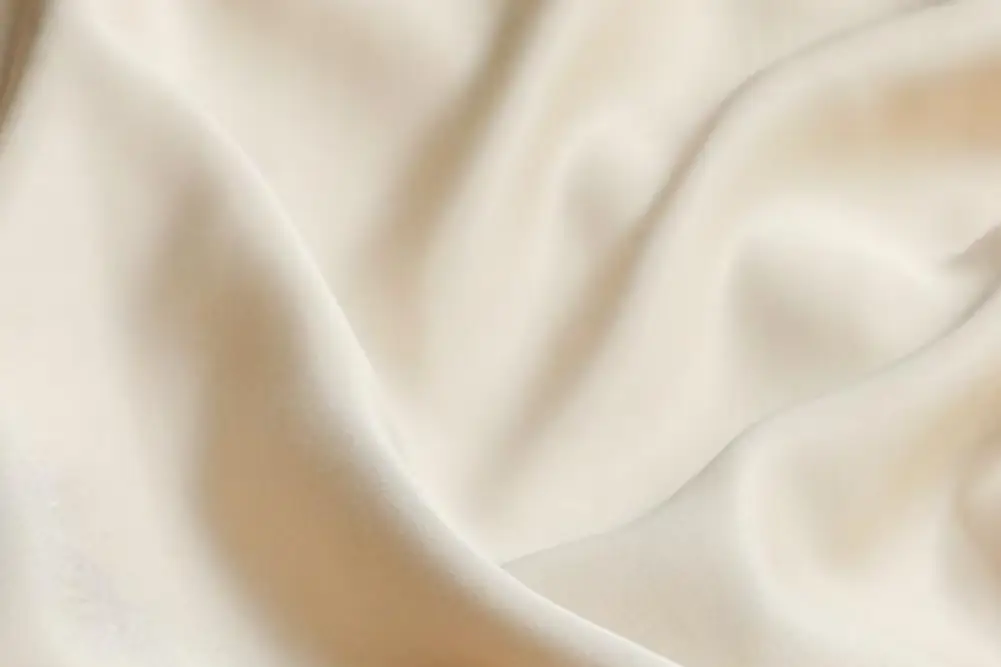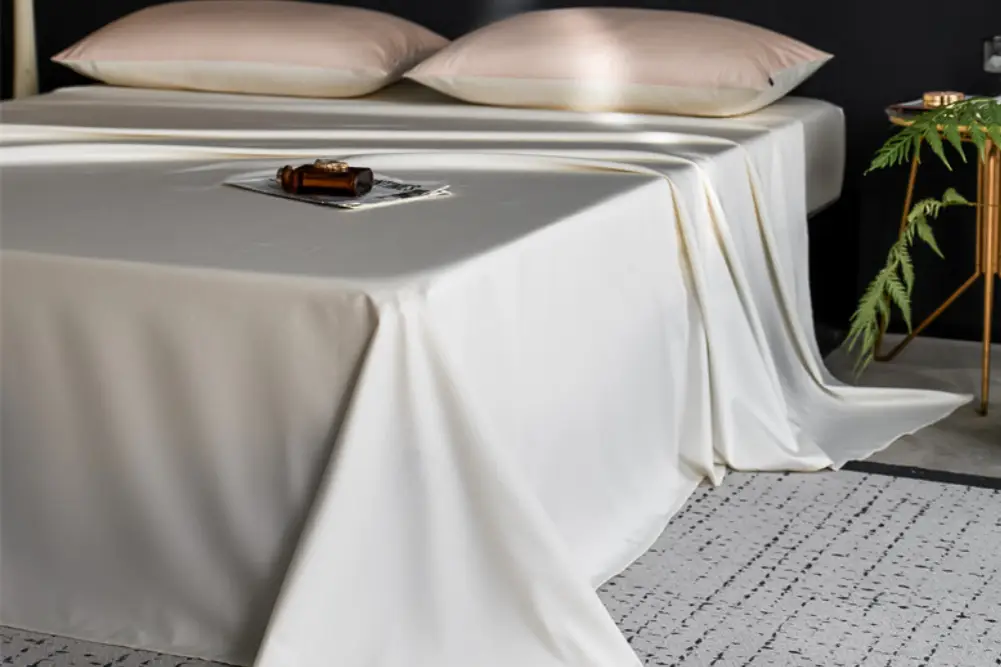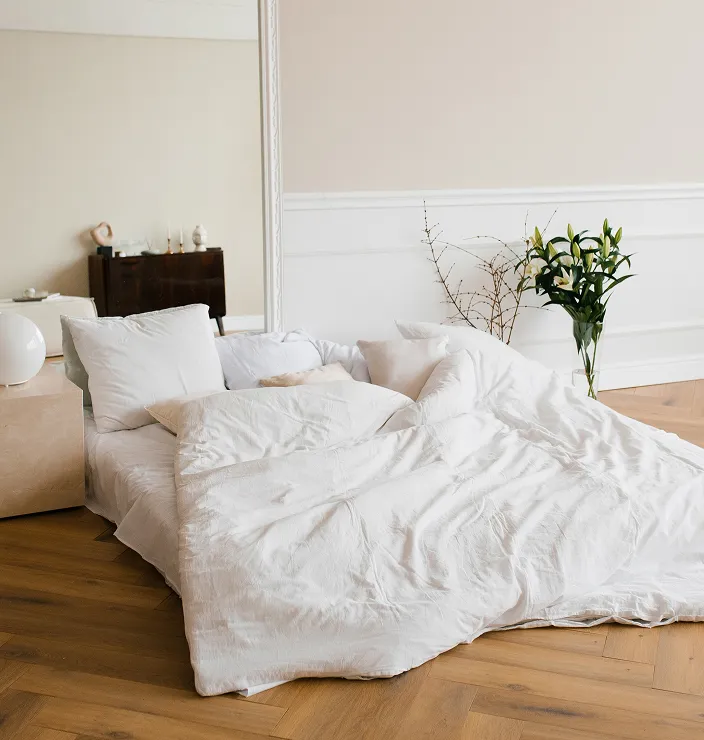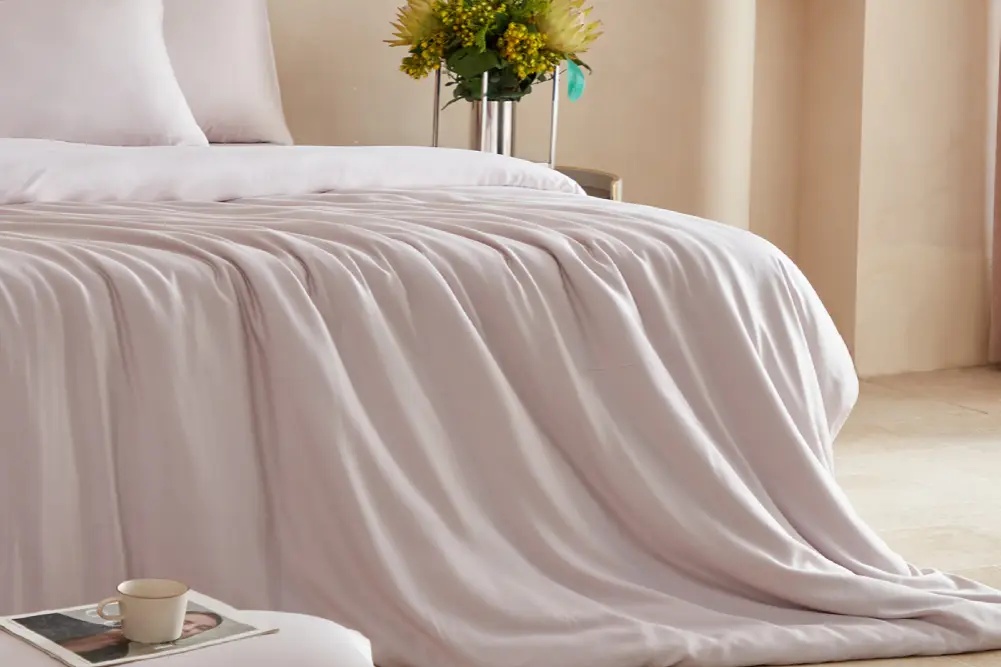
White sheets look crisp and clean when they are new. Over time, though, they often turn yellow and dull. Many people wash them again and again, yet the bright white never comes back. This is a common problem in homes and hotels alike.
This guide explains the issue from a textile manufacturer’s point of view. It covers why sheets turn yellow, how to wash them the right way, and how to remove tough stains. It also looks at safe bleaching, gentle natural methods, and the routines that hotels use to keep their linen bright. Each part builds on the one before it, so the methods make sense by the end.
Why White Sheets Turn Yellow and What Causes Stains
Yellowing is rarely caused by one thing. It builds up slowly from many sources. Understanding these sources makes the cleaning steps that follow much easier to follow.
Common Causes of Yellowing and Dinginess
Several everyday substances cause white sheets to fade and yellow. The main ones include: sweat and natural body oils, leftover residue from lotions and skincare, detergent that does not fully rinse out, minerals from hard water, oxidation from dried perspiration, and the waxy film left behind by fabric softener.
These substances do not just sit on the surface. Over time they soak into the fibers and bond with them. Because the buildup spreads across the whole sheet, the fabric takes on an overall dull, yellow tone rather than a few clear spots. That is why old sheets can look tired even when they have no obvious stains.
Why a Regular Wash Isn’t Enough
A quick cold wash only lifts loose dust and light surface dirt. It cannot break down the oils and protein stains that are already locked inside the fibers. Worse, a poor wash can leave behind detergent residue and softener film, which actually speed up yellowing.
This is the key point. Plain washing is not the same as deep cleaning. To bring sheets back to white, the right method and the right order of steps matter just as much as the products used.
How to Wash White Sheets the Right Way: The Step-by-Step Guide
Washing white sheets well is a process, not a single action. The five steps below cover that process in order. Each one prepares the fabric for the next.
Step 1: Read the Care Label and Sort Lights From Darks
Always read the care label first. It shows the fiber content, the highest safe water temperature, and whether bleach is allowed. These details guide every later choice.
Then sort the laundry. White sheets should be washed on their own. When they share a load with dark or bleeding fabrics, dye can transfer and leave the white looking gray or dingy. Keeping whites separate protects their color.
Step 2: Pre-Treat Stains and Spots
Deal with visible marks before the main wash. Apply an oxygen-based stain remover, or a little diluted detergent, directly onto each spot. Let it sit for five to ten minutes so it can begin to break the stain down.
This early step gives the wash a head start. Specific stain types, such as sweat or blood, need their own approach, and those are covered in a later section.
Step 3: Pick the Right Detergent and Skip Fabric Softener
Choose a good detergent that contains enzymes or whitening agents. Enzymes target body oils and protein stains, which are the main causes of yellowing.
Skip the fabric softener. It may feel like a nice touch, but it leaves a waxy coating on the fibers. That coating traps oils, speeds up yellowing, and lowers how well the sheets absorb moisture. White sheets last longer and stay brighter without it.
Step 4: Set the Water Temperature (Hot vs. Cold)
Water temperature should match the fabric. Sheets made of 100% cotton can usually take hot water, around 130°F (54°C). Hot water dissolves oils, helps sanitize, and brightens the fabric.
Sheets with elastic fibers or special finishes are different. They should be washed in warm or cold water to avoid shrinking or damage. The simplest rule is this: let the care label set the temperature.
Step 5: Select the Correct Wash Cycle
Choose a normal or cotton cycle for most white sheets. Avoid stuffing the machine too full, because sheets need room to move and tumble in order to come clean.
Add an extra rinse at the end. This final rinse helps wash away any detergent that is left behind, which keeps residue from building up and causing future yellowing.
How to Get Stains Out of White Sheets
Different stains need different treatments. Sorting them by type makes removal far more reliable. The groups below cover the stains people meet most often.
Sweat and Yellow Body-Oil Stains
Sweat and body oil cause the most common yellow stains. To treat them, soak the sheets in a solution of oxygen bleach or hydrogen peroxide mixed with suitably hot water. The soak loosens the oils that have set into the fibers.
For a stronger start, rub a paste of baking soda and water onto the marks before soaking. Baking soda is gentle, yet it helps lift oily buildup and reduce odor.
Blood, Food, and Other Common Stains
Protein stains need a different rule. For blood, always use cold water first, because hot water sets the protein and locks the stain in. Dab a little hydrogen peroxide onto the spot to help lift it.
For food and drink stains, rinse the area in cold water right away, then apply a stain remover. The main rule to remember is simple: for protein-based stains, cold water first, never hot.
Laundry Stripping for Deep Buildup
Laundry stripping is a deep-cleaning method for heavy buildup. It uses a long soak, about four to five hours, in a bathtub of hot water mixed with borax, washing soda, and detergent. The soak draws out deep residue and hard-water minerals that normal washing leaves behind.
This method is strong, so it should not be used often. Check the fabric’s tolerance first, and avoid it on delicate or finished sheets. For sturdy cotton, an occasional strip can restore brightness that ordinary washes cannot.
How to Bleach White Sheets Safely
Chlorine bleach is powerful and effective, but only when it is used correctly. The two points below explain when to use it and how to use it safely.
Know When Chlorine Bleach Is (and Isn’t) Appropriate
Chlorine bleach suits one situation: 100% cotton white sheets whose label does not say “do not bleach.” On the right fabric, it removes deep yellowing well.
It is the wrong choice for other materials. Never use it on spandex or elastic blends, on wrinkle-resistant finishes, or on colored and printed bedding. On these, chlorine bleach can cause yellowing or fading, which ruins the very look it is meant to protect.
Measure the Right Amount and Soak Time
Use the correct dose. For a standard load, about half a cup (120 ml) of bleach, diluted in water, is enough. Soak for no more than five minutes, then rinse the sheets thoroughly.
Safety matters here. Make sure the room is well ventilated, and wear gloves to protect your skin. Never mix chlorine bleach with ammonia or vinegar, because the mix creates toxic gas. Careful handling keeps the process safe as well as effective.
How to Whiten Sheets Without Bleach (Natural Alternatives)
Chlorine bleach is not the only path to white sheets. Several natural methods brighten fabric gently, and many are kinder to fibers over the long term. The list below explains how each one works and how to use it.
- Baking soda. Add about half a cup to the wash cycle. It neutralizes odors, softens the water, and helps brighten whites. It is mild and safe for most fabrics.
- White vinegar. Add half a cup during the rinse cycle. It removes detergent residue and hard-water mineral deposits, and it helps restore softness. One caution: never use white vinegar together with chlorine bleach, because the mix produces toxic fumes.
- Lemon juice. Lemon juice is a natural acid that brightens fabric. It works best when the sheets are then dried in the sun, since the acid and sunlight boost each other.
- Borax. Using borax to whiten sheets is a long-trusted trick. Add about half a cup of borax per load, either to soak the sheets or to wash them, for stronger cleaning and brightening. It also softens hard water, which helps detergent work better.
- Hydrogen peroxide. This is a gentle oxidizing brightener that can replace chlorine bleach. It is especially good on sweat stains. Add about one cup to the wash, and keep it away from colored items.
- Oxygen bleach (such as OxiClean). Dissolve it in warm water and soak the sheets for several hours. Oxygen bleach is color-safe and gentle, so it suits most fabrics, including blends.
- Liquid bluing. Bluing works through optics, not chemistry. A tiny trace of blue cancels out yellow tones, so the sheets look whiter to the eye. Always dilute it strictly per the instructions, and never pour it straight onto the fabric.
- Sunlight and UV drying. The sun is a free, eco-friendly brightener. Its UV rays naturally bleach and help sanitize the fabric. One note: dry colored bedding inside-out, so the sun does not fade the visible side.
How to Keep White Sheets White (Prevention and Maintenance)
The easiest way to fight yellowing is to stop it before it starts. A few habits go a long way, and prevention is far simpler than restoration.
Reduce what gets onto the sheets in the first place. Shower and remove makeup before bed to cut down on oil transfer, and avoid heavy, oily skincare right before sleep. Wash the sheets about once a week so buildup never gets a chance to set.
Treat them well in the wash too. Do not overload the machine, rinse thoroughly, and avoid using too much detergent. It also helps to own more than one set of sheets and rotate them, which spreads out wear across the sets. Finally, store clean sheets in a dry, well-ventilated place, since damp storage can cause yellowing on its own. Good habits keep white sheets white for much longer.
How Do Hotels Keep Their Sheets So White?
Hotels make white linen look effortless, but the result comes from a clear system. They start with high-quality, long-staple cotton, which holds up to heavy use and frequent washing. Their laundries use oxygen-based brightening and tight temperature control, along with water softening to fight mineral buildup. They also rotate linen on a schedule, which keeps each batch looking consistent across many rooms.
The fabric itself plays a large role. As a bedding manufacturer that supplies hotel linen, RUHO Living works with brands and properties tied to well-known groups such as InterContinental, Hyatt Regency, and Novotel. Commercial-grade bedding is built differently from typical retail products. It uses denser weaving and is made to survive repeated industrial laundering. That is a big reason hotel sheets stay bright and smooth far longer than many home sheets do.
FAQs
Can I Wash White Sheets With Other Colors if They’re Light?
It is best to wash white sheets on their own, even with light colors. Pastel and light fabrics can still release a trace of dye in the wash. Over many cycles, that small amount of transfer slowly dulls the white and gives it a grayish tone. If washing them together cannot be avoided, choose items in the same tone that you have confirmed are colorfast. Separating whites is a small effort that protects their brightness for the long run.
Why Do My Sheets Smell Even After Washing?
Odor usually comes from two sources: detergent residue and bacteria that grow in damp fabric. Sheets left wet in the machine after washing are a common cause. To fix it, use less detergent, add an extra rinse, and try a rinse with white vinegar to clear residue. Dry the sheets right away, in the sun if you can. It also helps to clean the washing machine itself regularly, since buildup inside the drum can pass odors back onto every load.
How Long Do White Sheets Last Before They Need Replacing?
Quality sheets generally last about two to three years. The exact lifespan depends on how often they are used and washed, and on the quality of the fabric to begin with. Higher-grade cotton tends to last longer. It is time to replace a set when cleaning no longer works. Watch for persistent yellowing that will not wash out, fabric that has grown thin, surface pilling, or stains that no longer lift. At that point, restoration costs more effort than it is worth.
Are White Sheets Harder to Maintain Than Colored Ones?
Each option has trade-offs. White sheets show dirt and yellowing more easily, which can feel like more upkeep. Yet that same visibility makes it easy to judge when they are truly clean, and white can be safely bleached or brightened when needed. Colored bedding hides dirt better, but it cannot take strong bleach and carries a real risk of fading over time. Neither is simply easier; they just ask for different care.
Conclusion
Yellowing is both preventable and treatable. The keys are clear: wash sheets the right way, target each stain by type, brighten safely with the right method, and build daily habits that stop buildup before it starts. Put together, these steps keep white sheets looking fresh far longer.
For households, hotels, or brands that want hotel-grade whiteness and durability, the fabric itself is where it begins. RUHO Living is an OEM/ODM home-textile and hotel-bedding manufacturer that offers custom development, low minimum orders, and OEKO-TEX Standard 100 and BSCI certified production. Buyers can browse the sheet sets collection or explore hotel linen options. From there, it is easy to start a custom program, request the product catalogue, or get in touch about a tailored solution.