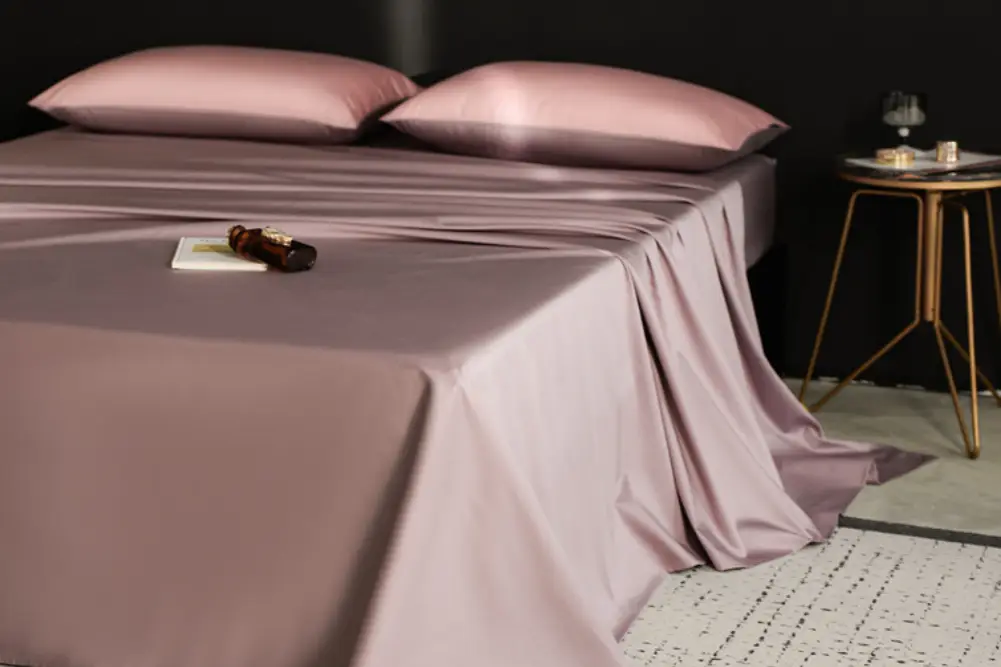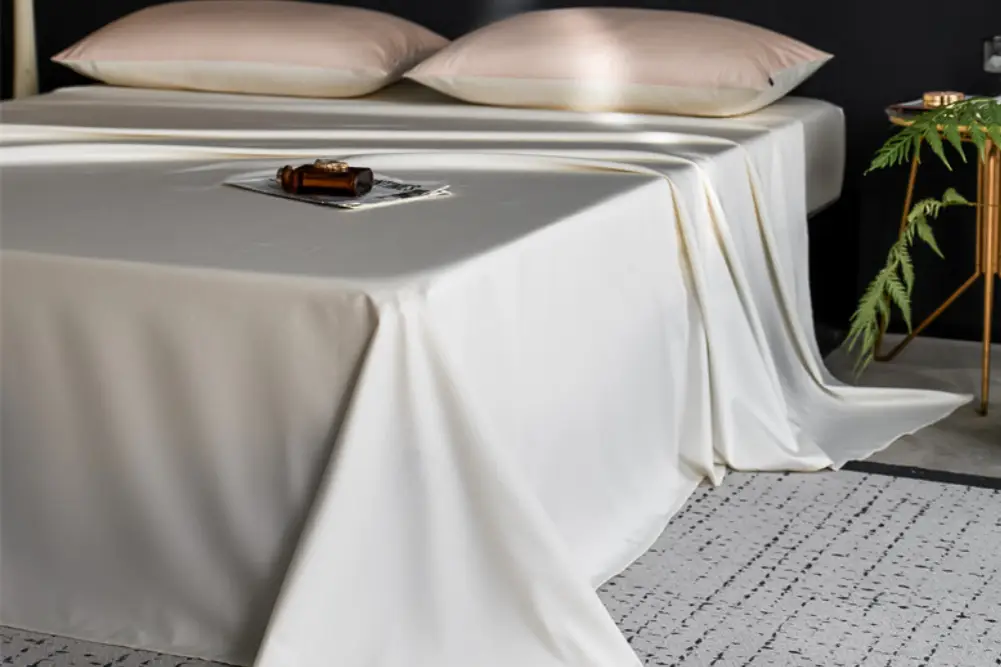
Many sleepers wake up to find one corner of the fitted sheet snapped off the mattress. Some discover all four corners exposed by sunrise. Others get startled awake when a loose sheet flips up against the face. This issue is far from rare. Industry surveys suggest that more than 60% of households face recurring fitted-sheet slippage.
From a manufacturer’s standpoint, the root cause is rarely one single flaw. Instead, the problem comes from a mix of factors: mattress size, elastic quality, fabric type, and sleep habits. Bedding makers who supply hotels and large retailers track each of these factors during product design. This article walks through the issue in clear steps. First, it explains the root causes. Then it lists eight proven fixes. After that, it shares techniques from the hotel housekeeping world. A short FAQ section closes the piece.
Why Does Your Fitted Sheet Keep Coming Off?
Fitted sheet slippage is rarely caused by one issue alone. In most cases, four root causes work together. They include wrong mattress size, worn-out elastic, slippery fabrics, and active sleepers. Manufacturers who design hotel-grade bedding (e.g., bed sheets, duvet covers, pillowcases) study all four. The next four sections explain each cause in depth. A reader who understands the source can then pick the right fix.
Wrong Sheet Size for Your Mattress
Modern mattresses have grown thicker over time. Older models measured 7 to 9 inches deep. Today’s versions often range from 12 to 18 inches. Sheet makers now group fitted sheets into three pocket-depth tiers: Standard (7 to 14 inches), Deep Pocket (15 to 17 inches), and Extra-Deep (18 to 22 inches). A sheet that falls more than 2 inches short of the mattress depth cannot tuck under the base. Pop-off is almost certain. Many sleepers also stack extras (e.g., protectors, memory-foam toppers, mattress pads) on top of the base mattress. A 12-inch mattress with a 4-inch topper and a 0.5-inch protector totals 16.5 inches. The original sheet, sized for the base alone, no longer fits.
Worn-Out or Poor-Quality Elastic
Elastic fibers wear out over time. Spandex and elastic-polyester blends usually start to fail after 2 to 3 years of regular use. Heat speeds up the decline. Tumble drying above 130°F (54°C) breaks down rubber and stretches out the band. Budget fitted sheets often use cut-and-sewn elastic. In that build, the elastic runs only along the four corners. All-around elastic, by contrast, runs the full perimeter and grips far better. Sheet labels reveal a lot. Products with spandex content at or above 3% tend to hold up longer in commercial settings (e.g., hotels, vacation rentals, dormitories). Wholesale buyers often check this number before placing bulk orders. Strong elastic is one of the clearest signs of a well-built sheet.
Slippery Fabrics and Low-Friction Mattress Surfaces
Fabric grip matters more than most shoppers realize. Smooth fabrics (e.g., satin, silk, microfiber polyester) have low friction. They slide off mattress tops with ease. Modern mattresses add to the problem. Many use polyurethane foam covers or cooling fabrics, which are slick by design. Cotton and flannel offer stronger grip. Even so, combed cotton above a 600 thread count loses some of that grip due to the calendered finish. The physics is simple. When the friction between fabric and mattress drops below the elastic’s pull-back force, the corner lifts. From a production view, hotel-supplier mills often pair mid-range thread counts with textured weaves to keep the sheet firmly seated.
Adjustable Beds, Shared Beds & Restless Sleepers
Sleep behavior plays a big role too. Adjustable bases flex the mattress arc. They pull on all four corners during each elevation cycle. Shared beds add more strain. Couples shifting positions, children climbing on, and pets settling in all lift sheet edges. Light sleepers turn 13 to 20 times per night on average. Each turn creates shear force on the elastic. Over months, that force adds up. King-size beds (76 by 80 inches) tend to suffer most. The larger surface area and uneven diagonal load place extra stress on the four corners. Manufacturers who sell into the hospitality channel often build heavier-duty elastic into king and California king fitted sheets for this reason.
How to Keep Sheets on Bed — 8 Proven Solutions
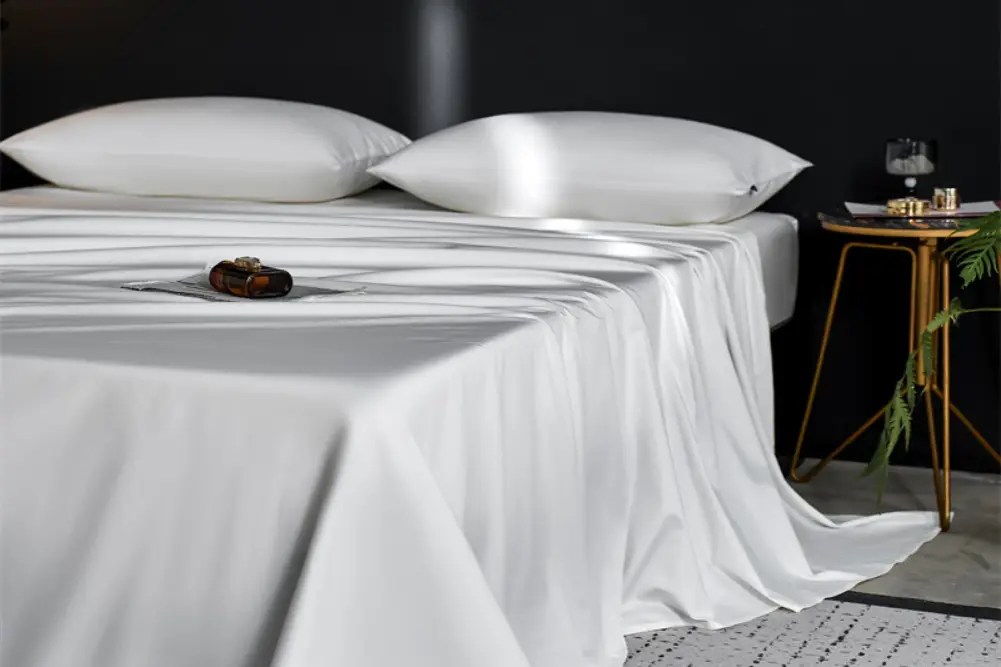
The eight solutions below move from zero-cost tricks to long-term upgrades. Some methods (e.g., the envelope tuck, sheet clips, non-slip pads) cost little or nothing. Others (e.g., deep-pocket sheets, sheet suspenders, mattress protectors) call for a small investment. The strongest results often come from stacking two or three methods at once. A wholesale buyer for a hotel chain might combine deep-pocket sheets with a high-friction protector. A renter on a budget might start with the no-cost tuck method instead.
Try the Envelope Tuck Method (No-Cost Hack)
The envelope tuck is a housekeeping-industry technique. It is a close cousin of the classic hospital corner. The method takes three steps. First, pull each of the four sheet corners toward the center of the mattress underside. Second, fold the excess fabric down at a 45-degree angle. Third, tuck the fold at least 6 inches under the mattress. The trick works best when the sheet pocket exceeds the mattress depth by 2 to 4 inches. The fabric then has enough slack to bend and grip. The main advantage is cost. The method requires no extra purchase. Anyone with hands and a few minutes can apply it. The main drawback is durability. The tuck holds well on still sleepers and standard frames. It loses grip on adjustable bases and under restless sleepers. Housekeepers in budget properties (e.g., highway motels, family inns, hostels) still rely on this method daily.
Make Your Own Elastic Sheet Straps
A DIY approach can save money. The materials are simple: about 2 meters of 1-inch-wide elastic webbing, four suspender clips, scissors, and a sewing machine or industrial-strength fabric glue. The method involves cutting two strips of 60 to 70 inches each. A clip goes on each end of the strip. The two strips then cross in an X-pattern beneath the mattress. The total cost runs $3 to $8. That price saves 50% to 70% versus retail equivalents at $10 to $25. The DIY version has several advantages. The straps are washable. They are adjustable. They can fit any mattress size. Renters and budget-minded households (e.g., young families, college dorm dwellers, RV owners) often build their own. For wholesale buyers, the DIY benchmark serves another purpose. It helps frame pricing decisions when sourcing retail-ready sheet sets. A factory-built sheet with proper all-around elastic should outperform any DIY strap. The DIY approach is best viewed as a stop-gap, not a permanent fix.
Use Bed Sheet Clips to Lock the Corners
Sheet clips bite through both the sheet corner and the mattress fabric. Three main types exist: metal-jaw fasteners, plastic alligator clips, and padded grippers. Prices run from $5 to $15 per four-piece set. Some buyers prefer padded versions for delicate fabrics. Rubber-padded clips suit silk and combed-cotton sheets, since metal teeth can leave marks. Sheet clips offer a non-permanent fix. They install in seconds and remove just as fast. The product fits well for short-term users (e.g., guest house owners, vacation rental hosts, mobile workers). Clips fall short on one point. They do not address the root cause. A sheet with worn elastic or wrong depth will still slip in places the clips do not cover. For hotel chains buying in bulk, clips are rarely part of standard issue. They serve better as a household accessory than a commercial bedding solution. Quality fitted sheets remain the long-term answer for most operators.
Install Sheet Suspenders Under the Mattress
Sheet suspenders go by several names. The same product appears as sheet garters, sheet holders, or sheet straps. The design is consistent. Elastic webbing carries four or six clips. The webbing runs in an X-pattern or straight under the mattress. Retail prices fall between $10 and $25. Installation takes minutes. The user lifts one mattress corner, threads the elastic under, and clips diagonally opposite corners of the sheet. Manufacturers claim up to a 90% reduction in slippage. This figure comes from the makers themselves, not from independent tests. Suspenders work especially well in three settings (e.g., adjustable bases, king-size beds, children’s beds). The constant pull keeps sheet corners locked in place. From a supply-chain view, suspenders sit in the aftermarket category. Most large bedding manufacturers, including hotel linen suppliers, do not bundle them with sheet sets. Instead, specialty accessory makers handle this product line. Buyers who need a complete bedding solution often pair suspenders with deep-pocket fitted sheets sourced from a textile mill.
Add a Non-Slip Mattress Pad or Rubber Gripper
The principle is simple friction. A high-friction layer sits between the mattress and the fitted sheet. Several products work for this role (e.g., rubber shelf liner, rug pad, silicone-dot mats). Coverage matters. A full-mattress liner gives the best result. A smaller option places one 30 by 30 centimeter pad at each corner. Prices run from $8 to $20. The method works best with low-friction sheet fabrics (e.g., silk, satin, polyester microfiber) and memory-foam mattresses. The drawback is small but real. A minority of users report a slight drop in breathability. Manufacturers who design sleep products often address this issue with perforated or open-weave pad materials. The non-slip layer suits households with one specific mismatch: a slick mattress paired with smooth sheets. Hotels and resorts (e.g., spa retreats, beach resorts, business hotels) tend to skip this fix. They prefer to solve the issue at the sheet level with proper fabric and elastic specs.
Layer a Mattress Protector for Extra Friction
A mattress protector serves two roles. It guards the mattress from stains and dust mites. It also adds friction beneath the fitted sheet. Most protectors use cotton or knit fabric on the top side. This surface grips far better than bare polyurethane mattress fabric. The best build for grip is a TPU film backed by cotton. All-polyester shells slide more and add less friction. Retail prices range from $20 to $50. The layering order is straightforward. The protector goes on first and tucks in tight. The fitted sheet goes on second. Buyers who source full sheet sets often pair their bedding with a quality protector to extend mattress life by 3 to 5 years. From a supplier’s view, this combination is a smart upsell. Hotels especially benefit, since protectors cut replacement costs across hundreds of rooms. A clean mattress also lengthens the service life of the bed itself.
Choose Fitted Sheets with Deep Pockets & Strong Elastic
The right fitted sheet solves most slippage issues at the source. Smart buyers check four points before purchase. First, pocket depth should reach 15 inches at minimum. Thick mattresses need 17 inches or more. Second, the elastic should run all the way around the sheet, not just at the corners. Third, the elastic band width should measure 1 inch or wider for stronger grip. Fourth, the fiber should come from a long-staple source (e.g., Egyptian cotton, Supima cotton, combed long-staple cotton). Thread count plays a role too. A range of 300 to 500 strikes the best balance between grip and softness. Retail prices for quality options run from $30 to $150. Wholesale buyers sourcing direct from a manufacturer often pay less for the same specs. RUHO Living, for instance, produces fitted sheets with all-around elastic and customizable pocket depths for hotel and retail clients. Custom sizing helps match the sheet to any mattress profile in the order.
Size Up for Thick, Pillow-Top or Memory Foam Mattresses
The thickness math is simple. The total equals the mattress base plus the protector (about 0.5 inches) plus any topper (2 to 4 inches). One example helps. A 12-inch mattress with a 3-inch memory-foam topper totals 15 inches. The sheet should have a pocket depth of 17 inches or more. The extra slack matters. A slightly loose pocket beats a too-tight pocket every time. Extra-Deep Pocket sheets at 18 to 22 inches are the safe choice for stacked beds. Measurement requires care. A soft tape, held straight from the top of the mattress to the bottom edge, gives the right reading. Many shoppers also mix up two close sizes (e.g., King and California King). King beds measure 76 by 80 inches. California King beds measure 72 by 84 inches. The two are not interchangeable. Hotel chains spell out the exact dimensions on every purchase order. Households buying online should pull a measurement tape before checkout to avoid returns.
Quick Fix vs. Long-Term Solution — Which Should You Choose?

The right approach depends on the use case. Quick fixes (e.g., the envelope tuck, sheet clips, non-slip pads) cost $0 to $20. They take five minutes to apply. They suit short-term scenarios such as hotel stays, rentals, travel, or guest beds. They do not, however, solve the root cause. Long-term solutions cost more. A full upgrade to deep-pocket sheets, sheet suspenders, and a quality mattress protector runs $50 to $200. The payoff is real. The setup lasts six months to several years.
A simple decision matrix helps buyers choose. For a temporary stay (e.g., hotel, vacation rental, dorm), sheet clips or the envelope tuck work well. For frequent laundering (e.g., children’s beds, guest rooms, busy households), elastic suspenders hold up best. For premium long-term bedding (e.g., master bedrooms, owner suites, executive guest rooms), deep-pocket sheets with all-around elastic deliver the cleanest result. For adjustable bases (e.g., medical beds, smart sleep frames, motorized recliner beds), suspenders paired with deep-pocket sheets give the strongest hold.
Three factors guide the final choice. The first is remaining mattress lifespan. The second is laundering frequency. The third is shared use of the bed. Buyers who weigh all three rarely return to the slippage problem.
How Do Hotels Keep Their Bed Sheets So Tight?
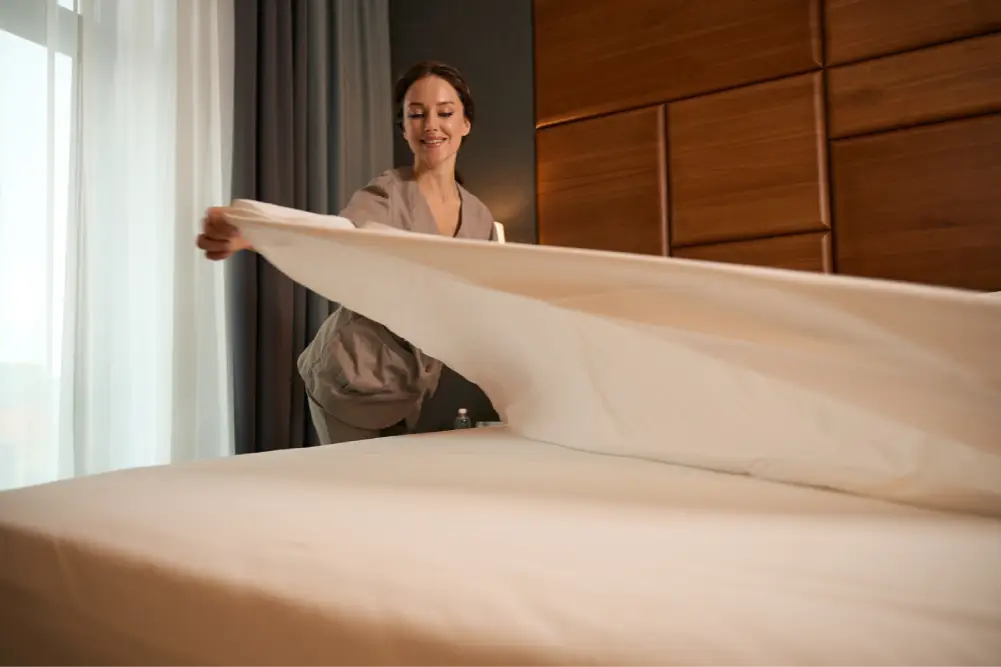
The hotel industry uses methods that most households never see. The first surprise is the sheet itself. Luxury hotels usually use flat sheets with hospital corners, not fitted sheets. Hotel mattresses also tend to be thinner than home models. Most measure 10 to 12 inches, which makes tucking easier. A mattress topper and a quilted pad sit on top of the base for added comfort.
The standard procedure is precise. Housekeepers lay the flat sheet across the bed. They fold each corner at a 45-degree angle. Then they tuck at least 6 inches between the mattress and the bed frame. The result is the crisp, tight finish that guests notice. Upscale properties (e.g., five-star resorts, luxury business hotels, boutique inns) sometimes add commercial sheet fasteners for extra hold.
Linen specs matter too. Hotel sheets typically run 300 to 400 thread count in percale or sateen weaves. The sheets get ironed between washes for that signature crispness. Replacement cycles run faster than at home. Linens rotate daily and retire before elastic fatigue sets in. Household buyers can borrow several of these methods. A flat sheet can replace a fitted sheet on standard beds. Sheet clips can mimic commercial fasteners. A thinner mattress profile also helps. RUHO Living supplies hotel-grade bedding to leading hospitality groups around the world, drawing on this same playbook of fabric, weave, and elastic specs.
FAQs
The following questions come up often from both household buyers and procurement teams at hotel chains and retailers.
Are Higher Thread Count Sheets More Likely to Slip Off?
Yes, higher thread count sheets are generally more prone to slipping off, though elastic quality matters even more. The reason lies in the fabric structure. Higher thread counts mean finer yarns and tighter weaves. The result is a slicker fabric surface. The reduced friction makes those sheets slide more easily on smooth mattress fabrics. Thread count, however, is not the only factor. A 400 thread count sheet with strong all-around elastic stays put far better than a 1000 thread count sheet with weak corner elastic. The practical sweet spot is balanced. Most bedding experts point to 400-thread-count percale as the best mix of softness, grip, and durability. Hotel procurement teams often buy in this range for the same reason: predictable performance across many wash cycles.
Can I Repair a Stretched-Out Fitted Sheet at Home?
Home repairs are possible. Three methods stand out. The first uses a seam ripper to open the corner seam. The old elastic comes out, and fresh quarter-inch elastic gets sewn in. The second method keeps the original structure intact. A new elastic band is added over the existing one. The third option is to stitch suspender clips or hook-and-loop fasteners onto the four corners. Tool costs run $3 to $8. The repair extends sheet life by one to two years. Hotels rarely repair sheets, since labor cost outweighs the value of the linen. Households, however, can gain real savings from a simple mend.
Does Washing or Drying Damage the Elastic on Fitted Sheets?
Yes, certain laundry habits do damage elastic. High-heat drying above 130°F (54°C) breaks down rubber and spandex. The loss runs about 0.5% to 1% of elasticity per wash cycle. Bleach is even harsher. It destroys elastic fibers outright. Several care steps protect the sheet. Cold or warm water washes work best. Low-heat or air drying preserves the elastic. Direct sunlight should be avoided, since UV light weakens fibers over time. Wash frequency also matters. Every 7 to 10 days is the sweet spot. Over-washing shortens the sheet’s life without major hygiene gains.
Conclusion
Fitted sheet pop-off is a four-factor problem. Mattress dimensions, elastic aging, fabric friction, and sleep habits each play a role. Solving one factor often falls short. Solving all four leads to lasting results. A practical path forward starts with the zero-cost option. The envelope tuck method costs nothing and takes only minutes. Many sleepers see real improvement on the first night. For a permanent fix, the right combination is clear. A deep-pocket fitted sheet with all-around elastic, paired with sheet suspenders, removes the issue for years. From a supplier’s view, the investment pays back in better sleep quality, longer mattress life, and fewer middle-of-the-night corrections. Manufacturers who design hotel-grade fitted sheets build with all four factors in mind. Quality sheets stay where they belong.