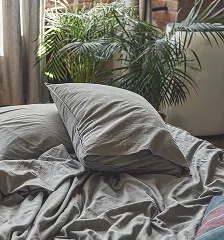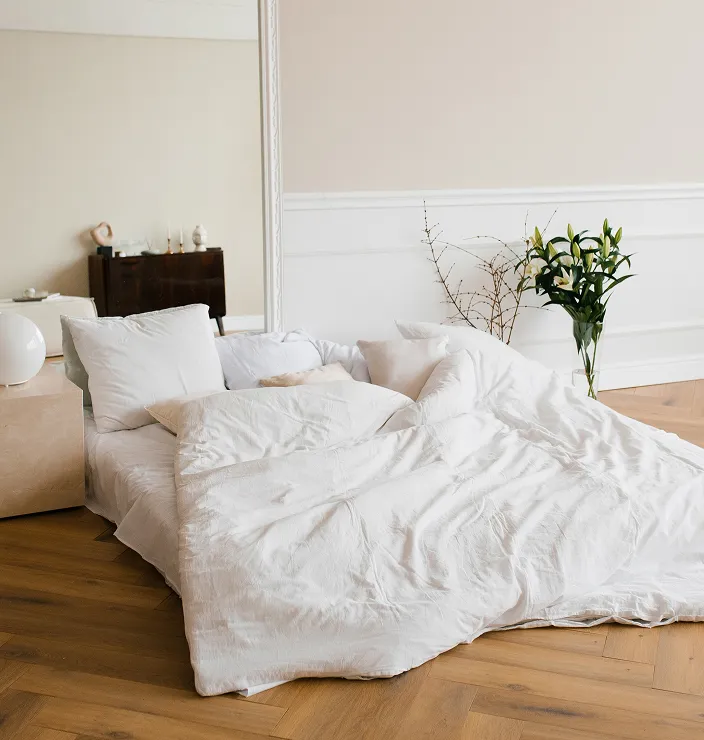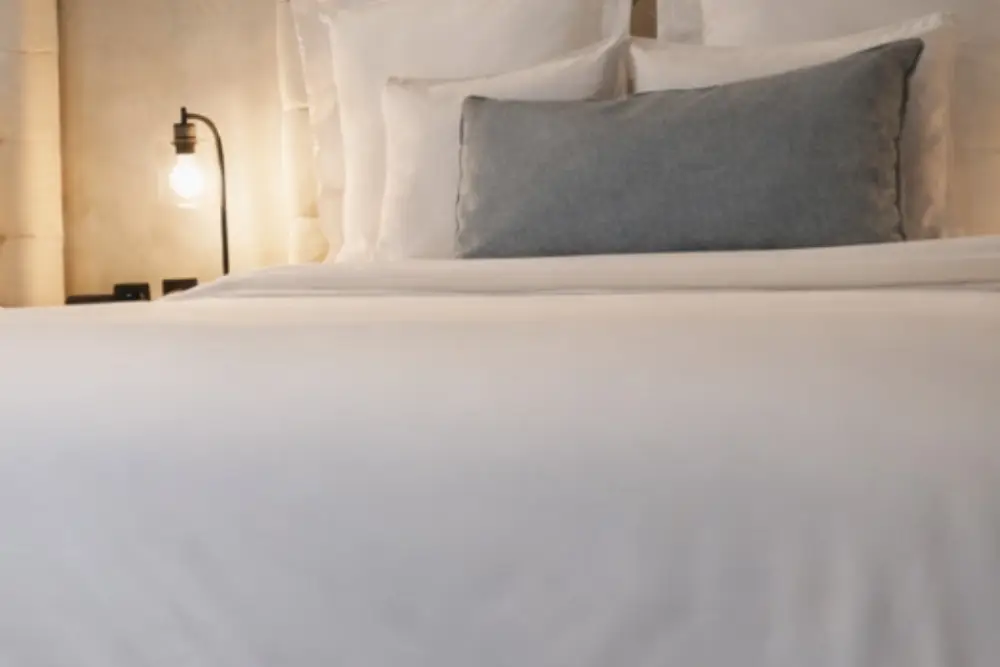
A quiet shift is reshaping hotel beds worldwide. Upscale hotels (4-star, premium full-service properties) and luxury hotels (5-star, top-tier properties) now favor triple sheeting. Economy hotels (2-star, budget, limited-service properties) and midscale hotels (3-star, mid-tier properties) still prefer double sheeting for its speed and simplicity. The choice is not about taste. It is about three measurable factors: operational cost, hygiene, and guest perception.
Hotel decision-makers weigh these factors every day. These decision-makers include, for example, procurement managers, directors of housekeeping, and general managers. This article compares double sheeting and triple sheeting from a manufacturer-supplier view. It covers six key dimensions: bed structure, linen consumption, labor impact, laundry economics, hygiene implications, and brand aesthetics. By the end, hoteliers will know which bed-making method fits their property’s tier, staff capacity, and financial model.
What Is Double Sheeting?
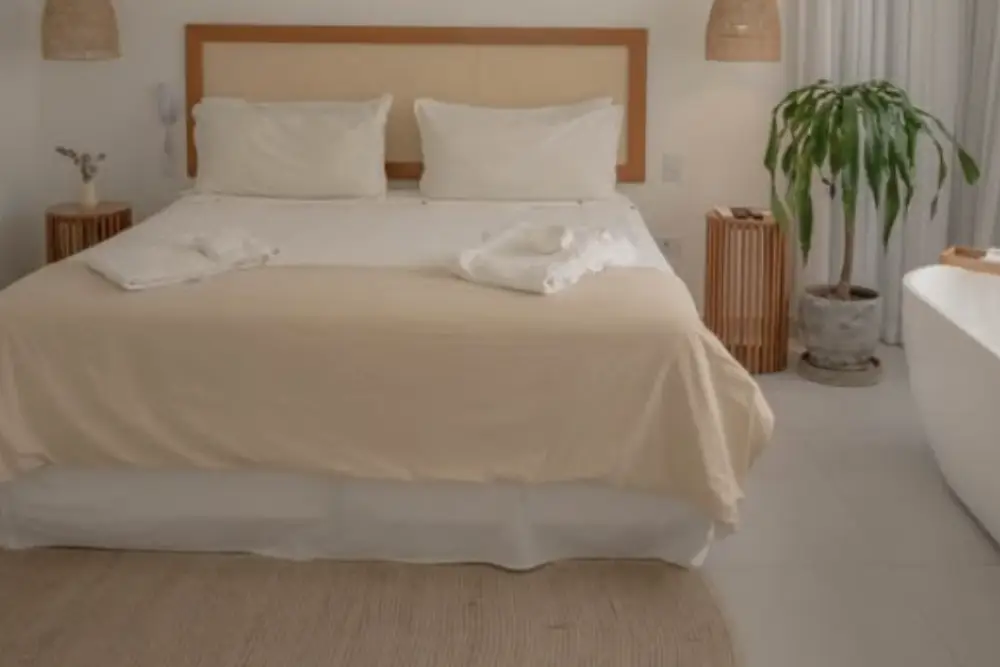
Double sheeting is the traditional three-piece bed-making method used across most of the global hospitality industry. It has three main parts: a bottom fitted sheet, a top flat sheet, and a blanket or duvet. A fitted sheet is a shaped sheet with elastic corners that wraps the mattress. A flat sheet is a rectangular sheet placed between the guest and the blanket. A duvet is a soft, fluffy quilt filled with down, feathers, or synthetic fiber that rests on top as insulation.
The term “double sheeting” points to the two sheet layers only. The duvet or blanket serves as insulation. It does not count as a sheet layer.
The bed structure builds upward from the mattress in four clear steps. First, the fitted sheet wraps the mattress tightly. Second, the flat sheet is smoothed over it and tucked at the sides and foot. Third, a duvet or blanket sits on top. The duvet usually slides inside a duvet cover (a fabric sleeve that fully encases the duvet). The duvet is often folded down at the head of the bed to show the flat sheet beneath. Fourth, two pillows in pillowcases finish the setup.
Linen composition per bed under double sheeting is simple: 1 fitted sheet plus 1 flat sheet plus 1 duvet cover or blanket plus 2 pillowcases. That is roughly three to four laundered pieces per turnover.
Double sheeting fits three main property types: economy hotels, midscale hotels, and extended-stay apartments. It is also the default choice for Airbnb hosts. Airbnb is an online marketplace for short-term home rentals.
Double sheeting offers three clear benefits: lower linen volume, faster bed-making time, and lower CapEx. CapEx stands for Capital Expenditure, which is the upfront cost of buying inventory such as linens, furniture, and equipment. The main drawback is a hygiene blind spot. Duvet covers and blankets tend to be washed less often than bottom sheets in daily operations. This gap is where guest complaints usually start.
What Is Triple Sheeting?
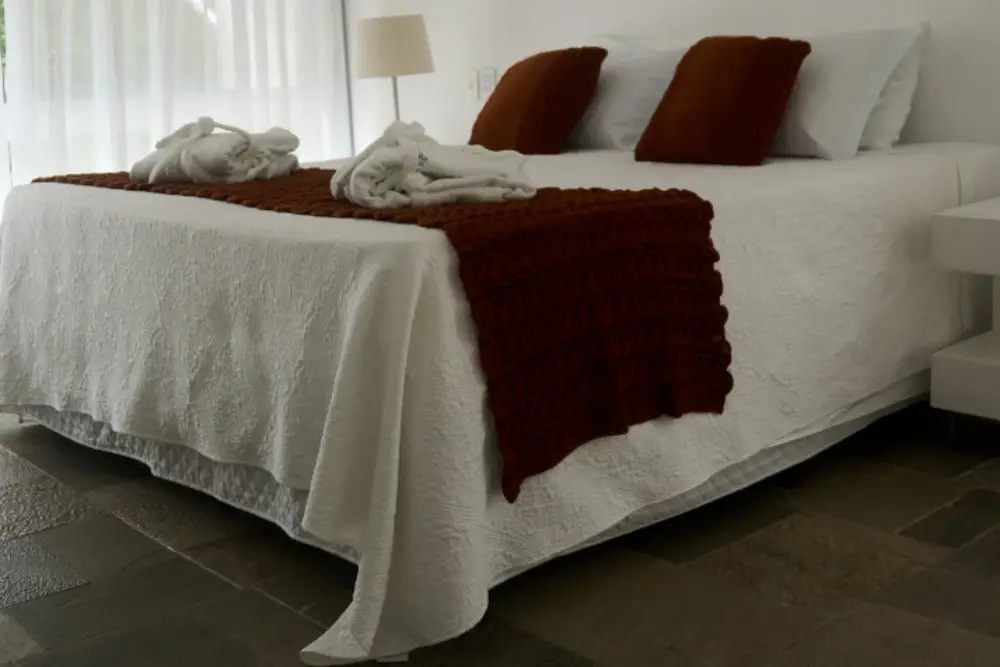
Triple sheeting is a premium bed-making method that layers three washable sheets around a single blanket. This structure produces the crisp, all-white, hotel-grade visual signature most travelers associate with upscale properties. The bed builds upward in five layers: bottom fitted sheet, top flat sheet, blanket, second top flat sheet, and an optional decorative top layer such as a bed scarf or bed runner (a narrow, contrasting fabric panel laid across the foot of the bed).
The defining feature is operational, not visual. The blanket is fully encased between two washable flat sheets. All three sheets, plus the decorative scarf, are replaced at every guest check-out. The word “triple” refers to the three layers of laundered sheeting (one fitted sheet plus two flat sheets). It does not mean three blankets or three duvets.
Triple sheeting rose to prominence in the early 2000s. Three premium North American hotel groups led the shift: Westin (an upscale brand within the Marriott portfolio), Marriott (Marriott International, one of the world’s largest hotel groups), and Hilton (Hilton Worldwide Holdings, a major American hotel chain). These groups adopted the method to address rising guest complaints about duvet hygiene. Today, triple sheeting is the standard across three hotel segments: upscale, upper-upscale (a tier just below luxury, including full-service flagships from Marriott, Hilton, and Hyatt), and luxury. Many boutique hotels (small, design-forward independent properties) also use it.
Linen composition per bed under triple sheeting is more complex: 1 fitted sheet plus 2 flat sheets plus 1 blanket plus 1 bed scarf plus 3–4 pillowcases, including decorative shams. Shams are decorative pillowcases that sit on top of the sleeping pillows. Total laundered pieces per turnover run from five to seven.
Triple sheeting delivers two core benefits: traceable hygiene and a premium visual signature. The blanket never touches guest skin directly. The bed itself becomes a brand asset. The method also has three clear costs: roughly double the linen volume, longer bed-making time, and higher laundry spend.
Double Sheeting vs Triple Sheeting: Key Differences Compared
The choice between double sheeting and triple sheeting comes down to six dimensions: bed structure, linen cost, housekeeping labor, laundry expense, hygiene performance, and brand aesthetic. These six form the standard comparison framework used in the hotel industry. The table below shows the quick takeaway for each dimension. The sections that follow explain each one in the detail a procurement brief needs.
| Dimension | Double Sheeting | Triple Sheeting |
| Bed structure & sheet layers | ~3–4 laundered pieces per bed; blanket or duvet exposed on top | ~5–7 laundered pieces per bed; blanket sandwiched between two washable sheets |
| Linen cost & inventory | Lower CapEx; ~300 sheet sets for a 100-room property at par 3 | ~1.6x–2x higher CapEx; ~600 sheet sets for a 100-room property at par 3 |
| Housekeeping labor | ~2.5–3.5 minutes per bed | ~4.5–6 minutes per bed; longer training curve |
| Laundry & operating cost | Baseline | +1.5–2.5 kg laundry per room per day; materially higher utility spend |
| Hygiene standards | Duvet cover wash frequency varies by property discipline | Per-stay blanket encasement; traceable guest-contact surface |
| Aesthetic & brand positioning | Residential, homelike; fits budget and extended-stay brands | Crisp, layered, luxury-signature look; fits upscale and luxury brands |
Bed Structure & Sheet Layers
The core structural difference is the blanket’s position on the bed. Under double sheeting, the blanket sits exposed on top. Under triple sheeting, the blanket is sandwiched between two washable sheets. A side-by-side view from the mattress upward makes this operational difference concrete.
Under double sheeting, the mattress is wrapped by a fitted sheet. A flat sheet is smoothed and tucked above it. A blanket, typically inside a duvet cover, sits on top as the final layer. The guest sleeps between the flat sheet and the duvet cover. Each surface that contacts the guest is washed between stays, in principle. Linen piece count lands at three to four pieces per bed: fitted sheet, flat sheet, and duvet cover. Pillowcases are counted separately.
Under triple sheeting, the fitted sheet and first flat sheet match the double-sheet setup. The difference begins above. A blanket is laid over the first flat sheet. A second flat sheet is then draped over the blanket and tucked under the mattress on the sides and foot. This fully wraps the blanket. A decorative bed scarf often finishes the foot of the bed. Linen piece count rises to five to seven pieces: fitted sheet plus two flat sheets plus bed scarf. Pillowcases are counted separately.
This single engineering choice drives the industry’s hygiene debate. It has done so for the past two decades. The exposed-blanket structure creates a wash-frequency gap. The encased-blanket structure closes it.
Linen Cost & Inventory Requirements
Linen cost depends on two variables: par level and unit price. Par level is the target standby quantity of an item that a housekeeping department must hold to keep the property running. The industry default is par 3. Par 3 means each room keeps one set in use on the bed, one set in the laundry cycle, and one set in reserve.
A worked example makes the math clear. A 100-room hotel running double sheeting needs about 300 sheet sets (one fitted plus one flat each) to maintain par 3. The same property moving to triple sheeting needs about 600 sheet sets. Each room now requires two flat sheets per turnover instead of one. Blankets and bed scarves add to the count further.
Linen unit costs vary by fabric type and thread count. A standard percale 200 TC flat sheet typically runs about $8–$15 per piece. Percale is a plain-weave, matte-finish cotton fabric valued for its crispness. TC stands for Thread Count, which measures the number of threads per square inch. A luxury sateen 300 TC+ flat sheet typically runs about $18–$35 per piece. Sateen is a cotton weave with more yarn surface on one side, producing a silky sheen. Price depends on three factors: cotton grade, weaving technique, and finishing process.
Factored together, the pattern holds across manufacturer quotations. Triple sheeting’s initial linen procurement cost is typically 1.6x to 2x that of double sheeting. This ratio holds for properties of equivalent size and quality tier. Well-documented supplier catalogs, such as RUHO Living’s hotel linen program, include par-level calculations across mattress sizes. This helps procurement teams avoid a common mistake: ordering against in-use quantities alone.
Housekeeping Labor & Bed-Making Efficiency
Housekeeping labor is the second-largest cost gap between the two methods. Bed-making time translates directly into labor hours, and labor hours translate directly into payroll. Housekeeping managers work with two benchmark times: about 2.5–3.5 minutes per bed for double sheeting, and about 4.5–6 minutes per bed for triple sheeting. Both numbers assume one attendant and a standard king or queen mattress.
Scaled to a 100-room property that turns every room daily, the gap adds about two to four housekeeping labor hours per day. Annualized at regional wage rates, that gap becomes a standing increase in the housekeeping payroll line. This is not a rounding error. It is a real budget item.
The learning curve deepens the impact. Triple sheeting demands three precise skills: mitered corners (a hospital-corner folding technique that produces a 45-degree tight edge), symmetrical layering across both sides of the bed, and consistent placement of the decorative bed scarf. New-hire training time extends to match. Most upscale properties build in one to two weeks of supervised bed-making practice before a new room attendant works an unobserved board. Properties switching from double to triple should time the transition for a low-occupancy window. This lets supervisors focus on retraining without racing the clock on same-day turnovers.
Laundry & Operational Costs per Room
Laundry is the single largest ongoing cost variable that differs between the two methods. Three inputs drive laundry cost: water, energy, and detergent. Each scales with the weight of linen processed.
Industry reference ranges place laundry cost per kilogram of linen at about $0.40–$0.80 in North America. The figure is lower across most of Southeast Asia and higher across Western Europe. These numbers vary meaningfully by three factors: local utility pricing, in-house versus outsourced laundry, and detergent specification. Triple sheeting generates about 1.5–2.5 kg of extra laundry per room per day over double sheeting. The extra flat sheet and the washable bed scarf drive this gap.
An annualized example puts the number in context. A 100-room property running at 70% occupancy will see about $18,000–$35,000 in extra annual laundry spend under triple sheeting. Occupancy rate is the percentage of available rooms sold during a given period. Figures of this kind are best treated as region-dependent planning ranges rather than fixed numbers.
Two operational adjustments can partly offset the increase. First, a centralized laundry contract with a regional industrial laundry typically brings the per-kilogram rate down at higher volumes. Second, specifying sheeting that holds color and hand-feel through 150-plus industrial wash cycles extends asset life and reduces replacement frequency. Hotels should confirm this durability spec with their linen manufacturer before placing bulk orders.
Hygiene Standards & Guest Perception
Hygienic traceability is the core reason hotels adopt triple sheeting. The blanket is fully encased between two washable flat sheets. All three sheets are replaced at every guest check-out. By definition, the surface a guest’s skin contacts has been laundered since the prior stay. This operationalizes per-stay blanket replacement. It also closes the cross-contamination risk tied to blankets and duvets that are not washed between every guest.
The industry context shifted sharply after 2020. After COVID-19 (Coronavirus Disease 2019, the global pandemic that began in late 2019), the AHLA Safe Stay Guidelines reshaped guest expectations. AHLA stands for the American Hotel & Lodging Association, the main trade association representing the U.S. hotel industry. The Safe Stay Guidelines are an enhanced cleaning protocol launched in 2020. Triple sheeting adoption in the upscale segment rose steadily as a direct result.
Unclean-linen complaints are also a recurring theme in guest reviews on OTAs. OTAs stands for Online Travel Agencies, which are platforms that aggregate and resell hotel rooms. Three of the largest OTAs are Booking.com, Expedia, and Agoda. Precise complaint percentages vary by property and region, so any single figure should be treated with care. The useful observation is simpler: visible or suspected linen hygiene issues are a persistent, reputation-damaging complaint category. Triple sheeting is engineered specifically to reduce this risk.
Aesthetic Appeal & Brand Positioning
The visual difference between the two methods is as important as the operational one. A hotel bed is a branded product, not just furniture.
Triple sheeting’s crisp, all-white, layered look anchors several signature bed programs. Three of the best-known examples are Westin’s Heavenly Bed, Marriott’s Signature Bed, and Hilton’s Serenity Bed. These programs are engineered to be recognizable at first glance. They work the same way a lobby scent or a uniform silhouette becomes part of a brand’s asset library. Guests often cannot articulate what makes a bed “feel like a hotel.” The layered silhouette does most of that work.
Double sheeting with an exposed duvet reads as more residential and homelike by contrast. It fits naturally with three hotel categories: budget brands, select-service brands, and extended-stay brands. Extended-stay hotels are properties designed for guests staying a week or longer, such as Residence Inn, Homewood Suites, and Extended Stay America. Guests in these properties often prefer a bedroom that feels less stiffly “hotel.” That homelike quality is a deliberate positioning choice, not a cost compromise.
Operators running either configuration should remember one design lever: the bed scarf and bed runner are key canvases for brand color identity. In an all-white triple sheeting program, a branded navy, forest, or brass-toned scarf does strong merchandising work. It is also one of the most photographed room elements on social channels such as Instagram, TikTok, and Pinterest.
How to Choose the Right Sheeting Method for Hotels
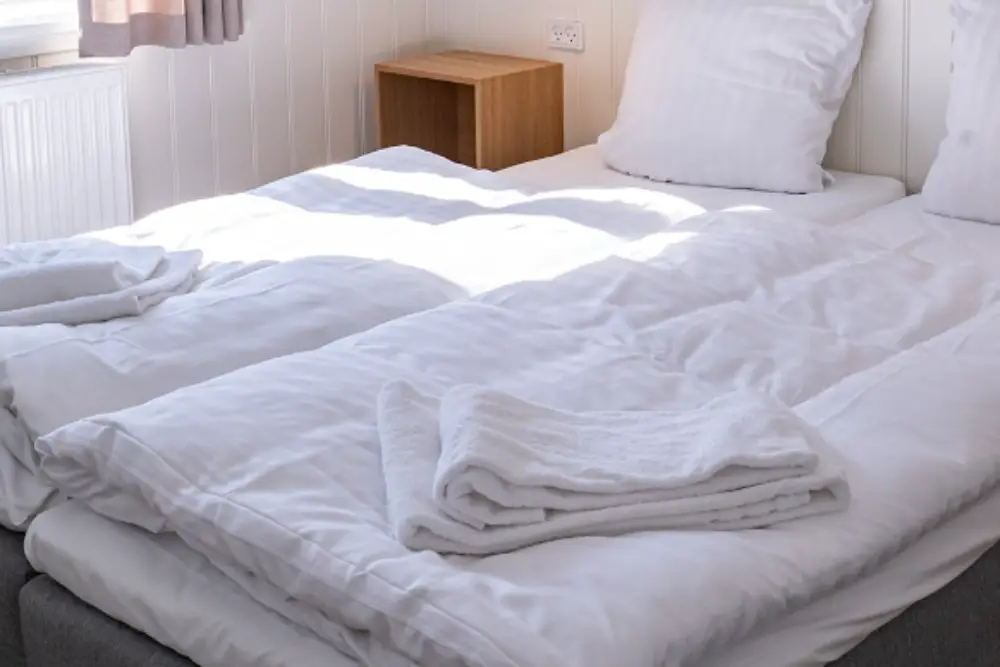
The right sheeting method depends on a four-step decision framework. First, match the method to the property’s positioning. Second, confirm housekeeping labor can keep up. Third, run the math across CapEx and OpEx. Fourth, choose a reliable supplier whose specs and supply capability will not become a limiting factor later.
Match the Method to Hotel Tier (Economy / Midscale / Upscale / Luxury)
Sheeting method should be keyed to hotel tier and ADR band as a starting mapping. This mapping is an industry default, not a rigid rule. ADR stands for Average Daily Rate, the average rental revenue per occupied room per day and a core hotel performance metric.
- Economy / 2-star: Double sheeting paired with a washable duvet cover. The critical hygiene discipline at this tier is laundering the duvet cover between every stay, not only on extended-stay turnovers.
- Midscale / 3-star: Primarily double sheeting. Some midscale brands now introduce triple sheeting in signature or premium rooms rather than across the property. One example is Holiday Inn Express, which is IHG’s limited-service midscale brand. IHG stands for InterContinental Hotels Group, a British multinational hotel company.
- Upscale / 4-star: Triple sheeting is the recommended default. At this tier, it has become the guest expectation rather than a brand differentiator.
- Luxury / 5-star: Triple sheeting is the operational standard. It is typically paired with high thread-count sateen and carefully specified bed scarves that carry brand color identity.
ADR is the second filter in this mapping. Properties running ADR above $150 can typically absorb the extra linen CapEx and laundry OpEx of triple sheeting without compressing contribution margin. Contribution margin is the revenue left after variable costs are subtracted, used to cover fixed costs and generate profit. Below the $150 ADR band, the math begins to weigh against triple sheeting. Double sheeting with disciplined duvet-cover hygiene often becomes the more defensible operating choice at that level.
Assess Housekeeping Capacity & Workflow
The pivotal metric to pressure-test before a triple sheeting rollout is rooms per attendant per day. The industry benchmark sits at 14–16 rooms per attendant. This number varies by three factors: property tier, room size, and turnover complexity.
Switching from double to triple sheeting lengthens per-room make-up time. Rooms-per-attendant productivity typically drops by two to three rooms per day under otherwise identical conditions. That drop is a real payroll decision, not a rounding error. The go/no-go analysis should assess three possible responses: additional hires, adjusted shift overlap, or revised workflows. This assessment belongs inside the decision, not after it.
A conservative recommendation is to run a two-week pilot on a single floor before a full-property rollout. The pilot gives housekeeping management empirical data on revised bed-making times under real same-day turnover pressure. It replaces the idealized numbers that emerge from training-room drills. The pilot also surfaces three practical issues before they compound across every floor: training gaps, supply shortages, and staging problems.
Calculate Total Operating Cost and ROI
A three-step calculation gives hotel finance teams a defensible ROI figure. ROI stands for Return on Investment, the financial return generated relative to the cost invested, expressed as a percentage or ratio.
- Linen CapEx: the initial linen procurement cost. Calculate par 3 quantities across all mattress sizes, multiply by supplier-quoted unit prices, and add the extra flat sheets, bed scarves, and shams required for triple sheeting.
- Labor OpEx: bed-making time × hourly wage × rooms × annual occupied nights. OpEx stands for Operating Expenditure, the ongoing operational cost of running the business. The gap between double and triple sheeting under identical wage and occupancy assumptions is the extra labor cost.
- Laundry OpEx: extra kilograms of linen × per-kilogram laundry rate × annual occupied nights.
Revenue impact sits on the other side of the equation. The key question is whether triple sheeting enables an ADR lift of about $5–$15 per room per night. That lift is a realistic outcome when positioning is credibly upgraded. The second question is whether GSS improves materially in the cleanliness and room categories. GSS stands for Guest Satisfaction Score, a measurable index of guest experience aggregated from post-stay surveys.
Combining both sides, upscale properties with sound execution typically achieve payback in 18–30 months. Luxury properties treat triple sheeting as table stakes for competitive positioning. At that tier, the investment is framed less as discretionary ROI and more as a floor requirement of the segment.
Select a Reliable Hotel Linen Supplier
Five criteria separate qualified hotel linen suppliers from everyone else in the market. These five criteria cover compliance, fabric transparency, durability, supply reliability, and customization.
- Compliance: two certifications are the entry-level credentials to look for. The first is OEKO-TEX Standard 100, an international certification that textiles have been tested for harmful substances. The second is ISO 9001, the international standard for quality management systems.
- Fabric spec transparency: suppliers should publish three core specs openly: GSM (grams per square meter, a measure of fabric weight and density), thread count, and cotton-blend ratio. Marketing adjectives alone are not enough.
- Durability: an industrial wash cycle lifespan of 150-plus cycles is the benchmark for solid hotel-grade quality.
- Lead time & MOQ: consistent, documented supply capability across reorder cycles. MOQ stands for Minimum Order Quantity, the smallest order a supplier will accept.
- Customization: logo embroidery and custom sizing are frequently needed. Custom sizing accommodates non-standard mattresses and brand identity requirements.
A practical sourcing tip closes the supplier conversation: prioritize one-stop manufacturers that can deliver coordinated products together. These products include sheet sets, fitted sheets, duvet covers, and bed scarves. Consolidating SKUs reduces inventory management overhead and typically simplifies reorder cycles over the life of the program. SKUs stands for Stock Keeping Units, unique identifiers for each distinct product variant.
FAQs
Is triple sheeting better than duvets for hotels?
Triple sheeting is more hygienically traceable than duvets, not necessarily “better” in an absolute sense. Triple sheeting encases the middle blanket between two washable flat sheets. This guarantees the guest-contact surface is replaced at every check-out. A traditional duvet setup can reach similar hygiene standards if the duvet cover is laundered between every stay. In real-world operations, though, duvet covers are often changed less often than bottom sheets. That gap is where the hygiene risk opens.
How much does triple sheeting cost per room compared to duvets?
Triple sheeting costs roughly 40–80% more per room than a duvet setup in initial linen CapEx. Three cost drivers explain the gap: the extra flat sheet, the bed scarf, and the expanded par-level inventory. Per-room annual laundry and labor OpEx is about $180–$350 higher than a duvet setup. These figures depend on three local factors: region, wage structure, and occupancy rate. Treat these numbers as estimated ranges. A regional procurement quote will usually tighten them considerably.
Does triple sheeting require special-sized sheets?
Triple sheeting does not require special sheet sizes, but it does require larger flat sheets than double sheeting. Both flat sheets must fully wrap the blanket and tuck under the mattress on the sides and foot. For that reason, they should be about 10–15 cm larger in each dimension than the flat sheets used for conventional double sheeting. Standard mattress sizes are available off-the-shelf from qualified hotel linen manufacturers. Common sizes include King (a U.S. mattress size roughly 76″ × 80″), Queen (roughly 60″ × 80″), and Twin XL (roughly 38″ × 80″).
Choosing the Method That Fits the Property
There is no single best bed-making method. There is only the one that fits a property’s positioning, housekeeping labor capacity, and operating economics. Double sheeting continues to serve the economy and midscale segments well. Triple sheeting is the operating baseline at the upscale and luxury tiers. With disciplined execution, triple sheeting becomes a durable lever on two outcomes: guest perception and ADR.
Supplier selection decides whether the program performs over the next five years or becomes a maintenance problem within eighteen months. This is true whichever direction a property chooses. Hotels planning a new linen program, or reconsidering an existing one, are welcome to request a tailored quotation and specification sheet from RUHO Living’s hospitality team. Every quote is matched to the specific property tier and bed configuration.