Many people open a new set of sheets and expect them to feel soft. Instead, the fabric often feels stiff and a little rough. This is strange. The store display looked smooth, and the label promised comfort. So why does new bedding feel so harsh at first?
This article answers that question on two levels. First, it explains what home users can do to soften their bedding. Second, it looks at how manufacturers build softness into fabric at the factory. Both views matter. A simple home trick can help, but real, lasting softness starts much earlier, on the factory floor.
Why Is My Bedding Fabric Stiff? The Real Causes
New bedding feels stiff for clear reasons, and most of them have nothing to do with quality. Stiffness usually comes from how the fabric is made and shipped, not from a flaw. Understanding the causes makes the rest of this guide easy to follow.
The first cause is sizing and starch. During weaving, the lengthwise yarns are coated with a thin layer of sizing. This coating protects the yarns so they do not break on the loom. Some of that sizing stays in the fabric. It makes the new cloth feel stiff, and the effect is strongest before the first wash.
The second cause is finishing chemicals. Before shipping, fabric often gets treated with finishing agents. These can include wrinkle-resistant resins, easy-care coatings, and anti-mildew treatments for the long trip overseas. These treatments leave a hard hand and sometimes a faint chemical smell.
The third cause is the fiber itself. Some fibers are simply crisp by nature. Linen and untreated cotton feel firm at the start. This is because of how the cellulose inside the fiber is built. The tight, ordered structure gives the fiber a stiffer first touch.
The fourth cause is the weave. High-count, high-density fabrics feel crisp when new. A good example is percale, a plain weave packed with fine yarns. The tight structure feels cool and firm before it relaxes.
The fifth cause is hard water. If sheets are washed in hard water, calcium and magnesium minerals build up on the fibers. These deposits make the fabric feel stiffer and rougher over time.
One point is worth stressing here. Stiffness does not equal poor quality. In most cases it comes from process residues or the nature of the fiber. With the right care, the fabric can become soft.
How to Soften New Bedding by Fabric Type?
Different fibers behave in different ways, so they need different softening methods. What works for linen is not always best for cotton or microfiber. The three sections below explain the right approach for each main fabric type.
How to Soften Linen Bedding?
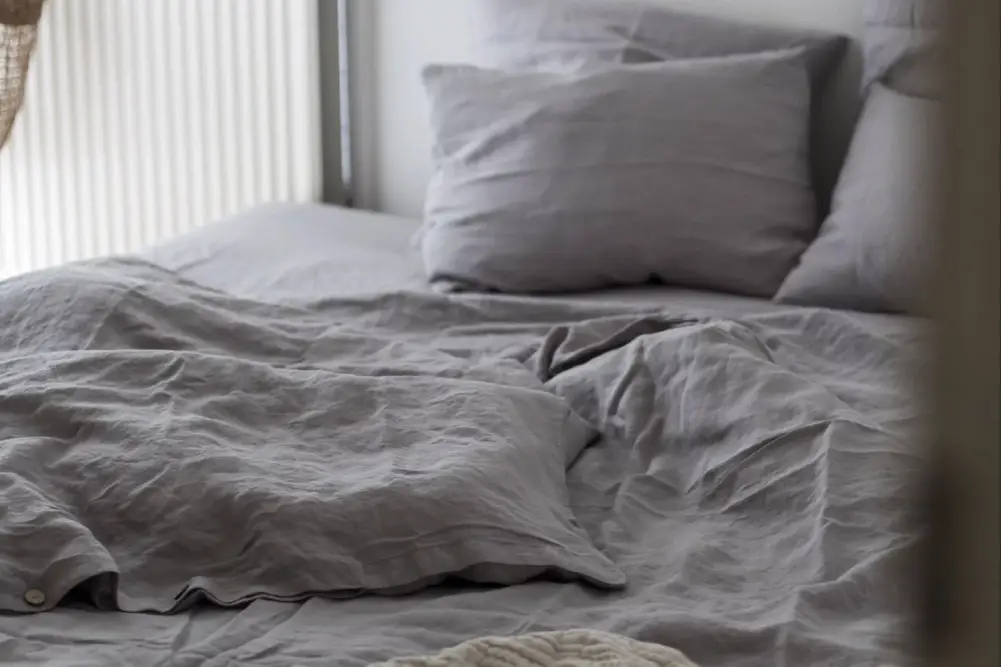
Linen has a special trait: it softens with every wash. Washing slowly breaks down the pectin and the rigid bonds between the fiber bundles. As these bonds loosen, the fibers relax and the fabric grows softer. This is why old linen feels so lovely.
A few home methods help speed this along. Washing in warm water works well. Using less detergent is better than using more, since heavy detergent can leave residue. Adding about half a cup of white vinegar to the wash helps remove alkaline buildup. Air drying is gentle on the fibers. Low-heat tumble drying also works if the sheets come out promptly and get shaken loose. Wool dryer balls add soft friction and help fluff the fibers.
One thing should be clear. Linen usually needs several washes to reach its best feel. This is normal, and it is part of what makes linen special. The same point comes up again later in the FAQ.
How to Soften Cotton & Percale Bedding?
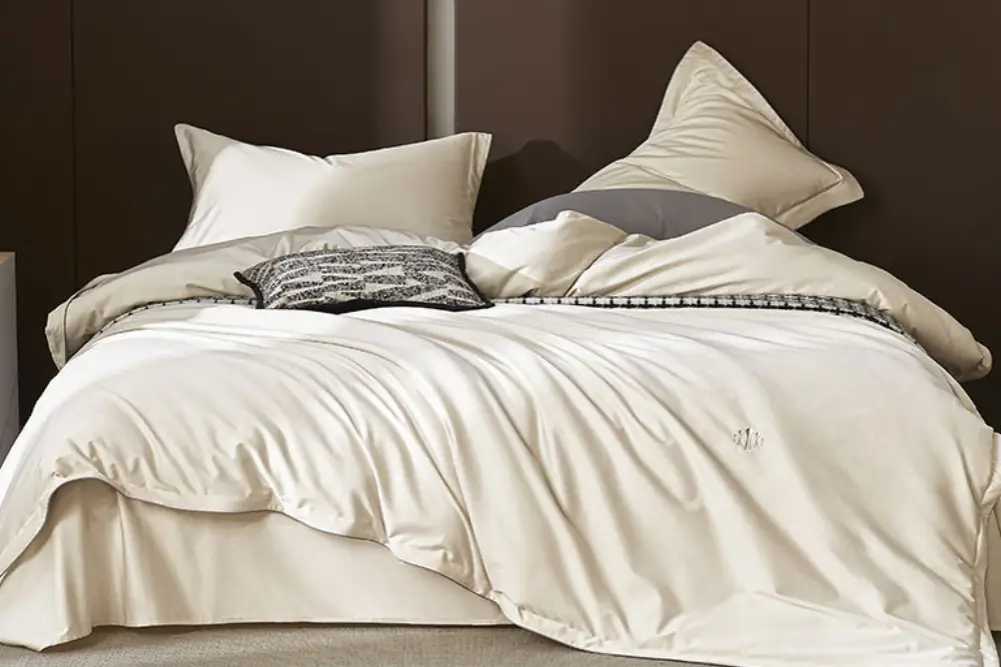
Stiffness in pure cotton and percale comes mostly from two things: leftover sizing and the dense plain weave. The good news is that both respond well to simple care.
Washing before the first use is the key step, since it removes much of the sizing. Adding a small amount of baking soda to warm water helps soften minerals in the water. White vinegar can work as a natural softener instead of a store-bought one. It also helps to avoid too much high-heat drying, because strong heat can make fibers brittle. Dryer balls add friction and help loosen the weave.
It also helps to know the difference between two common cotton weaves. Percale is a plain weave, so it feels crisp and cool. Sateen is a satin weave, so it feels smoother and softer right away. Neither is better; they simply offer a different hand.
How to Soften Polyester & Microfiber Bedding
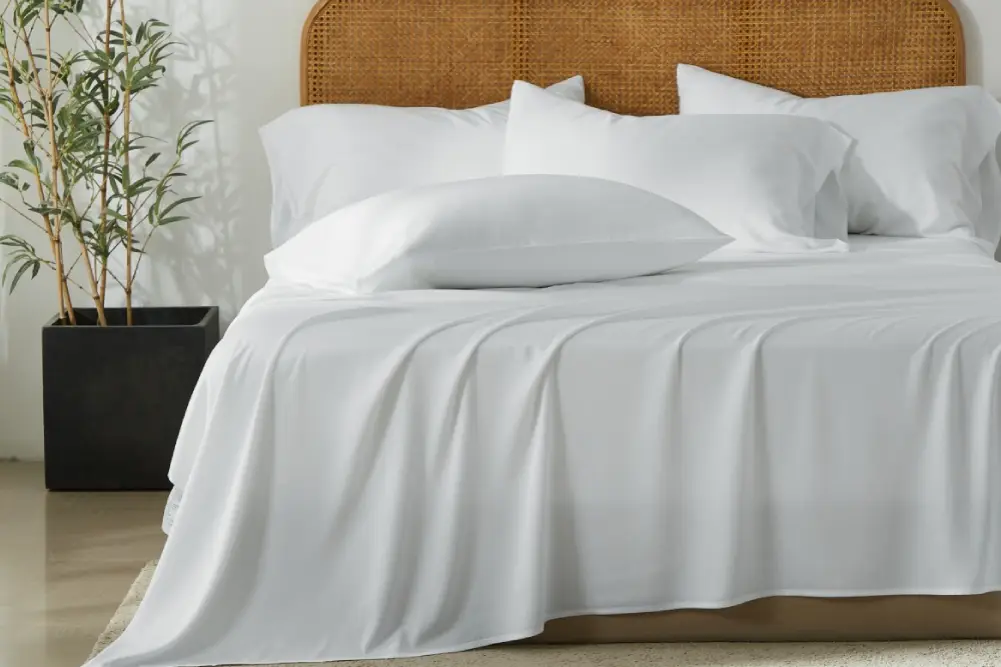
Stiffness in synthetic fabric has its own causes. It often comes from static, finishing coatings, and heat that hardens the fibers. The fix is gentle and careful washing.
Synthetics should be washed on a gentle cycle and dried on low heat. They do not handle high heat well. Fabric softener actually suits synthetics better than natural fibers. This is because synthetics absorb less, so the softener coats the surface instead of soaking in. Anti-static steps, like dryer balls or a little vinegar, also help.
One caution matters most here. High heat can ruin the soft hand of microfiber for good. Once the fibers melt or harden, the damage cannot be undone. So a low-heat setting is not just advice; it protects the fabric.
How to Soften Bedding That Have Already Been Washed
Sometimes sheets stay stiff even after washing. When this happens, the cause is usually hard-water minerals or a buildup of softener wax over time. A few deeper steps can bring the softness back.
A deep clean with white vinegar helps strip away minerals and residue. A wash with baking soda then neutralizes and fluffs the fibers. Some people also do a “strip wash,” which means washing the sheets once with no detergent at all. This pulls out hidden buildup that normal washing leaves behind.
It is also smart to check whether hard water is the real problem. If it is, a water softener or a mineral-removing product can help. One more point is important. Long-term use of fabric softener can form a waxy coating on the fibers. This coating cuts down absorbency and breathability, so it can quietly make sheets worse over time.
Textile Finishing Techniques: How Manufacturers Engineer Softness
Home methods help, but they only go so far. Truly lasting softness is not added at home. It is built at the factory through finishing processes. This is where the story shifts from quick consumer tips to real manufacturing craft.
Finishing is the stage after weaving and dyeing. Here the fabric is shaped, relaxed, and treated to reach its final hand. Skilled manufacturers use several methods, and they often combine them. The four sections below explain the main approaches that turn raw, stiff cloth into soft, ready-to-use bedding.
Mechanical Softening (Sanforizing, Tumbling & Brushing)
Mechanical softening uses physical force, not chemicals, to relax the fabric. There are three common methods: sanforizing, tumbling, and brushing.
Sanforizing is an anti-shrink finish. The machine uses controlled compression to pre-shrink the fabric. This cuts down later shrinkage and also relaxes yarn tension, which improves the hand. Tumbling sends the fabric through large drums, where it tumbles and rubs against itself. This action breaks up stiff fiber bundles and leaves a soft, fluffy feel. Brushing, also called sueding, uses a sandpaper roller or needle cloth to lightly scrape the surface. This raises tiny short fibers and creates a soft, napped face, such as brushed cotton or peach-skin fabric.
These methods share one big advantage. They rely on physical action, not chemistry, so the soft effect tends to last well through many washes.
Chemical Softening (Enzyme Washes & Softener Finishes)
Chemical softening uses special agents to change how the fabric feels. The two main types are enzyme washes and softener finishes.
An enzyme wash, also called bio-polishing, uses cellulase enzymes. These enzymes gently remove tiny fuzz and loose microfibers from the fabric surface. The result is a smoother, softer cloth that pills less over time. Softener finishes work differently. Agents such as silicone-based and fatty-acid-based softeners form a thin, slick layer on the fibers. This layer reduces friction, so the fabric feels softer to the touch.
There is one key difference between the two. An enzyme wash makes a permanent change to the fabric structure. Surface softeners, on the other hand, can wash away over time. Good manufacturers balance both methods. This gives the fabric softness now and durability later.
Calendering, Heat-Setting & Plasma Treatments
This group covers finer, more engineered finishing methods. The three main ones are calendering, heat-setting, and plasma treatment.
Calendering passes the fabric through heated, pressurized rollers. These rollers flatten the fibers, which adds a smooth hand and a gentle sheen. Heat-setting is used mainly for synthetic fibers. It applies heat to lock the fiber form in place. This stabilizes the size and reduces later hardening and wrinkling. Plasma treatment is a newer, eco-friendly option. It uses low-temperature plasma to change the surface energy of the fibers. This improves both the hand and the absorbency, and it does so without heavy use of chemicals.
Together these methods show how precise modern finishing has become. They go beyond simple softening and fine-tune the fabric in careful, measured ways.
Stone, Garment & Pre-Washing: Softness Built In at the Factory
Some processes build softness right into the product before it ships. The three main ones are stone washing, garment washing, and pre-washing.
Stone washing uses pumice or enzymes to abrade the fabric during the wash. This gives the cloth a soft, gently worn hand. Garment washing means washing the finished bedding as whole pieces, not just as raw fabric. The bedding comes out soft, pre-shrunk, and no longer stiff before it even leaves the factory. Pre-washing removes sizing and finishing residues ahead of shipping. Because of this, the product feels soft straight out of the box.
This is the real reason premium bedding and hotel linens feel so good. The softness is engineered in at the factory level, not left to the buyer. RUHO Living applies these kinds of washing and finishing steps in its own production. That is why its washed cotton bedding arrives soft and ready to use.
How to Choose Bedding Fabric That Stays Soft?
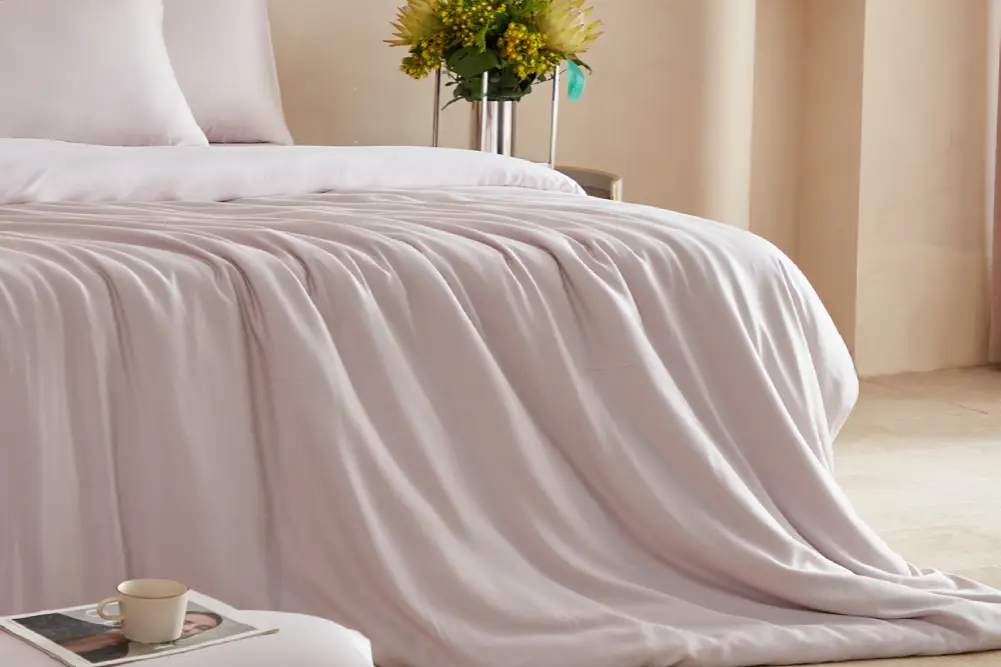
Knowing the causes of stiffness makes buying smarter. The goal is not just softness on day one. It is softness that lasts through years of use and many washes. The five points below form a simple buying checklist for brands, hotels, and careful shoppers alike.
Match the Fiber to How It Will Be Used
The best fiber depends on the job. Long-staple cotton suits buyers who want smoothness and strength together. Linen suits those who love breathability and do not mind some early crispness, since it softens with each wash. Microfiber suits budget-minded, easy-care needs, such as rental units or hotels with fast room turnover. Matching the fiber to the use case prevents disappointment later.
Read the Finish, Not Just the Thread Count
The finish often matters more than the thread count. How a fabric is treated affects the hand more than yarn count and density alone. A smart buyer looks for clear finishing details. Terms like enzyme-washed, garment-washed, or brushed tell more about the feel than a high thread-count number. Chasing thread count by itself can be misleading, as the later FAQ explains.
Check for Pre-Washed or Garment-Washed Construction
Pre-washed and garment-washed products are soft right away. They also tend to shrink very little after purchase. This makes them a strong choice for buyers and hotels. These clients often do not want to run sheets through many break-in washes. The fabric arrives ready for the bed, which saves both time and effort.
Verify Wash-Durability and Certifications
For business buyers, wash-durability is critical. Hotel bedding, for example, must survive 200 or more washes and still hold its hand and shape. A few certifications are worth checking, too. OEKO-TEX Standard 100 limits harmful substances in the fabric. ISO 9001 shows a strong quality-management system. BSCI covers social responsibility and fair factory conditions. RUHO Living holds OEKO-TEX Standard 100, ISO, and BSCI. These give buyers a clear way to confirm both safety and quality.
Request Fabric Samples Before You Commit
It is always wise to request fabric samples before a bulk order. A sample lets the buyer check the hand, the shrinkage, and the wash performance in person. This is standard practice in the industry, and it lowers procurement risk. Most serious manufacturers, including RUHO Living, offer a sampling service for exactly this reason.
FAQs
Why does new bedding smell like chemicals?
The smell usually comes from finishing resins and from wrinkle- or mildew-resistant treatments. These residues sit on the fabric until they are washed out. The first wash removes most of the smell. Products certified to OEKO-TEX Standard 100 also limit harmful substances. This keeps the chemical load low from the start.
Does a fabric softener damage sheets over time?
Over time, fabric softener can build a waxy coating on the fibers. This coating reduces absorbency and breathability, so it can hurt the feel of natural fibers. The effect is smaller on synthetics, which absorb less anyway. For cotton and linen, white vinegar is a smarter, gentler choice as a natural softener.
Is higher thread count always softer?
No. Thread count alone does not decide softness. Finishing processes and fiber quality matter more than the number on the label. In fact, very high density can feel crisp at first rather than soft. Some thread-count claims are also inflated, so the figure is not a reliable guide on its own.
How many washes until linen reaches peak softness?
Linen softens gradually, not all at once. It typically reaches its peak feel after a dozen or so washes. After that, it generally keeps improving over years of use. So a little patience pays off, and good linen rewards it with a soft, lived-in hand.
How RUHO Living Engineers Soft, Wash-Durable Bedding
Stiff bedding is rarely a sign of poor quality. As this guide has shown, it mostly comes from sizing, finishing residues, and the natural feel of the fiber. Home methods like vinegar rinses, baking soda, and dryer balls can improve the hand. But the deepest, longest-lasting softness is engineered at the factory through mechanical, chemical, finishing, and washing processes.
This is where RUHO Living comes in. RUHO Living is a bedding manufacturer in Nantong, China, established in 2004. The factory uses mechanical and chemical finishing. It also relies on garment-washing and pre-washing. Together, these steps build softness into the fabric from the start. Its products are certified to OEKO-TEX Standard 100, ISO, and BSCI. The bedding is engineered to withstand 200 or more washes while keeping its hand-feel and stable dimensions. For more than twenty years, RUHO Living has served hotels and brands around the world. Its range runs from hotel linens to custom bedding sets.
Maybe you build a bedding brand, run a wholesale business, or handle hotel procurement. If so, you are invited to see this quality for yourself. Request fabric samples or ask for the product catalogue, and feel the engineered softness and wash-durability firsthand. RUHO Living’s team is ready to help you turn a great bedding idea into a soft, lasting product.